



Barry Diller Withdraws $18 Billion Bid for MGM Resorts

Barry Diller did not soften the language. On September 23, 2026, People Incorporated announced through PRNewswire that it was withdrawing its proposal to purchase all public shares of MGM Resorts International. The Wall Street Journal had reported first that Wednesday that he was pulling the bid, and MGM’s confirmation followed.
“There are lots of ingredients that go into a proposal of this kind on its way to completion,” Diller said. “We didn’t feel the mix was coming together in the way we had hoped and have decided not to pursue taking the company private at this time.”
The words belonged to Diller as chairman and senior executive of People Incorporated. They closed a stretch of talks that had run for months. The company simply stated that the mix had failed to cohere and that the effort to take MGM private would not continue at this time. What remained was the fact of the withdrawal itself, and the larger shape of the offer that had just been set aside.
People Incorporated’s June 1, 2026 letter set a single cash price on the remaining equity. The firm proposed $48.30 a share for every outstanding MGM share it did not already own. Including debt, the bid was valued at more than $18 billion.
At the date of the letter, People held approximately 26.1 percent of MGM. The offer covered the rest—a full take-private of the remaining stake, not a partial majority purchase. Later accounts that cast the June approach as a bid merely for control did not match the filing. The company had asked for all public shares outside its own holding, in cash, at that fixed figure.
MGM’s board formed a special committee of independent directors to evaluate the proposal. The committee negotiated with People Incorporated over the several months that followed the June 1 letter. The structure on the table stayed the one first written down: a complete buyout of what People did not own, priced at more than $18 billion including debt.

In June, Barry Diller told the Wall Street Journal what had drawn him to the casino operator. “While everyone was running into all sorts of ‘AI opportunities,’ I wanted to run the other way,” he said. “It wasn’t hard for me to find MGM, where no one is going to get in between those resorts and consumers until we get to the final simulation.”
People Incorporated, formerly IAC, is a media holding company with more than 40 brands, among them PEOPLE, Food & Wine, Travel + Leisure and Southern Living. Diller, its chairman and senior executive, cast the bid as a turn toward real-world resorts while artificial intelligence upended the media business. The deal would give his company a hedge. Real-world experiences such as casino visits or shows remained more insulated from AI, for now.
That was the case for buying into physical places that still stood between operator and guest. The casino sector around the offer was already moving toward another large take-private of its own.
Caesars Entertainment shareholders voted Tuesday and Wednesday to approve Tilman Fertitta’s $17.6 billion buyout. The tally ran 65.4 percent in favor. The approval cleared the principal shareholder hurdle for that transaction, immediately before People Incorporated’s withdrawal, and fixed a market reference for what a full take-private of a Las Vegas Strip operator could command.
Fertitta’s agreement to buy Caesars had first been reached roughly a week before Diller’s June approach. By late September the shareholder vote was done; the deal still required regulatory clearance. The reference point it supplied now sat beside MGM’s own recent figures.
Those figures had not moved evenly. In the second quarter of 2026 MGM reported net income of $292.4 million and diluted earnings of $1.11 a share, numbers filed with the SEC on July 29. The third quarter of 2025 had closed on a net loss of $285.3 million, or $1.05 a share. Revenue itself stayed inside a narrower band, running from $4.18 billion to $4.45 billion a quarter since early 2024. The operator being priced carried heavy Strip exposure together with regional properties and a digital reach; the bottom line had swung farther than the top.
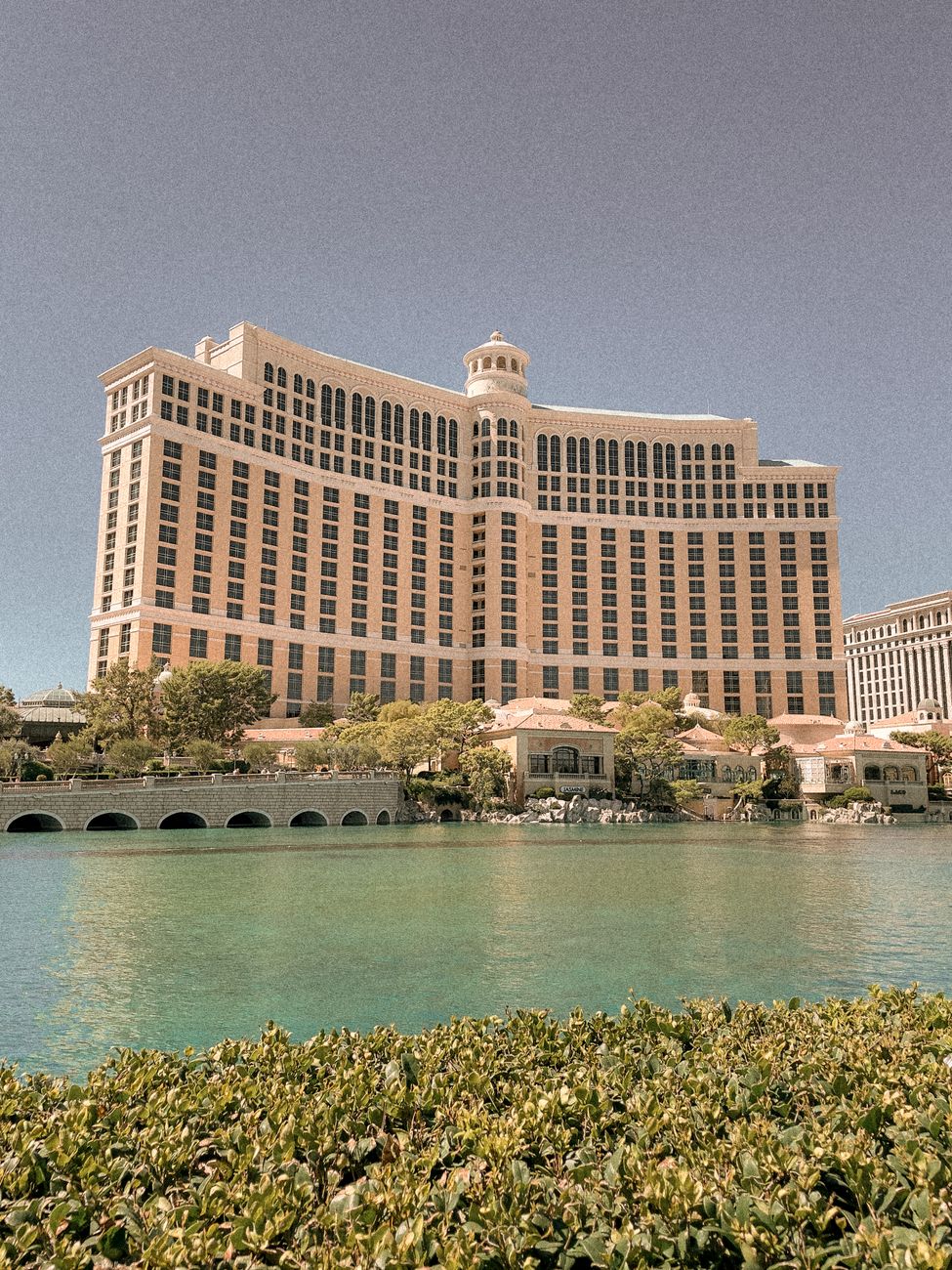
Paul Salem issued a statement Wednesday afternoon on behalf of the MGM board. The directors were staying the course as a standalone company.
“The Board remains excited to continue to lead MGM Resorts as a standalone company,” Salem said. “Our leading position in Las Vegas, our best-in-class regional properties, and BetMGM’s continued momentum highlight the value we bring to our shareholders. In addition, our international portfolio of MGM China and the significant opportunity ahead with MGM Osaka support a clear path to increasing shareholder value.”
Barry Diller answered with thanks of his own. “I want to thank the Special Committee and all the MGM Directors for giving us the time and consideration during the process. People Incorporated is doing just fine with its principal publishing business achieving its 11th quarter of growth with plenty of cash to both invest in its business and purchase its stock.”
The special committee’s months of talks were over. The board had chosen its path; what remained was the stake People still carried and whatever might follow from it.
MGM shares closed the regular session on September 23 at $37.85. In after-hours trading they fell roughly 8 to 10 percent, leaving an implied market capitalization of about $8.6 billion. Over the prior 24 hours to 23:00 UTC that day the stock was down 12.4 percent; across the preceding 20 trading days it had fallen 18.5 percent and touched a 20-day low of $33.70.
“What is undimmed is our belief in the future of MGM Resorts,” Diller said. “We continue to hold 66.8 million shares representing approximately 27% of MGM Resorts and have total confidence in both the management and the Company’s prospects.” He left the door open as well: “We at People Incorporated remain open to and interested in the possibility of a strategic transaction with MGM Resorts and look forward to considering a range of alternatives.”
The June cash price had been $48.30 a share. On the day of the withdrawal the stock closed at $37.85. After the drop the market valued the company at about $8.6 billion.