



DR Congo Ebola Outbreak Tops 4,000 Deaths
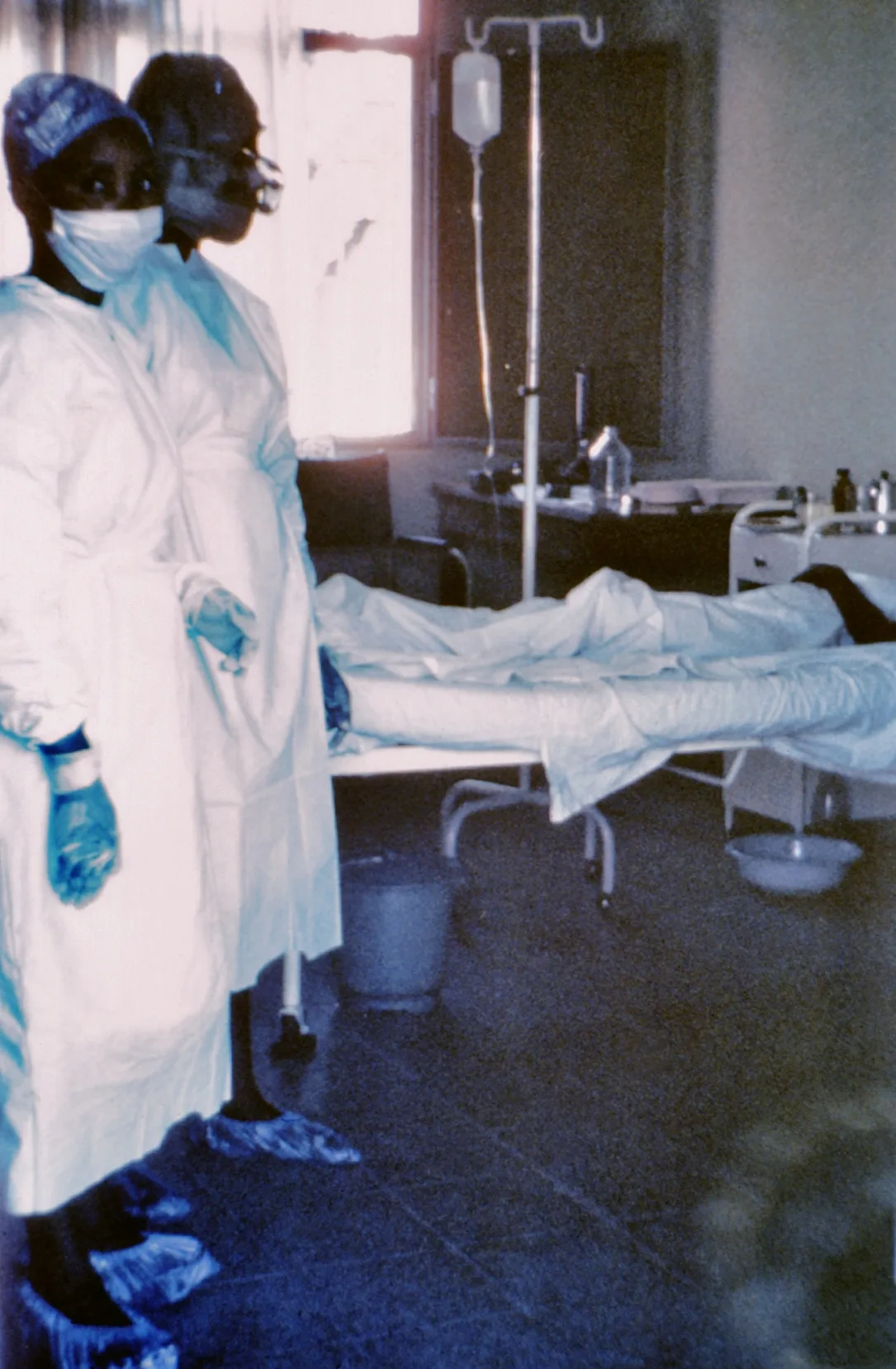
Health workers gathered in Bunia, capital of Ituri province at the heart of Congo’s Ebola outbreak. The signs read “No money, no data!” and “No payment for months.” Biongi Beiza was one of them. Front-line staff had gone without wages for August and for September. “There is no explanation from the administration,” Beiza said.
Among those gathered were members of the surveillance teams, who identify people exposed to infected patients. That identification is the opening move in any effort to slow the virus: name the contacts of each case so the next chain can be interrupted. Officials dispersed the protesters. Front-line workers have struck several times since the outbreak began over those same unpaid months.
Soldiers searching for weapons burned an Ebola-hit displacement camp that housed a patient transit center in Kigonze, on the outskirts of Bunia. Nineteen thousand people fled. Julien Harneis, the U.N. senior Ebola coordinator, set out what the loss meant. “When we lose a center, that means we lose capacity, we lose investment, and we have to start again. And above all, it means that people do not get access to the care that they really need,” Harneis said. Creating the transit and treatment centers had already required money and staff in short supply.

In Butembo, Marie-Célestin Karondwa, a local official with Congo’s ruling Union for Democracy and Social Progress party, had gone on the radio to urge preventive measures against infection. He was attacked and beaten at his home. The house was set on fire afterward. He died at a hospital of his injuries. Mistrust of health workers and of the authorities had long hampered the response. Some residents dismissed Ebola as a hoax. Anger over the handling of past outbreaks and over chronic corruption still kept communities from the people trying to reach them. The full count of the dead was only just coming into view.
Four thousand eighteen people have died.
The deaths stood among 8,300 confirmed cases across seven provinces. The outbreak was declared on May 15, 2026, and was caused by Bundibugyo ebolavirus, a virus that produces Ebola disease in humans and for which no vaccine or treatment has been approved. More than 2,000 patients have recovered. At least 50 health workers have died of Ebola since the start. Médecins Sans Frontières fixed the scale in a single line: “The human cost of this crisis is unprecedented in the DRC, with communities facing the largest Ebola disease outbreak ever recorded in the country.”
Near the end of September, 278 confirmed infections were recorded in one week, the lowest weekly count since mid-June. Weekly deaths stood at 192, down from a mid-August peak of 364. Wessam Mankoula, MBBS, MPH, an epidemiologist with the Africa Centres for Disease Control and Prevention, spoke to what the dip did not settle. “This curve doesn’t mean that the outbreak is totally under control, because we need to understand the reason for this falling in the last epi [epidemiologic] week.”
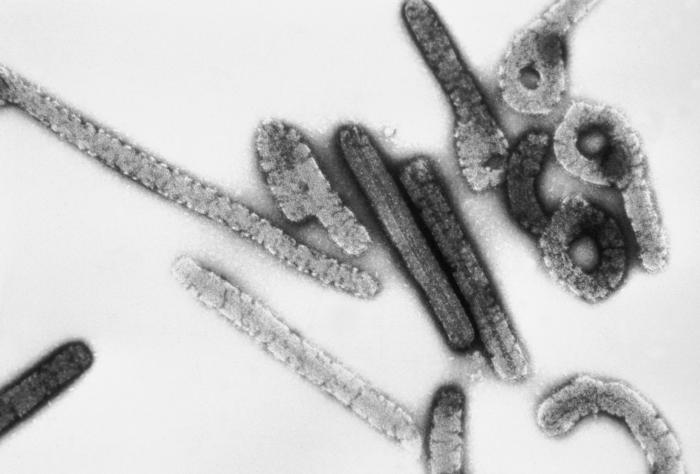
An Associated Press journalist watched a mobile-lab team operating near an Ebola treatment center in Butembo. The labs had shortened the wait from sample to answer. Tests that once took 72 hours could now be finished in six, said Lota Kalubi, a doctor at the center. Reach had shifted with them. Michel Ngimba, with the National Institute of Biomedical Research in Butembo, set out what the mobility allowed. “So we can go, if today we have an emergency, for example, in Katwa, we can start up the vehicle, and we can move the lab to Katwa,” Ngimba said.
As of late last week, 6,300 healthcare workers had received the Ervebo vaccine in a clinical trial, and 1,066 others had also received doses. Ervebo has proven efficacy against Zaire ebolavirus, the more common strain; its effectiveness against Bundibugyo is still being estimated. The country was also studying remdesivir, an antiviral given as treatment, and obeldesivir for post-exposure prophylaxis, a dose meant to block infection after contact with the virus. Contact follow-up—the work of finding and monitoring people exposed to a patient—had reached 78.7 percent. That figure still covered only 23 percent of the expected contact volume, a shortfall Mankoula described as a major concern.
The labs could roll. The lists of the exposed could not keep pace.
New cases were down 32 percent in Ituri while climbing in Tshopo and North Kivu. North Kivu carried a case-fatality rate—the share of confirmed cases that ended in death—of 59.3 percent against a national average of 48.4 percent. The weekly burden had eased from roughly 850 cases and 470 deaths in mid-July to about 490 cases and 230 deaths in September.

More than 21 days had passed without a new case in 18 health zones. At the same time the World Health Organization flagged rapid spread into fresh zones that stretched limited resources. Médecins Sans Frontières put the demand plainly: “Stopping the spread of Ebola disease requires multiple coordinated actions to be carried out at the same time.” The response had to find people who might be infected, move them into care, follow those they had exposed, stop transmission inside clinics and villages, and earn enough trust that the sick came forward early.
Last month authorities launched a village-centered approach that worked with local leaders. The work still met refusal. Wessam Mankoula named the health zones where access had not been restored and where surveillance could no longer be strengthened. “The security situation and some of the community resistance in some of the health zones in Katwa, Beni, Butembo, Nizi, and Nia-Nia has led to the inability of our team to continue with strengthening surveillance activities,” he said. Katwa, Beni, Butembo, Nizi, and Nia-Nia sat beyond the reach of the teams charged with finding new infections and the people those infections had touched.
An aid worker with Médecins Sans Frontières tested positive for Ebola on September 29 while working in Congo. The worker was medically evacuated on a special medical flight to the Netherlands. The flight arrived late Thursday night. The patient was transferred into the high-level isolation unit at Leiden University Medical Center.
The high-level isolation unit held one evacuated worker.