


GE HealthCare Plans $945 Million SOFIE Acquisition

GE HealthCare announced a definitive agreement on Monday, Oct. 5, 2026, to acquire SOFIE Biosciences for $945 million in cash. Nearly a billion dollars, paid outright, for a privately held U.S. maker of the radioactive imaging agents used in positron emission tomography.
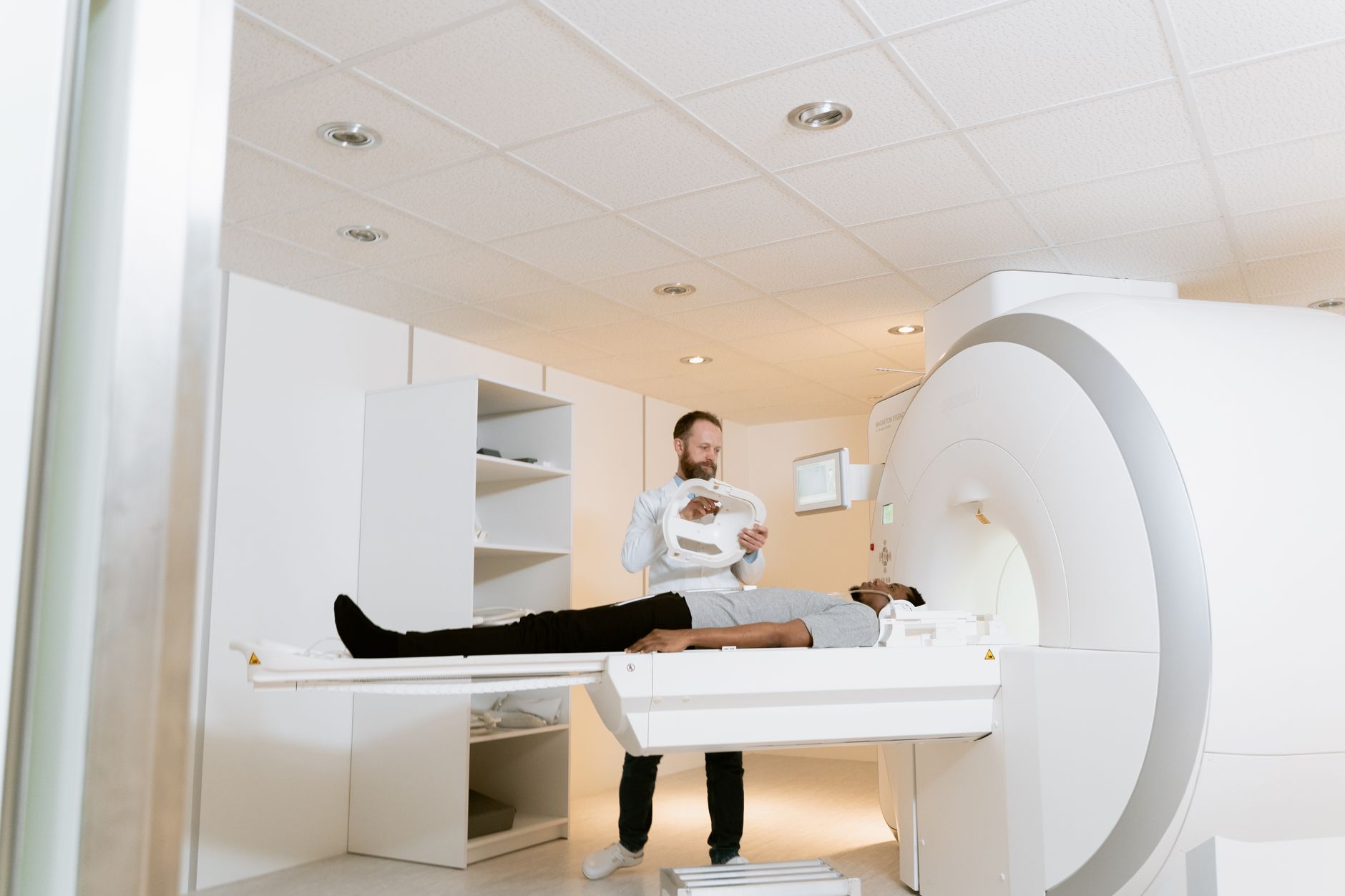
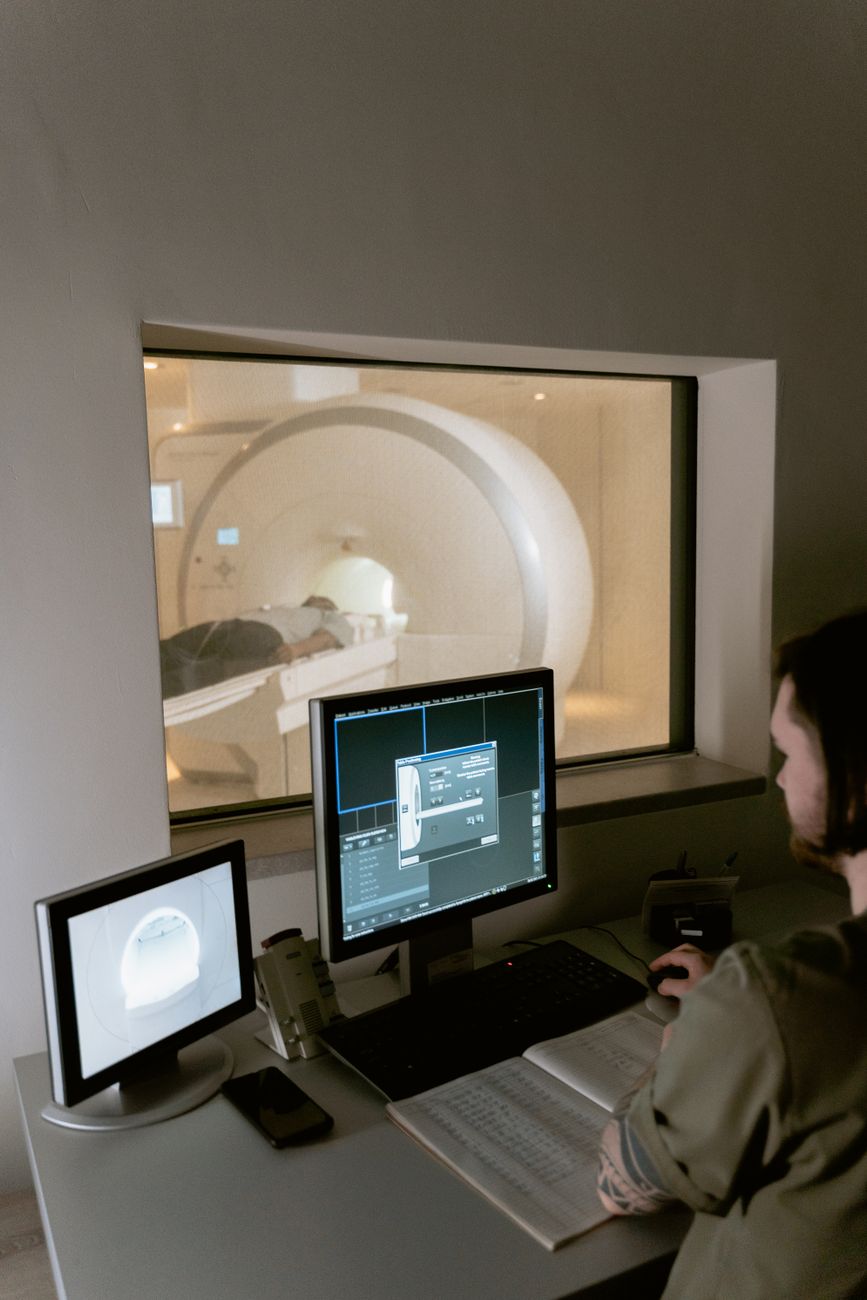
PET is the scan that injects a radiotracer so detectors can map metabolic activity in living tissue—tumors, heart muscle, the brain—by catching the paired gamma rays released when a positron meets an ordinary electron and both vanish. Fluorine-18, the positron-emitting isotope that labels these agents, has a half-life of roughly 109 to 110 minutes. Half the radioactivity is gone in under two hours. FDA guidance on PET drugs notes that the products are typically administered within minutes to a few hours after preparation. They cannot be stockpiled and shipped nationally the way ordinary medicines are. They have to be manufactured regionally, quality-released quickly, and delivered before the decay empties the dose.
SOFIE’s answer was density: fifteen U.S. contract-manufacturing sites, twenty-one cyclotrons, and a theranostics-focused development and manufacturing site. Cyclotrons produce the fluorine-18, usually from oxygen-18; chemists then attach the isotope to a pharmaceutical formulation. Fifteen sites put production nearer the hospitals and imaging centers that schedule the scans, adding local options and backup paths when a batch fails or a delivery slips. BTIG analyst Ryan Zimmerman, in a note to clients, said the added manufacturing and distribution capacity could help reduce bottlenecks in the radiopharmaceutical adoption cycle. A tracer that clears the clinic still has to arrive usable when the patient and the scanner are ready.

The company already sat inside that supply chain. Owned by the private-equity firm Trilantic North America, SOFIE manufactures GE HealthCare’s Flyrcado injection—flurpiridaz F-18—the PET radiopharmaceutical the FDA approved in 2024 for detecting myocardial ischemia and infarction and coronary artery disease. In cardiac PET, that tracer is what lets clinicians map blood flow and damage in living heart muscle. SOFIE also produces Lantheus’s Pylarify (piflufolastat F-18) for prostate-cancer imaging and Neuraceq (florbetaben F-18) for imaging the beta-amyloid plaques associated with Alzheimer’s disease. The contractor GE HealthCare had just agreed to buy was already making doses for GE’s own portfolio and for other radiopharmaceutical companies at once. That dual role is what made ordinary CMO pricing stop explaining the number.
“The PET radiopharmaceutical market is expanding rapidly with the introduction of innovative radiotracers and advances in precision care, including the growing adoption of targeted therapies,” O’Neill said.
Patrick Phelps, SOFIE’s co-founder, president and CEO, spoke for the seller on the same Monday. “As demand continues to increase for F18 products, and pipelines for new diagnostics and therapeutics continue to expand, joining GE HealthCare marks an exciting step in our journey as a leading U.S. CMO,” Phelps said.
The agreement also delivered U.S. rights to FAPI-74, a Phase III PET tracer targeting fibroblast activation protein. The agent is under study for pan-cancer and oncology imaging, with trials in pancreatic cancer and gastroesophageal tumors. GE HealthCare already held the rights outside the United States. Monday’s cash closed the remaining geography on a late-stage diagnostic still working through the clinic.
About twenty PET radiotracers are available today. More than thirty radiotherapeutics are in development. Those candidates will need manufacturing partners who can turn isotope and chemistry into scheduled doses.
GE HealthCare’s Pharmaceutical Diagnostics segment will absorb SOFIE. After closing, the company says, SOFIE will remain an independent manufacturing partner for its existing customers, including other radiopharmaceutical companies. The same network would serve GE’s own portfolio and the products of firms that compete with it. “As part of GE HealthCare, SOFIE Biosciences is expected to grow in the low double digits, and enables us to participate across the radiopharmaceutical value stream, meeting customer demand through a mix of GE HealthCare owned and partner facilities,” O’Neill said.
GE HealthCare had already moved on manufacturing control a year earlier. In 2025 it acquired the remaining 50 percent of Nihon Medi-Physics, the joint venture it had operated with Sumitomo Chemical. The Tokyo-based company brought thirteen manufacturing sites across Japan into full ownership. That purchase completed an overseas footprint built for agents that have to be produced close to the hospitals and imaging centers that use them. Monday’s agreement applied the same logic on American soil, this time through an all-cash acquisition rather than a joint-venture buyout.
In August 2026, Curium announced a deal of up to $8 billion for Lantheus. The figure was nearly an order of magnitude larger than Monday’s cash price and placed two major radiopharmaceutical names under one roof while capital continued to chase radioactive drugs used in cancer care. Two GE HealthCare manufacturing expansions in successive years now sat beside that combination on the sector’s deal calendar.
Regulatory approval stands between the signed agreement and the transfer of ownership. GE HealthCare expects the acquisition to close in the first half of 2027, subject to that approval and the ordinary closing conditions that accompany it. In the first full year after ownership transfers, the company has said, the acquisition is expected to contribute to revenue growth, adjusted EBIT margin, and adjusted earnings per share.
Equity investors did not wait. The day after Monday’s announcement, GE HealthCare shares closed up 2.3 percent. Through that point in the year the stock had fallen 19.9 percent, while the industry had declined 22.4 percent and the S&P 500 had advanced 13.1 percent. Coverage then put the company’s market capitalization at $29.04 billion.