



Researchers Drill Over 60 Feet Into Durupınar Formation Near Mount Ararat
By Andrew Powell (/journals/andrew-powell)
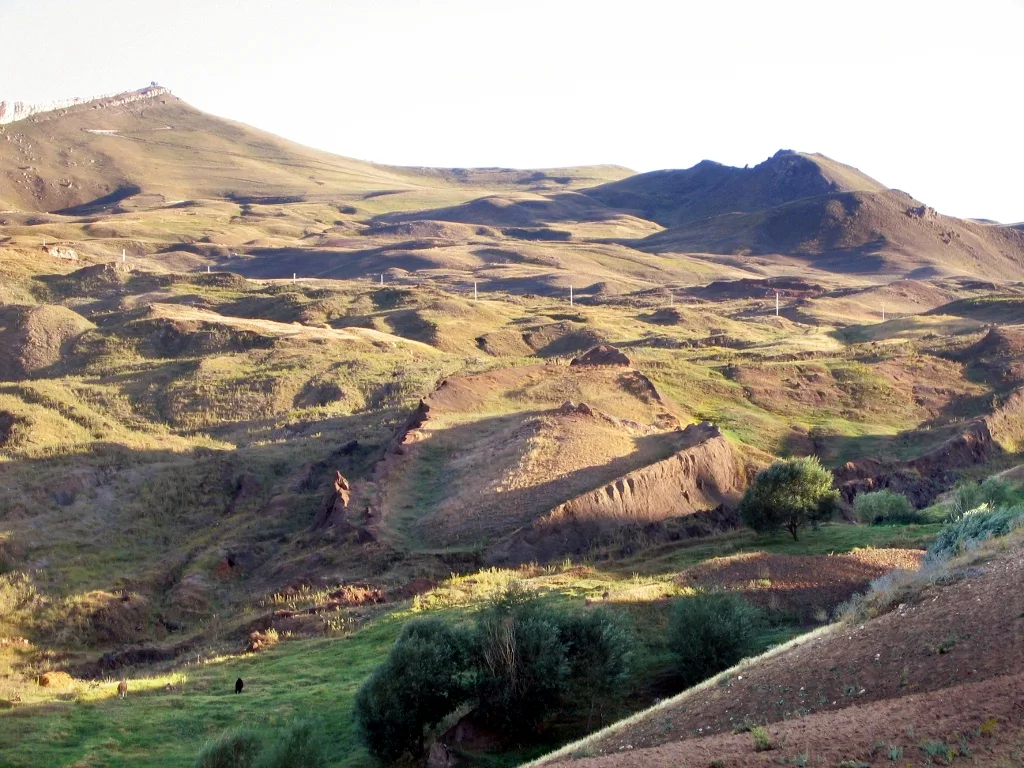
Researchers studying a boat-shaped formation in eastern Turkey that has long been linked to the biblical story of Noah’s Ark have completed their first full field season, collecting hundreds of samples and drilling more than 60 feet beneath the site. The Noah’s Ark Research Project, supported by Ağrı İbrahim Çeçen University, spent the past year examining the Durupınar formation near Mount Ararat, according to Fox News. Researchers are now waiting for laboratory testing that could provide more information about what lies beneath the unusual formation. The site was identified in 1959 and has attracted speculation for decades because of its distinctive shape. Geologists have generally rejected the idea that it represents Noah’s Ark, with a 1996 study by Lorence Gene Collins and David Franklin Fasold concluding that the formation was a natural rock structure. https://x.com/Complex/status/2103571451525640581 The latest project is taking a different approach by examining material beneath the surface. Andrew Jones, vice president of the research project, told Fox News Digital that the team collected more than 300 soil samples from different depths both inside and outside the formation. Researchers also conducted deep-core drilling at the location for the first time. Some drilling reached approximately 20 meters, or more than 60 feet, below the surface, with samples from inside the formation sent to laboratories for further analysis. “That’s what we’ll be testing this winter,” Jones said. Researchers are looking for evidence of human activity or material that could be consistent with decayed wood. The decision to drill deeper followed sampling conducted in 2024. Jones said those earlier samples showed differences between soil inside and outside the formation, including substantially more organic matter inside the site, along with higher potassium levels and variations in pH. This year’s drilling produced another result the researchers say warrants further examination. Jones said the team did not encounter a continuous mass of solid limestone or other rock while drilling into the formation, although boulders were found in some areas. “We’re still studying our results,” Jones said, while noting that laboratory testing remains necessary before conclusions can be reached. Ancient pottery found near the formation has also drawn attention. Jones clarified that the fragments were discovered beside the site rather than inside it and said their style has been tentatively dated from the early Chalcolithic period through the Iron Age. Two ancient settlements are also located near the formation, although one has not been excavated. Jones, who identifies as Christian, said he believes in the biblical account of Noah but urged people not to reach conclusions before the research is complete. The field work has now ended, but the laboratory analysis could provide the next major clues about the unusual formation. “We still have the lab work to do,” Jones said. “And I hope everyone can follow along and see what we find.”