



Airstrike kills 72 gold miners near Sudan-Egypt border, rights groups say
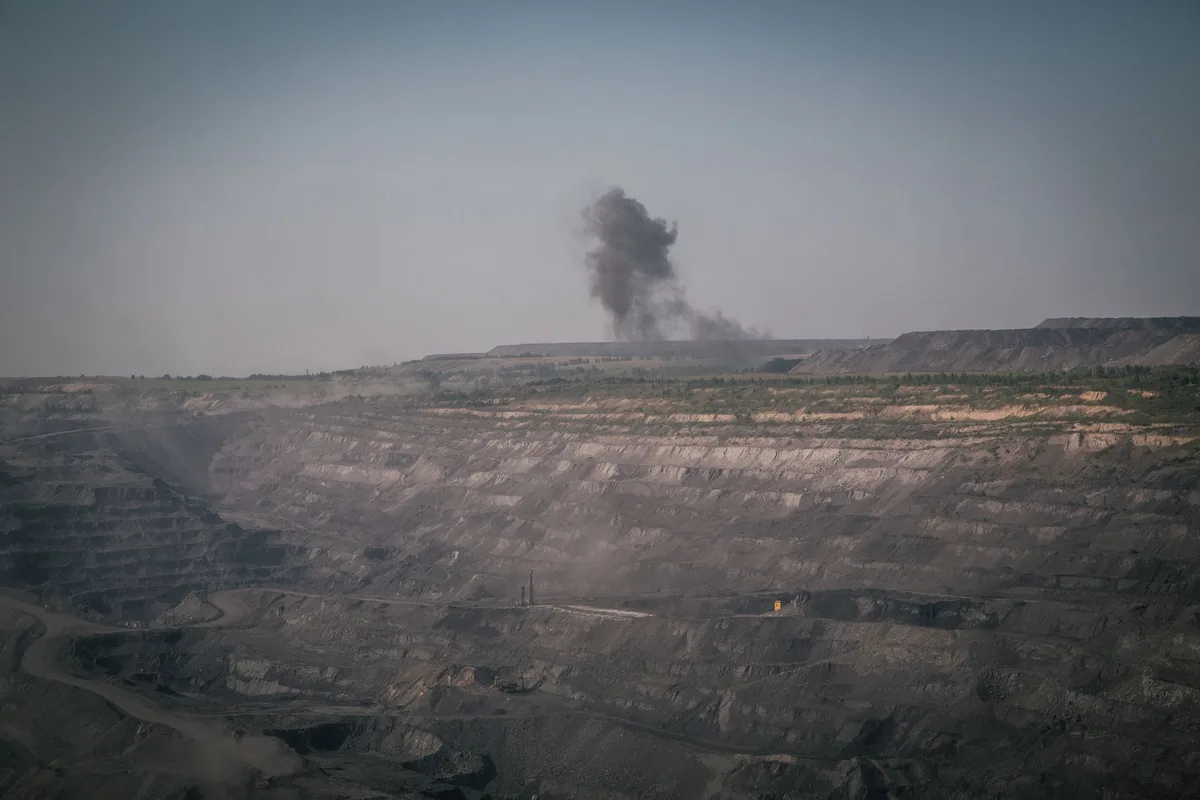
Abdelaziz Youssef was at the Jabal al-Uqaydat gold mining site when a jet appeared overhead. It was Saturday, around 8:00 am local time, 0600 GMT. The aircraft came into view above the camp and struck five times.
“Struck five times, many people were killed,” Youssef said. “We ran up the mountain terrified of another strike,” he told AFP. The morning held to that short chain: a jet overhead, five strikes, the run uphill.
Thousands had been working the remote camp when it was hit. Some turned toward Al-Ansary market. Others went the opposite way. Sharaf Ali reached the gold market just south of the Halayeb triangle and described what the scattering had done to any chance of a count.
“After the airstrike people scattered, some people came to Al-Ansary market, others went in the other direction, that's why no one knows how many exactly were killed,” Ali said.
Both survivors reported bodies on the ground as they fled. Many more were feared trapped under the rubble. The excavation pits had been destroyed with people still inside them. The camp lay hours from any urban centre. More than five missiles had been fired from the aircraft directly at the camps.
From Khartoum, Emergency Lawyers wrote on X on Sunday that Egyptian fighter jets had targeted civilian miners in the northern Wadi area inside Sudanese territory, resulting, according to preliminary information, in the killing of 72 civilians. Its fuller statement put the same figure in plain terms: the attack “resulted in the deaths of 72 civilian miners, according to preliminary information, while efforts to document and verify the casualty toll are ongoing.”
“The deliberate targeting of unarmed civilians violates international humanitarian law and the right to life,” the group said. “These acts may constitute war crimes.”
Survivors who spoke to the Paris-based Sudan Tribune put Saturday’s death toll above 200. That number stands against the 72 from Emergency Lawyers. The gap between the two figures remains open, and neither count has been independently confirmed. AFP and Reuters could not independently confirm the account. Neither Egypt nor the de facto Sudanese authorities issued any comment.
Images began circulating on social media and among local rights groups—still unverified—showing bodies in the rubble and others wrapped in funeral shrouds.
Saturday’s attack was the second this year on Jabal al-Uqaydat. In June, airstrikes at the same informal gold mining site killed 23 workers. Egypt’s military did not claim those strikes. It said it had conducted a “large-scale operation” against illegal gold mining and that the action took place within Egyptian territory. The operation detained 223 people, including 136 foreign nationals. Egypt’s border force said it seized 86 tonnes of gold ore. The campaign was announced to counter illegal gold mining and arms smuggling in the area.
The 23 dead from June and the open Saturday tolls of 72 and more than 200 belong to one mountain. Eighty-six tonnes of gold ore came off that border in the June seizure. The ore is what the pits and the competing counts still share.
Emergency Lawyers linked the strikes to control of the minerals along the border. “The repeated attacks on the gold- and mineral-rich border regions reflect a desire by Egyptian authorities to expand and assert control over Sudan's natural resources,” the group said.
The ground meets the Halayeb triangle, 20,580 square kilometres of Red Sea coastland claimed by both Egypt and Sudan. Two colonial borders created the claim. In 1899 the Anglo-Egyptian Condominium set a political boundary along the 22nd parallel north. In 1902 the British drew a separate administrative boundary that gave Sudan the tribal grazing lands north of that parallel. When Sudan became independent in 1956, Egypt held to the 1899 line and Sudan to the 1902 line. In 2021 the triangle’s population stood at 27,000. The rugged belt of mineral deposits stretches for hundreds of kilometres through the mountains and includes the disputed triangle.
Egypt’s full border with Sudan runs 1,200 kilometres, 745 miles, from the Red Sea to Libya. East of the Nile, gold and illicit trade have moved across that open frontier for years.
Emergency Lawyers continues efforts to document and verify the casualty toll. The survivors who fled remain split, some at Al-Ansary market and others in the opposite direction, and no single confirmed list of the killed has been assembled. In the images that have circulated—still unverified—bodies appear in the rubble. Others are wrapped in funeral shrouds.