



Missile hits Riyadh terminal injuring dozens as U.S. issues warning
By The Conservative Desk (/journals/conservative-desk)
The passenger at gate 403 watched the strike hit gate 401. “I was on gate 403,” the witness told AFP from the domestic terminal at King Khalid International Airport. “I saw 401 hit, I saw injured in front of my eyes. Everyone was running.”
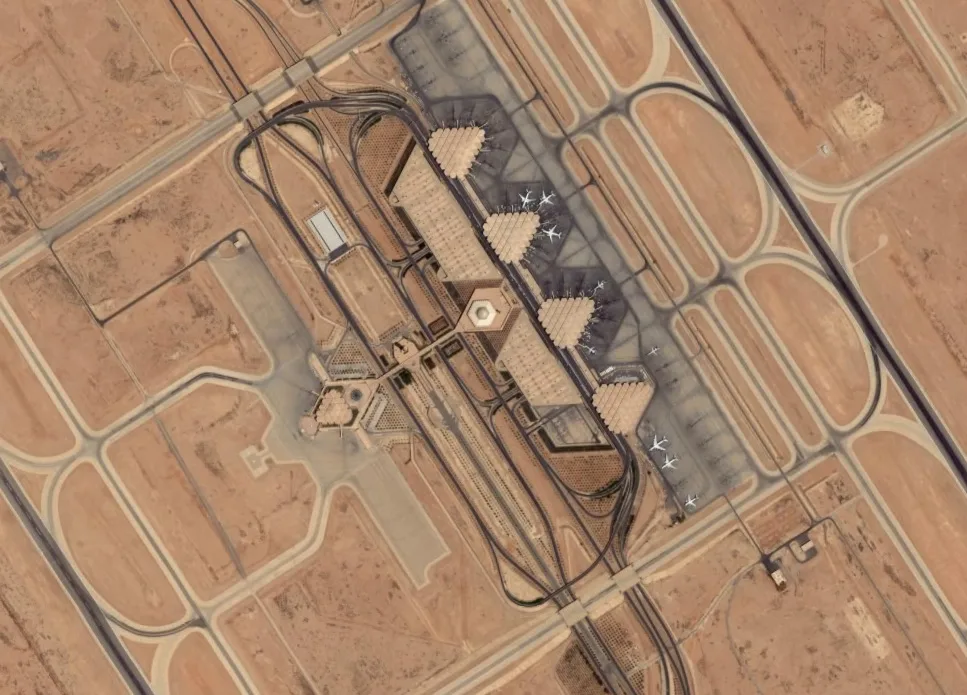
A missile struck a passenger terminal in Riyadh on Saturday, Oct. 10.
Dozens were injured. A hospital source said most were Saudi nationals, at least five were in intensive care, and some of the wounded were airlifted by helicopter. The airport was evacuated. Ambulances were seen rushing toward the scene. Ahmed Sayed, a resident of the capital, said he heard at least two loud explosions. A medical source told AFP that doctors had been ordered to report for a “serious emergency situation,” with the injured moved to hospitals across Riyadh and many described as in critical condition.
The last flight into the airport had landed at 2:05 p.m. local time, according to Flightradar24. FlightAware recorded at least 225 cancellations over the preceding 24 hours. Multiple airlines suspended service to Riyadh. The disruption was not a one-day event. An earlier strike on Wednesday killed a Sudanese national and injured eight. Another strike two days before Saturday killed three Saudi citizens, including a pilot. On Thursday, a Saudi national carrier aircraft was damaged on the ground with no passengers aboard. On Sunday, authorities reported that King Fahd International Airport in Dammam was targeted as well.
The U.S. Embassy strongly recommended that all U.S. citizens avoid King Khalid International Airport and the surrounding areas. Canadian, German, Spanish, British, and Irish missions issued parallel warnings to their own nationals. Canada’s embassy cited “ongoing military activity.”
Responsibility for the Saturday strike was not established in the first accounts. The Houthis had not commented on that attack. What the record did show was a clear pattern of pressure on Saudi civil aviation in the same week, including a Houthi warning to airlines “for the last time” about operating in Saudi airspace. Civilian terminals, a parked airliner, and the people standing at the gates were the ones absorbing the cost.
President Donald Trump, leaving the White House, was asked about the attacks. “It’s not good,” he said. “I’m not happy.” There was no immediate sign, in the reporting, of a new U.S. military response. That left the ordinary American traveler, the airline crew, and the partner government holding the risk while Washington weighed what, if anything, would follow.
Saudi authorities, for their part, warned the public that “filming, publishing or sharing information related to countering missiles and drones and their impact sites exposes you to legal liability.” They also pointed to “supporting diplomatic solutions to de-escalate tensions.” That is the de-escalation case in its own terms: keep the cameras off the impact sites, keep the channel open to diplomacy, and treat the crisis as something negotiation can still contain.
The week’s facts answer that claim without adjectives. A passenger terminal was hit. Dozens were hurt and at least five landed in intensive care. A pilot was already among the dead from an earlier strike. A commercial aircraft was damaged on the tarmac. Embassies told their citizens to stay away. More than two hundred flights were canceled in a single day-long window. Diplomacy may be the preferred language in a communiqué. It did not stop the missiles from reaching the gates where passengers stood.
For conservatives who take national sovereignty and public safety as governing duties rather than slogans, the picture is concrete. A major civil airport in a partner capital became a repeated target. Americans were told, in plain embassy language, not to go there. Commerce took the hit in grounded aircraft and canceled routes. The people in the terminal were not combatants. They were travelers, workers, and bystanders. Limited government does not mean indifference when civilian infrastructure is treated as a free-fire zone and U.S. citizens are pushed out of an allied hub by missile fire.
Free enterprise depends on the basic expectation that a passenger terminal is not a battlefield. Rule of law depends on the difference between military targets and the crowd at gate 401. National sovereignty, Saudi and American alike, is tested when non-state actors backed by a hostile power can reach deep into a capital’s airport and force evacuations, hospital surges, and embassy warnings. Faith and family enter the same frame whenever a flight attendant, a pilot, or a traveler fails to come home from what should have been a routine departure.
None of that requires inventing a policy the record does not supply. The record supplies a hospital system told it faced a serious emergency, a week of prior bloodshed at the same airport, mass cancellations, and a president who said he was not happy. It supplies the Houthi warning issued “for the last time.” It supplies the U.S. advice that American citizens avoid the airport and its surroundings.
What it does not supply is a settled attribution for the Saturday strike in the first hours, or a finished decision in Washington. Trump’s words stood as spoken. The embassy warning stood as posted. The witness at gate 403 stood as the clearest human account of what the missile did when it hit.
On Sunday, the Saudi civil aviation authority said an attack had also targeted Dammam’s airport in the east of the kingdom, with damage assessments still under way.