




Massive 2,000-Year-Old Ritual Bath Lifted From Israeli Archaeological Site
Andrew Powell · Oct 8, 2026 · 2 min read
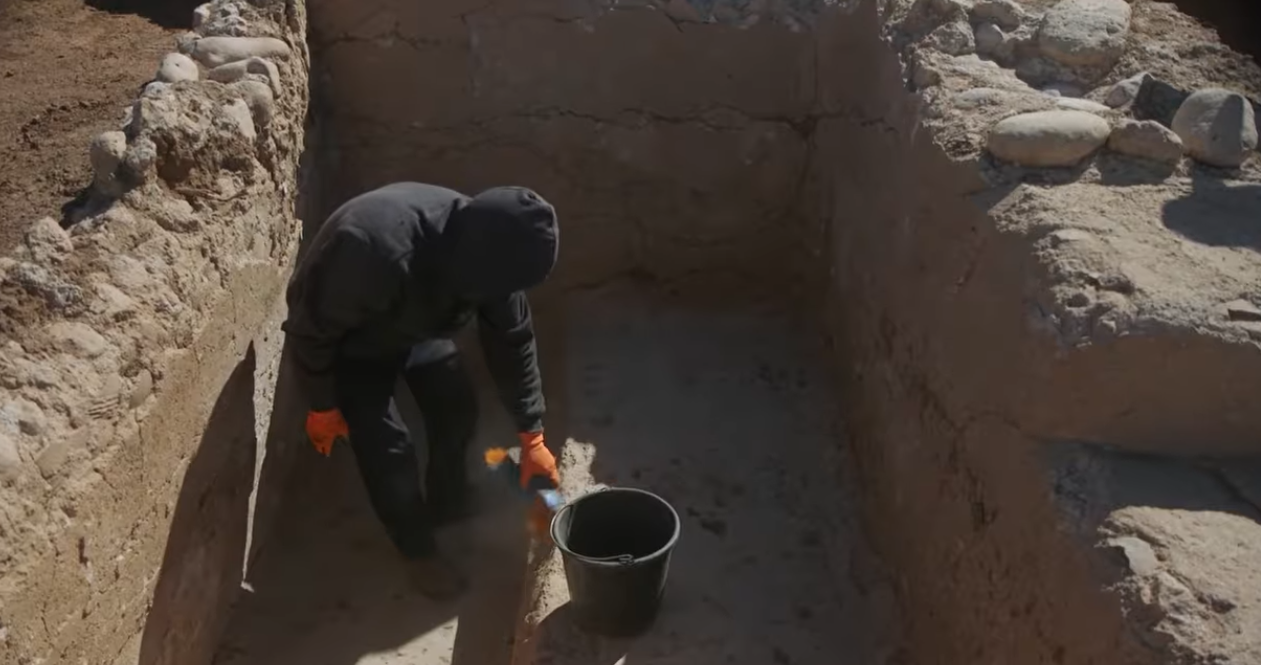
A remarkably preserved Jewish ritual bath dating back roughly 2,000 years has been uncovered in Israel, offering archaeologists a rare glimpse into life during the Second Temple period.
According to Fox News, the ancient mikveh was discovered during an archaeological excavation in Kiryat Gat, about 35 miles southwest of Jerusalem.
The Israel Antiquities Authority announced in September that the 25-ton structure had been carefully removed from the site intact.
Photos released by officials show a massive crane lifting the ancient bath from the excavation area. The structure was moved as part of an effort to protect it from damage during construction of a new neighborhood.
Mikvehs were used by Jews for ritual purification during the Second Temple period. The newly discovered bath dates to roughly the era of Jesus Christ, who lived and taught as a Jew during the same period, although Scripture does not specifically state that Jesus used a mikveh.
The discovery also provides evidence that a previously unknown Jewish settlement existed in the area during the Second Temple period, according to officials.
Archaeologists found stone measuring vessels at the site as well. Such vessels were commonly used during the period because Jewish law held that stone was not susceptible to ritual impurity.
The mikveh is expected to eventually return to the community where it was discovered. The IAA said it will be incorporated into an open public space at the center of the new neighborhood once construction is finished.
Author and filmmaker Dinesh D'Souza said the discovery provides a tangible connection to the world described in the Bible.
“It gives you a vivid picture,” D'Souza told Fox News Digital. He said discoveries like the mikveh can help people better understand both the Old and New Testaments by showing what life was like during the period in which Jesus lived.
D'Souza also pointed to the Pool of Siloam and Jerusalem's Pilgrimage Road as examples of archaeological sites with connections to the biblical accounts. He said being able to visit and observe such locations provides a physical connection to the ancient setting.
His book and documentary, both titled “The Stones Cry Out,” examine biblical archaeology and its historical significance.
D'Souza said archaeological discoveries also have meaning beyond biblical history, arguing that ancient Jerusalem represents one of the foundations of Western civilization alongside Athens.
For him, the newly preserved mikveh is another physical artifact that helps reveal the world in which biblical events unfolded.