




Quiet discipline, not charisma, turns good companies great
Only eleven of 1,435 Fortune 500 firms went from market-or-worse returns to at least three times the market for fifteen years—and Collins finds they did it with humble leaders and narrow focus, not celebrity CEOs.
IJR · Oct 11, 2026 · 13 min read
In 60 seconds
- A 22-person team screened Fortune 500 firms from 1965 to 1995 and found only eleven that shifted from ordinary to sustained three-times-market returns, each paired with a similar rival that never leaped.
- At the turning point every winner was run by a Level 5 leader who mixed personal humility with fierce will, not a celebrity visionary.
- They got the right people on the bus before choosing direction, then faced brutal facts while keeping faith they would prevail.
- Each narrowed to a hedgehog concept—the overlap of what it could be best at, what drove its economic engine, and what it cared about—and used technology only to accelerate that focus.
- The leap came from years of consistent flywheel pushes, not one dramatic program; comparison firms often cycled through doom-loop initiatives instead.
- Several of the eleven later failed or scandalized, a reminder these practices may explain a period of greatness without locking it in forever.
The big idea
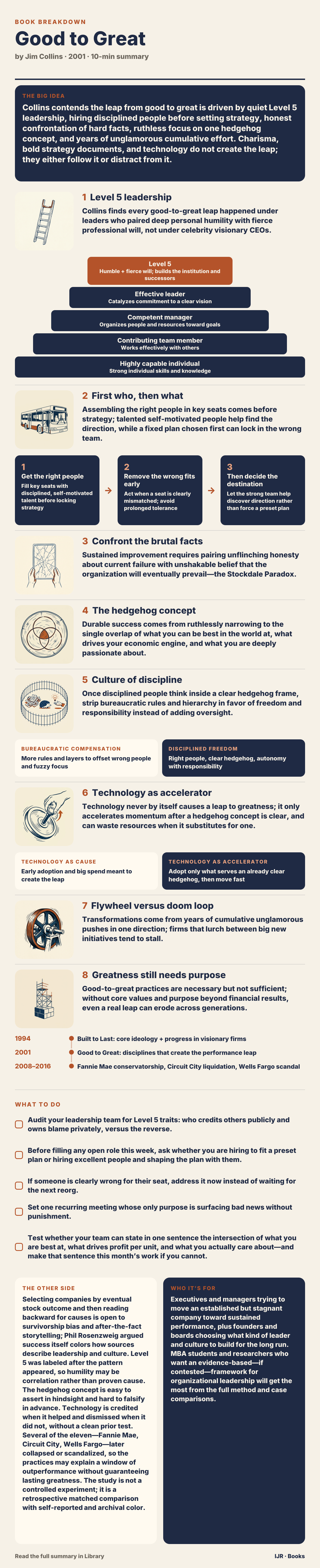
Collins contends the leap from good to great is driven by quiet Level 5 leadership, hiring disciplined people before setting strategy, honest confrontation of hard facts, ruthless focus on one hedgehog concept, and years of unglamorous cumulative effort. Charisma, bold strategy documents, and technology do not create the leap; they either follow it or distract from it.
The book in brief
Collins and twenty-two researchers set out to find what actually separates companies that make a sustained leap in performance from peers that look similar but never break out. They screened every Fortune 500 company from 1965 to 1995 for a strict pattern—fifteen years of stock returns at or below the market, a transition, then fifteen years at least three times the market—and only eleven firms qualified. Each was matched to a comparison company in the same industry with similar starting resources that failed to leap.
The findings upended the team’s own expectations. Charismatic CEOs, elaborate strategy, heavy acquisitions, and early technology bets did not explain the winners. What did was a quieter pattern: leaders who combined humility with iron will, a habit of getting the right people in place before deciding where to go, cultures that surfaced bad news without punishment, and a narrow focus discovered over years rather than declared in a workshop.
The book then walks through the mechanisms in order. Level 5 leadership sits at the top of a five-rung hierarchy and shows up as understated executives who build institutions rather than personal brands and who set successors up to succeed. First-who-then-what puts people before vision. The Stockdale Paradox pairs unflinching honesty about current failure with unshakable belief in eventual prevail. The hedgehog concept forces a company to the single intersection of world-class capability, economic engine, and genuine passion. A culture of discipline then strips bureaucracy so self-managed people can act inside that frame. Technology only accelerates momentum already aligned to the concept.
The payoff image is the flywheel: heavy at first, then seemingly self-turning after years of consistent pushes in one direction. Comparison companies often fell into a doom loop of new CEOs, bold programs, short attention, and replacement. Collins closes by linking the work to his earlier Built to Last, arguing these disciplines get a firm to greatness but core values beyond profit are what might lock it in across generations—while later collapses among some of the eleven show even that is no permanent guarantee.
Context
Jim Collins led the multi-year study with a research team and published the book in 2001, just after the dot-com crash, when the claim that technology alone does not create greatness landed with force. It reshaped how a generation of executives talked about leadership and organizational discipline, and it was framed as a companion mechanism to his 1994 book with Jerry Porras, Built to Last, on enduring purpose.
The key ideas

1
Level 5 leadership
Collins finds every good-to-great leap happened under leaders who paired deep personal humility with fierce professional will, not under celebrity visionary CEOs.
- Level 5Humble + fierce will; builds the institution and successors
- Effective leaderCatalyzes commitment to a clear vision
- Competent managerOrganizes people and resources toward goals
- Contributing team memberWorks effectively with others
- Highly capable individualStrong individual skills and knowledge
Researchers ranked executive capability on a five-level hierarchy that starts with a highly capable individual and rises through team member, competent manager, and effective leader to Level 5. Level 5 leaders were often described by colleagues as shy, understated, even awkward in public, yet privately relentless about building an enduring institution rather than a personal legacy.
They deflected credit outward and blamed themselves when things went wrong, the reverse of the pattern Collins saw in many comparison-company chiefs. They also set successors up to succeed still further; ego-driven leaders often, consciously or not, set successors up to fail so their own records would look larger by comparison.
The label itself was coined after the pattern appeared in the eleven winners, so humility may partly be a shared trait rather than a proven independent cause. Still, across the set the contrast with flashy turnaround celebrities was consistent.
In practice: Darwin Smith, an in-house lawyer named CEO of Kimberly-Clark in 1971, sold the traditional paper mills and bet on consumer brands against Procter & Gamble; stock beat the market by 4.1 times over his tenure while he rarely gave interviews. Scott Paper later hired celebrity cutter Al Dunlap, who took public credit for short-term cuts and left the firm weaker.

2
First who, then what
Assembling the right people in key seats comes before strategy; talented self-motivated people help find the direction, while a fixed plan chosen first can lock in the wrong team.
- 1Get the right peopleFill key seats with disciplined, self-motivated talent before locking strategy
- 2Remove the wrong fits earlyAct when a seat is clearly mismatched; avoid prolonged tolerance
- 3Then decide the destinationLet the strong team help discover direction rather than force a preset plan
Good-to-great leaders resisted the urge to announce where the bus was going and then staff around the route. They spent years getting the right people aboard and the wrong people off before settling the destination, on the theory that disciplined people will figure out a smart path together.
Compensation was not the differentiator: executive pay at the eleven was not dramatically higher or more incentive-heavy than at comparison firms. Performance came from people already driven to perform, not from pay schemes meant to manufacture drive.
The practical rules Collins offers are blunt and hard to operationalize: when in doubt about a hire, do not hire—keep looking; when you know someone is wrong for a seat, act early rather than wait for more data or the next reorg. Mass layoffs during downturns were more common at the comparison companies than at the winners.
In practice: Wells Fargo CEO Dick Cooley spent much of the 1970s recruiting exceptionally strong executives before banking deregulation was even visible; when deregulation hit, that bench adapted while Bank of America, the comparison, did not.

3
Confront the brutal facts
Sustained improvement requires pairing unflinching honesty about current failure with unshakable belief that the organization will eventually prevail—the Stockdale Paradox.
Collins names the paradox after Admiral James Stockdale, who survived over seven years as a POW at the Hanoi Hilton by never losing faith he would get out while facing each day’s brutal facts without illusion. Applied to companies, it means building cultures where uncomfortable truths surface and get acted on instead of being suppressed.
The mechanism was structural more than rhetorical: lead with questions rather than answers, encourage vigorous debate without personal blame, run honest post-mortems on failures, and install red-flag systems so bad news travels upward fast. Motivational speeches were not the tool.
Collins presents this as harder to institutionalize than it sounds; the book offers no formula beyond sustained example and insistence over time.
In practice: Kroger’s leaders in the 1970s accepted internal data that the old grocery format was structurally doomed and spent years closing or fully rebuilding nearly every store as superstores—years before the market forced the issue—while A&P saw similar warnings and avoided the full reckoning.
4
The hedgehog concept
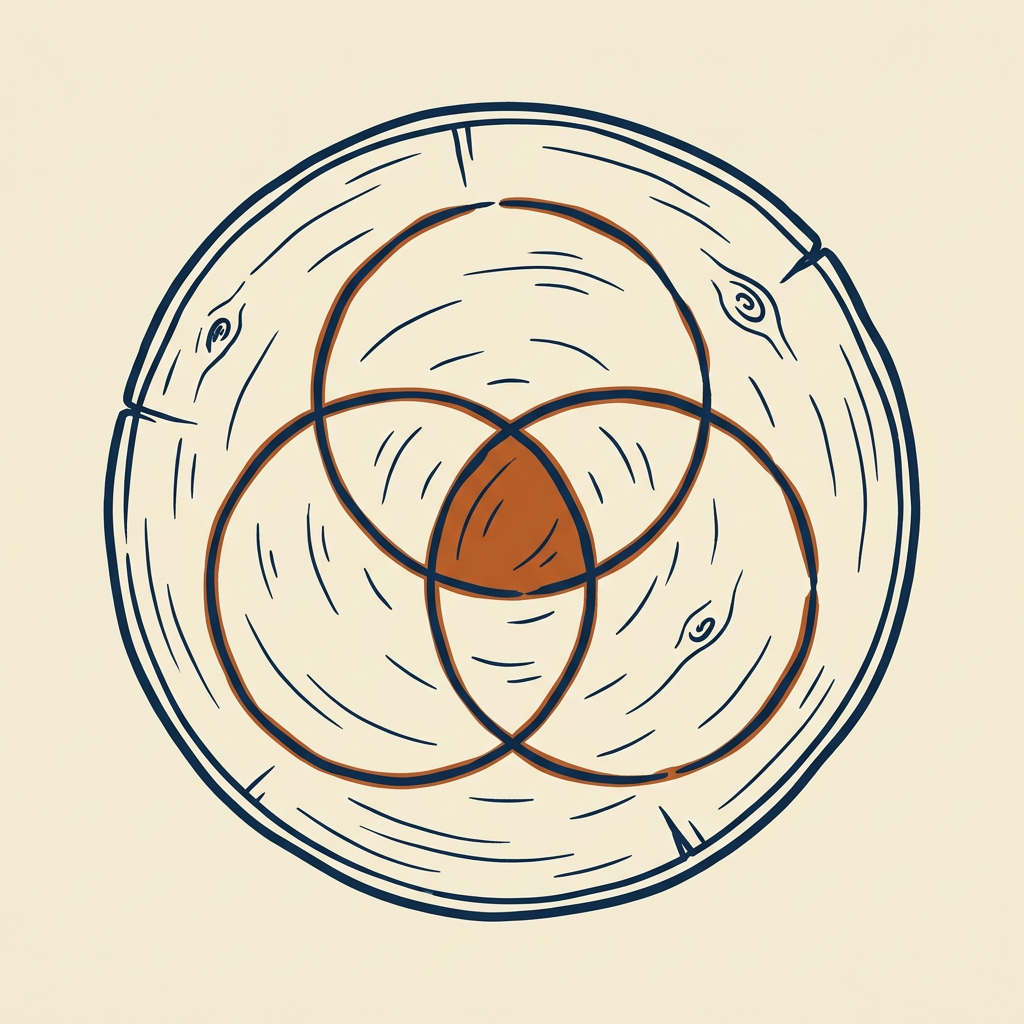
Durable success comes from ruthlessly narrowing to the single overlap of what you can be best in the world at, what drives your economic engine, and what you are deeply passionate about.
Borrowing Isaiah Berlin’s fox-and-hedgehog distinction, Collins argues each winner eventually found one unifying concept at the intersection of three questions rather than spreading into every adjacent market. The economic engine was usually expressed as profit per a specific unit, not raw revenue total.
Arriving at the concept took years of internal argument and iteration, not a single offsite or consultant workshop. Collins is explicit that it is discovered, not invented on a whiteboard.
The idea is powerful in hindsight and somewhat unfalsifiable in advance: it is easy to describe a winner’s focus as its hedgehog after the fact, and harder to prescribe the exact concept for a struggling firm before results appear.
In practice: Walgreens concluded it could be best at convenient, high-traffic drugstores and began measuring profit per customer visit, closing restaurants and airport shops that did not fit; Eckerd kept buying stores without an equivalent filter and eventually was acquired.

5
Culture of discipline
Once disciplined people think inside a clear hedgehog frame, strip bureaucratic rules and hierarchy in favor of freedom and responsibility instead of adding oversight.
Bureaucratic compensation
More rules and layers to offset wrong people and fuzzy focus
Disciplined freedom
Right people, clear hedgehog, autonomy with responsibility
Discipline here is not a tyrant enforcing compliance. It is self-disciplined people taking consistent action inside boundaries set by the hedgehog concept. Bureaucracy, in Collins’s account, mainly compensates for incompetence and lack of discipline; with the right people who understand the concept, layers and rules can come off.
Freedom inside a frame replaces thick policy manuals. People are trusted to act, and the organization says no—repeatedly—to opportunities outside the concept even when they look profitable on paper.
The comparison firms often added controls and programs when performance slipped, which compounded complexity without restoring focus.
In practice: Nucor gave plant managers wide autonomy and paid teams on measurable output with very few corporate layers, while repeatedly refusing diversification outside its minimill, high-volume, thin-margin concept.

6
Technology as accelerator
Technology never by itself causes a leap to greatness; it only accelerates momentum after a hedgehog concept is clear, and can waste resources when it substitutes for one.
Technology as cause
Early adoption and big spend meant to create the leap
Technology as accelerator
Adopt only what serves an already clear hedgehog, then move fast
The good-to-great companies were rarely early adopters for adoption’s sake. They asked whether a given technology directly served the concept they already had, and only then moved quickly—often becoming industry leaders in that narrow application.
Comparison companies more often spent from fear or fad, chasing tools without a tie to their economic engine. Published in 2001 right after the dot-com crash, the book points at internet strategies used as stand-ins for real focus, burning capital with little to show.
The broader claim is intuitively neat and also convenient: technology gets credit when it worked and is dismissed when it did not, without a sharp independent test beforehand.
In practice: Walgreens built an early private satellite network linking stores to a central prescription database so any customer could fill or refill anywhere nationwide—direct reinforcement of its convenience hedgehog—rather than a generic e-commerce splash.
7
Flywheel versus doom loop
Transformations come from years of cumulative unglamorous pushes in one direction; firms that lurch between big new initiatives tend to stall.
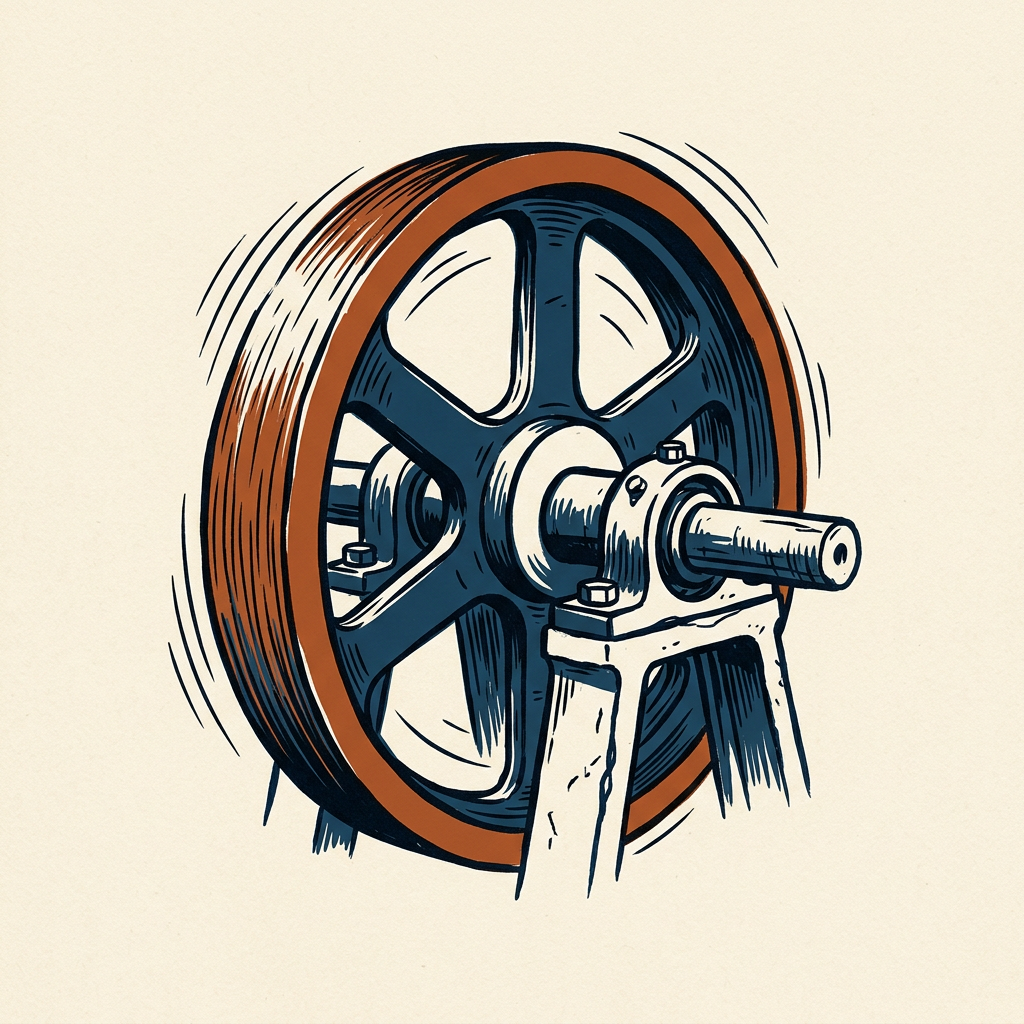
Collins images a massive flywheel that is hard to move at first and then gathers momentum with every consistent push until it seems to turn on its own. When he asked executives at the eleven to name the single moment or program that caused the breakthrough, none could point to one.
The leap emerged from years of Level 5 leadership, disciplined hiring, hard-fact confrontation, and rising hedgehog clarity—often five to ten years—before outsiders saw dramatic results. The average gap between internal transition and visible external results was measured in years, not quarters.
Comparison companies frequently fell into a doom loop: a new CEO arrives with a bold program or acquisition, wins short-term attention, fails to build lasting momentum, is replaced, and the next fad begins.
In practice: Warner-Lambert cycled through diversification pushes and restructurings under successive leaders without settling on one direction long enough to build momentum, while Gillette kept pushing the same core razor-and-blade economics for years.

8
Greatness still needs purpose
Good-to-great practices are necessary but not sufficient; without core values and purpose beyond financial results, even a real leap can erode across generations.
- 1994Built to Last: core ideology + progress in visionary firms
- 2001Good to Great: disciplines that create the performance leap
- 2008–2016Fannie Mae conservatorship, Circuit City liquidation, Wells Fargo scandal
Collins links the book to Built to Last, the 1994 study with Jerry Porras of long-lived visionary companies. That earlier work argued enduring greatness depends on preserving a core ideology while stimulating progress through ambitious goals.
In this framing, the disciplines in Good to Great are the mechanism that gets a company to a level of performance that purpose can then lock in. Defining mission beyond profit is a separate act from the flywheel itself.
Hindsight the 2001 book could not have had underlines the limit: several featured companies later lost their standing, which does not erase the practices during the outperformance window but cautions against treating any framework as a permanent seal.
In practice: Fannie Mae entered federal conservatorship in the 2008 crisis, Circuit City filed bankruptcy and liquidated in 2008–2009, and Wells Fargo was engulfed in a fraudulent-accounts scandal beginning in 2016.
Key terms
- Level 5 leadership The top of Collins’s five-rung hierarchy: personal humility paired with fierce professional will, aimed at the institution rather than the leader’s ego.
- First who, then what Get the right people into key seats—and the wrong people out—before deciding strategy or vision.
- Stockdale Paradox Hold unshakable faith you will prevail while confronting the most brutal facts of your current reality every day.
- Hedgehog concept The single overlap of what you can be best in the world at, what drives your economic engine (often profit per a specific unit), and what you are deeply passionate about.
- Culture of discipline Self-disciplined people acting consistently inside a clear frame, which lets the organization shed bureaucracy rather than add it.
- Technology accelerator A tool that speeds momentum only after the hedgehog concept is clear; not a cause of the leap by itself.
- Flywheel Years of consistent pushes in one direction that slowly build unstoppable momentum, with no single breakthrough moment.
- Doom loop The opposite pattern: new leaders, bold programs, short-term noise, failure to compound, replacement, and another fad.
What to do
- Audit your leadership team for Level 5 traits: who credits others publicly and owns blame privately, versus the reverse.
- Before filling any open role this week, ask whether you are hiring to fit a preset plan or hiring excellent people and shaping the plan with them.
- If someone is clearly wrong for their seat, address it now instead of waiting for the next reorg.
- Set one recurring meeting whose only purpose is surfacing bad news without punishment.
- Test whether your team can state in one sentence the intersection of what you are best at, what drives profit per unit, and what you actually care about—and make that sentence this month’s work if you cannot.
Questions to think with
- Where are we still hiring to a fixed plan instead of getting self-motivated people first and discovering direction with them?
- What brutal fact about our current model are we softening or postponing, and what would full reckoning require?
- Can we name our hedgehog in one sentence—best at, economic engine unit, and passion—or are we still foxing across too many bets?
- Which rules or layers exist mainly to compensate for the wrong people or a fuzzy concept, and what would we remove if both were fixed?
- Are we pushing one flywheel consistently, or cycling through doom-loop programs that reset momentum each time leadership changes?
The other side
Selecting companies by eventual stock outcome and then reading backward for causes is open to survivorship bias and after-the-fact storytelling; Phil Rosenzweig argued success itself colors how sources describe leadership and culture. Level 5 was labeled after the pattern appeared, so humility may be correlation rather than proven cause. The hedgehog concept is easy to assert in hindsight and hard to falsify in advance. Technology is credited when it helped and dismissed when it did not, without a clean prior test. Several of the eleven—Fannie Mae, Circuit City, Wells Fargo—later collapsed or scandalized, so the practices may explain a window of outperformance without guaranteeing lasting greatness. The study is not a controlled experiment; it is a retrospective matched comparison with self-reported and archival color.
Who it's for
Executives and managers trying to move an established but stagnant company toward sustained performance, plus founders and boards choosing what kind of leader and culture to build for the long run. MBA students and researchers who want an evidence-based—if contested—framework for organizational leadership will get the most from the full method and case comparisons.