


Most conflict comes from judgmental language, not bad people
Couples, managers, and parents stuck in the same fights get a four-step way to speak that lowers defensiveness without silence or surrender.
IJR · Oct 13, 2026 · 13 min read
In 60 seconds
- Ordinary habits—moralistic judgment, comparison, denial of responsibility, and demands—are a hidden form of violence that triggers defense even without shouting.
- Four sequential moves replace verdicts: observe without evaluating, name the feeling, trace it to a need, and make a concrete request the other person can refuse.
- Most adults cannot name true feelings and smuggle judgments in as feelings, which keeps arguments circular.
- Conflicts that look irreconcilable are usually competing strategies for shared human needs, not clashing needs.
- A request only counts as nonviolent if a genuine no is acceptable; otherwise it is a demand in polite clothes.
- Hearing blame as an unmet need, rather than defending or counterattacking, defuses hostility more reliably than apology or argument.
The big idea
Rosenberg argues that most conflict and cruelty stem not from bad character but from a language of judgment, comparison, and coercion people absorb without noticing. A four-step practice—observation, feeling, need, and a genuinely optional request—makes needs visible and turns fights into problem-solving.
The book in brief
Rosenberg starts from a blunt diagnosis: everyday speech built on moralistic labels, comparisons, denial of responsibility, and demands is itself a form of violence. It treats people as objects to correct and invites defense of identity rather than attention to what happened. He traces this life-alienating style to older hierarchical cultures of obedience and shows how it still shapes ordinary talk long after formal hierarchies softened.
He then offers a replacement discipline of attention rather than a script. Speakers learn to separate clean observation from evaluation, name the internal feeling the observation stirs, connect that feeling to an underlying need, and end with a specific, doable request. The structure is slower than blurting a judgment and feels like learning a foreign language, but it moves the conversation from character verdicts to unmet needs.
The middle of the book deepens two pieces most people skip. Feelings must be real internal states, not thoughts about the other person dressed up as feelings. Needs are treated as shared and universal while the strategies for meeting them are not; once the shared need is named, new strategies appear that positional bargaining had locked out. Requests are then tested by whether a no is truly acceptable; if not, the method collapses back into coercion.
Rosenberg next turns the method outward and inward. Listening means silently translating another person’s blame into the need underneath it before defending or counterattacking. Anger and guilt are treated as signals produced by judgmental thinking, not as the needs themselves, so the same four-part discipline applies to one’s own monologue. Later chapters show the same structure used in workplaces, schools, and large-scale mediation, while remaining candid that groups need more time, trust, and often a facilitator.
The book lands on a practical claim rather than a proof: separating observation from judgment and asking what need sits under a demand is a usable habit even if the larger theory of universal needs is incomplete.
Context
Marshall B. Rosenberg published the book in 1999 as a practitioner’s method drawn from workshops and mediation. It mattered because it gave therapists, mediators, teachers, and ordinary couples a repeatable way to de-escalate conflict, and it was later used in prisons, schools, and international peace work.
The key ideas

1
The language that wounds
Moralistic judgment, comparison, denial of responsibility, and demands are life-alienating speech that treats people as objects and provokes defensiveness even without intended harm.
Life-alienating move
Label the person (lazy, selfish, disruptive) or hide choice behind “I had to”
What it costs
The other hears an indictment of character and defends identity instead of the unmet need
Rosenberg opens by calling ordinary frustrated speech a kind of violence. Moralistic judgments label someone lazy or selfish instead of describing behavior. Comparisons rank one person against another. Denial of responsibility hides choice behind “I had to.” Demands frame asks so refusal brings punishment.
Each move turns the other person into something to be corrected rather than a subject with reasons. Hierarchical cultures built language to enforce compliance from kings, slaveholders, and strict parents; that language survived into everyday talk after the formal hierarchies softened.
The payoff of this chapter is diagnostic. Once readers can hear judgment-language in their own mouths, the rest of the method has something concrete to replace. Without that recognition, conflict stays misdiagnosed as bad character rather than bad wording.
In practice: A teacher says “you’re being disruptive,” which invites the student to defend identity; saying “when you talk while I’m talking, I feel frustrated because I want everyone to hear the instructions” describes an effect and leaves room for a response.

2
Four steps instead of judgment
Observation, feeling, need, and request—in that order—move a fight from a verdict on character to a description of an unmet need that invites problem-solving.
Rosenberg’s replacement structure is a discipline of attention, not a rote script. First observe without evaluation-words such as always or never. Then name the feeling the observation stirs. Next identify the need behind the feeling. Finally make a specific request.
The sequence matters because a character verdict invites defense or counterattack, while an unmet need invites joint solving. Skipping feeling and need and jumping straight to a request produces demands that sound like the method but still coerce.
Fluency comes only with practice; Rosenberg compares it to learning a foreign language most people were never taught as children. The four steps stay nonviolent only if the listener remains free to say no without punishment—a test developed fully later.
In practice: Instead of a father saying “you’re a slob,” he separates: “When I see three days of dishes in your room, I feel irritated because I need order in shared spaces to relax; would you be willing to bring the dishes down tonight?”
3
Feelings are data, not weapons
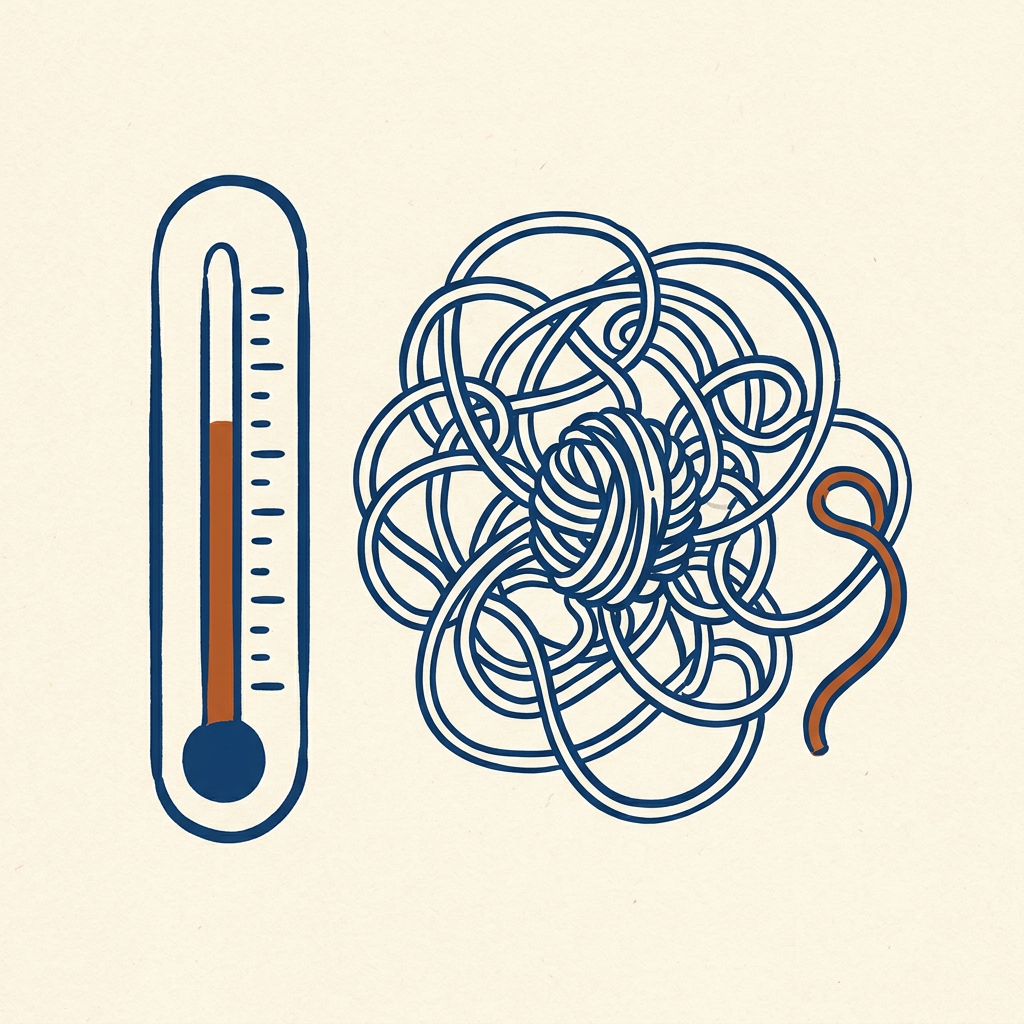
Most people cannot accurately name feelings and default to thoughts disguised as feelings, which keeps arguments circular more than any pure clash of interest.
Thought as “feeling”
“I feel like you don’t care” or “I feel disrespected”—smuggled accusation
Actual feeling
Hurt, anxious, embarrassed, discouraged—internal state tied to a need
Rosenberg found adult feeling vocabulary strikingly thin, especially among people raised on stoicism or pure intellectual argument. “I feel like you’re not listening” is a judgment about the other person, not a feeling. True feeling words name internal states: hurt, discouraged, relieved, energized.
He supplies long lists of feeling words because workshop participants often froze and defaulted to fine or stressed—catch-alls that hide useful information. Once a feeling is named accurately and without blame, it becomes data the other person can act on rather than a charge to defend against.
The single most common technical error he observed in decades of mediation was conflating feelings with thoughts about how others treat us. Naming the actual feeling and the need under it opens a different conversation than the accusatory version.
In practice: An employee who says “I feel disrespected” is offering an interpretation; naming anxious or embarrassed plus a need for consideration or inclusion does not require the other party to admit to disrespecting anyone.

4
Needs universal, strategies not
Apparently irreconcilable conflicts are usually clashes between strategies for meeting needs both sides share; separating need from strategy dissolves much of the fight.
This is the book’s conceptual core. Rosenberg holds that humans share basic needs—safety, autonomy, connection, meaning, rest, honesty, play—and that conflict arises from clashing strategies, not clashing needs.
Once the shared need is spoken aloud, strategies neither party had proposed become visible because the argument had been trapped at the level of competing solutions. He extends the same move to mediation among rival gangs and in the Middle East: naming security, dignity, or recognition behind a demand revealed common ground positional bargaining had obscured.
The technique still requires self-connection first. A person cannot accurately hear another’s needs while unaware of or ashamed of their own. Even if the universality claim is debated, asking what need a demand tries to meet routinely produces more movement than arguing the demand itself.
In practice: Two colleagues fighting over morning versus afternoon meetings may both need focus and efficiency; the clock time is only one strategy among many once that need is named.

5
Requests, not demands
A request counts as nonviolent only if the asker’s willingness to accept a no is real; otherwise polite grammar still functions as a demand.
Demand in disguise
Polite question followed by punishment, guilt, or withdrawal if refused
True request
Concrete, present, doable ask; a no is genuinely acceptable
The difference between request and demand is not wording but what happens after refusal. Punishment, guilt-tripping, or withdrawal after a no reveals the ask was a demand all along.
True requests are concrete and doable in the present. “Please be more considerate” is not actionable. Rosenberg also separates behavior-change requests from connection requests—asking someone to reflect back what they heard or say how they feel about what was shared—which he treats as essential when emotions run high, because people often cannot act until they feel heard.
The entire four-step method collapses back into coercion at the last step if the requester has not examined their own willingness to accept no. That willingness, not the formula, is the real test of nonviolence.
In practice: A wife’s repeated ask that her husband “communicate more” failed until reframed as “would you be willing to tell me one thing about your day before we eat dinner?”

6
Hearing blame as need
Silently translating another’s anger or criticism into their unmet need, then reflecting that guess, defuses hostility more reliably than self-blame, counterattack, or bare apology.
After teaching expression, Rosenberg turns to the harder half: receiving hostility without submitting or retaliating. When someone says “you never help around here,” the words are a poor translation of pain and unmet need.
He lists four possible responses: blame yourself, blame them back, empathize with your own feelings, or empathize with their feelings and needs. Only the last reliably de-escalates because it addresses what the outburst was trying to communicate.
Practically this means reformulating the attack as a need and checking it—“are you feeling overwhelmed and wanting more help with the house?”—rather than listing evidence of help already given. The listener can still disagree with facts or decline the implied request, but only after genuinely hearing the need. The move rests on the earlier claim that anger is secondary to unmet need, and it places a heavy composure burden on the person being attacked.
In practice: Rosenberg describes facing an armed man during a workshop; naming the man’s fear and need for respect rather than arguing his claims dissolved the confrontation within minutes.

7
Anger and guilt unpacked
Anger and guilt are signals produced by judgmental thinking layered on unmet needs; unpacking the judgment reveals the need being protected.
Anger, Rosenberg argues, is never the need itself. It is always a judgmental thought about someone else stacked on top of an unmet need. When angry he recommends an internal sequence: stop, identify the judgmental thought, connect to the need underneath, then express the need rather than the judgment.
Guilt gets parallel treatment. It arises when people violate their own values but frame the violation as a character flaw instead of an unmet need in themselves or someone else. Chronic guilt often signals confusion between what one “should” do and what one authentically wants in order to meet a need.
He warns against using guilt to motivate others, because compliance won that way is resentful rather than willing. The same discipline of separating observation, feeling, and need therefore applies to internal monologue; without that self-application the interpersonal technique stays performative.
In practice: A driver cuts you off; the thought “what a reckless idiot” produces the anger, while the need underneath is likely safety—and “I need to feel safe on the road” yields a different outcome than yelling the judgment.

8
The method at larger scale
The same four-step structure scales from intimate relationships to workplaces, schools, and political conflict, though power imbalances and low trust change what success looks like.
- DyadCouple or parent-child using the four steps directly
- Workplace or classroomBehavior, team or learning need, specific request instead of labels or punishment
- Intergroup conflictFacilitated need-naming across hostile groups when trust is low
In later chapters Rosenberg carries NVC into organizations, classrooms, and ethnically divided or war-affected communities. The underlying mechanics—needs versus strategies—do not change; context does.
In organizations he reframes performance talk: observed behavior, effect on team needs such as predictability, and a specific request, which he argues yields less defensive employees than formal disciplinary labels. In schools he replaces punishment-based discipline with need-identification, on the premise that a disruptive student is usually protecting autonomy, respect, or engagement that punishment worsens.
At larger scale he trained local mediators to help hostile groups articulate needs rather than positions so shared human needs could surface under political and ethnic identities. He is candid that groups require a slower process and, when trust is very low, a trained facilitator. The chapter functions as proof of concept for generality, not as controlled evidence.
In practice: A manager replaces “you are unreliable” with the observed missed deadlines, the team’s need for predictability, and one clear request, aiming for durable change without character attack.
Key terms
- Life-alienating communication Ordinary speech built on moralistic judgment, comparison, denial of responsibility, and demands that treats people as objects to correct.
- Observation A concrete description of behavior free of evaluation words such as always, never, or character labels.
- Feeling An internal state word (hurt, relieved, anxious) rather than a thought or accusation about someone else.
- Need A shared human requirement—safety, autonomy, connection, meaning, rest, honesty, play—distinct from any one strategy for meeting it.
- Request A specific, present, doable ask that remains nonviolent only if a genuine no is acceptable.
- Demand An ask backed by punishment, guilt, or withdrawal when refused, even if the grammar sounds polite.
- Connection request An ask for reflection or feeling response so the other person feels heard before any behavior change is sought.
- Jackal and giraffe Workshop labels Rosenberg used for judgmental speech versus need-based speech; some readers find them stilted in ordinary talk.
What to do
- Before raising a complaint, write the observable behavior with no adjectives, the feeling, the need, and one concrete refusable request—then say only those four things in order.
- When someone criticizes you sharply, wait ten seconds without defending; guess the need they might be protecting and reflect that guess back as a question.
- Before any ask of a colleague or family member, check whether you would accept a no without punishing; if not, name it as a demand instead of dressing it up.
- When anger hits, stop and name the judgmental thought first, then the need underneath, before speaking outward.
- Replace one vague appeal (“be more considerate,” “communicate more”) with a single doable present-tense request this week.
Questions to think with
- When I last said “I feel like…,” was I naming a feeling or smuggling in a judgment about someone else?
- What need is my side of a recurring argument actually trying to protect, and what other strategies might meet it?
- If the person I am about to ask said no, would I respond with punishment, guilt, or withdrawal?
- In the last sharp criticism I received, what unmet need might have been underneath the blame?
- Where in my day do I still use life-alienating habits—labels, comparisons, or “I had to”—without noticing?
The other side
The book rests on an untested claim that needs are universal and that most conflict reduces to competing strategies; that fits safety or food better than autonomy or self-expression, which critics tie to a Western post-1960s humanistic tradition. A framework built on naming individual feelings can land poorly—or cause harm—in cultures organized around hierarchy, indirectness, or collective face-saving. Support is almost entirely anecdotal from Rosenberg’s workshops and mediations, with later academic results thin and mixed. Empathic listening under attack also assumes the listener has enough safety and regulation to stay calm, which can become risky or subtly victim-blaming under intimidation, abuse, or steep power imbalance, and the method has little to say about structural conflicts such as unequal pay or discrimination that are not miscommunication. Some readers also find the prescribed giraffe-and-jackal vocabulary artificial in ordinary speech.
Who it's for
Couples trapped in the same argument, managers and mediators who need a repeatable de-escalation method at work, and parents or teachers who want to set limits without threats or shame will get the most from practicing the full four-step discipline.