


Extraordinary skill is built by deliberate practice, not talent
Ericsson shows that top performance comes from years of targeted, feedback-rich practice that rebuilds the brain and body, not from fixed natural gifts.
IJR · Oct 12, 2026 · 13 min read

In 60 seconds
- Innate talent explains far less of expert skill than people think; most so-called gifts are the residue of accumulated practice that reshapes the brain.
- Experts outperform others because they build rich mental representations that let them see patterns and anticipate problems novices miss.
- Ordinary repetition stops improving skill at a comfortable plateau; only purposeful practice with specific goals and feedback forces further adaptation.
- Deliberate practice targets weaknesses just beyond current ability with immediate feedback and full concentration, and it is rare because it is hard.
- The 10,000-hour rule was a misreading of one violin study; Ericsson rejects any fixed hour threshold that guarantees expertise.
- The same design principles can be approximated without a coach and in messy fields like business and medicine, though progress is slower and less even.
The big idea
Ericsson and Pool argue that extraordinary skill is not a mysterious gift but the product of deliberate practice: effortful, feedback-driven work that targets weaknesses just past current ability and builds refined mental representations over years. Ordinary experience plateaus because it stops forcing the brain and body to adapt; only that specific kind of structured demand produces abilities that look like magic.
The book in brief
The book starts from a widespread mistake: the belief that extraordinary performers are born with gifts the rest of us lack. That story, Ericsson argues, is mostly false for the skills people care about, and it actively steers people away from the long effort that actually produces mastery. The useful question is not who has talent but what kind of practice builds which abilities, because the brain and body stay changeable across almost the whole lifespan when the demand is right.
From there the argument turns to mechanism. What separates experts from everyone else is not raw speed or general memory but highly detailed internal models of their domain. Practice works when it constructs and sharpens those models so perception and judgment become more precise and more automatic. Thin models keep people stuck; rich ones let them see what outsiders cannot.
Next comes the distinction that explains why decades of experience so often fail to produce excellence. Naive practice—simple repetition—stops forcing adaptation once a skill feels comfortable. Purposeful practice breaks that plateau with clear targets, concentration, and feedback. Deliberate practice is the stricter form of the same idea: coach-designed work at the edge of ability, with immediate correction, in fields that already have clear standards and methods. It is rare precisely because it is uncomfortable, and popular hour-count formulas miss the qualitative core.
The second half of the book extends the method into harder conditions. People without formal coaches can still approximate the principles by inventing feedback loops and deliberately seeking harder problems, though they will usually advance more slowly. Motivation is treated as something to design—routines, short sessions, community, and early experiences that feel rewarding—rather than a mysterious inner trait. The same lens is applied to children, where early apparent giftedness often turns out to be earlier or more intense exposure, and to organizations, which typically train with the wrong kind of practice and need metrics, simulations, and graduated benchmarks if they want real expertise.
The book lands on a practical claim. Expertise is constructed through a specific kind of effortful, feedback-rich work. The cleanest evidence comes from music, chess, and sports, but the design goals—specific targets, tight feedback, practice just past current ability—remain the right ones even in messier domains where perfect conditions do not exist.
Context
Anders Ericsson spent decades as a psychologist studying elite performers. Written with science writer Robert Pool, Peak pushed back on popular talent myths and on the oversimplified 10,000-hour rule that had been traced to Ericsson’s own earlier work. It offered managers, athletes, musicians, and students a concrete alternative: ability as something constructed through a specific kind of practice rather than something merely revealed.
The key ideas

1
Talent is mostly practice residue
Innate talent explains far less of expert performance than people assume, and the myth of natural gifts actively discourages the sustained effort that produces mastery.
Talent myth
Top performers are born different; gifts are fixed
Practice view
Most observed skill differences are residue of accumulated work
Ericsson opens by dismantling the belief that top performers are simply born different. For the vast majority of skills people call talents, the differences we observe are the visible residue of accumulated practice, not a hidden gift that practice merely reveals. Genetics can matter at extremes such as height for basketball, but that is not the story for most abilities.
He reframes the question people ask about expertise. Instead of asking who has talent, we should ask what kind of practice produces which specific abilities. The brain and body remain adaptable across almost the entire lifespan when the right kind of demand is applied.
If talent were mostly innate, training programs would function as filters for finding the already-gifted. If it is mostly built, those programs should function as engines for construction. The rest of the book builds the case for the second view.
This shift matters because the talent myth does more than misdescribe reality; it stops people from starting the long work that actually changes what they can do.
In practice: Absolute pitch, once treated as a fixed genetic trait, could be taught to ordinary children through early structured training. London taxi drivers who spent years memorizing the city’s streets showed measurable growth in the hippocampus proportional to years on the job, growth that was not present before training.
2
Mental models power expertise
Expert performance runs on highly detailed mental representations of a domain; building those models, not raw repetition, is the real mechanism of improvement.
Real game layout
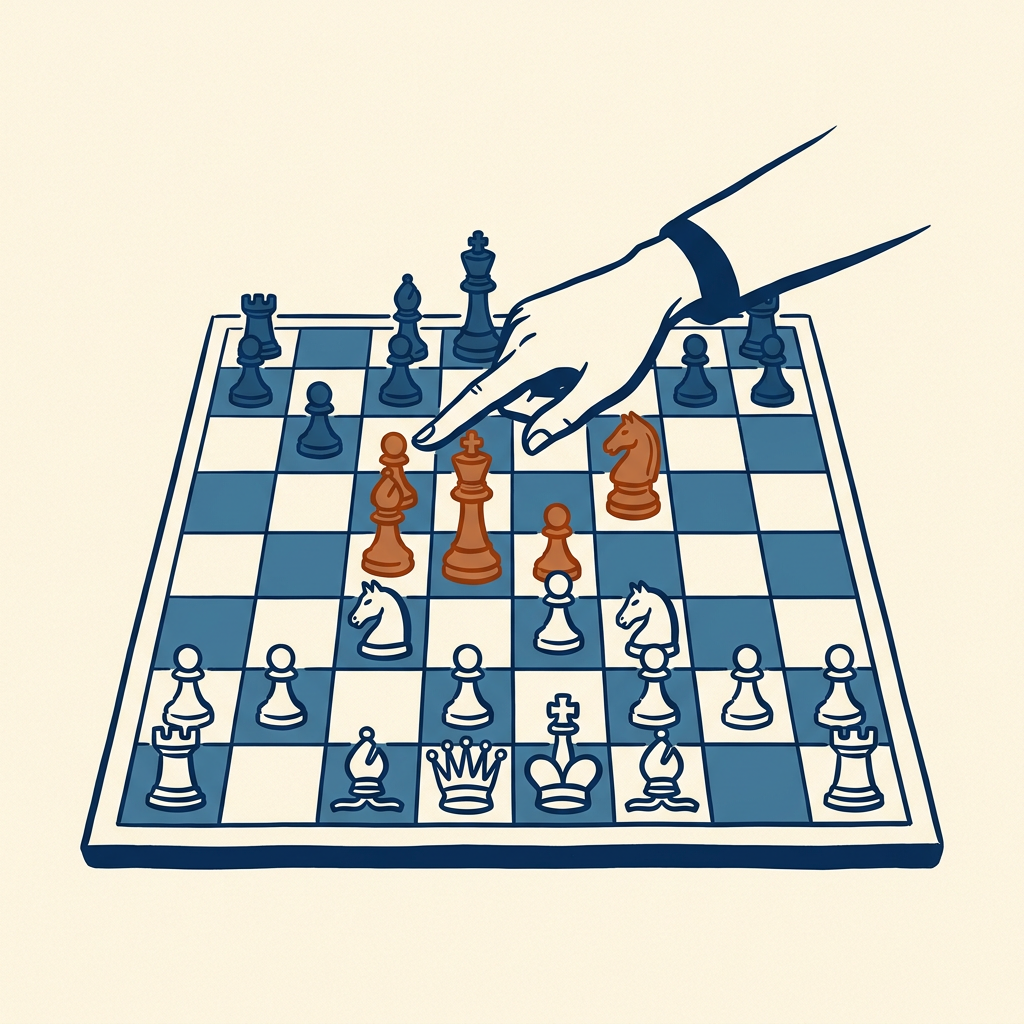
Experts reconstruct the board after a brief look
Random pieces
Expert memory advantage vanishes
Building on the idea that ability is constructed, Ericsson introduces mental representations: internal models that let an expert perceive, plan, and respond far faster and more accurately than a novice. A chess grandmaster does not calculate every possible move; they recognize meaningful patterns built from thousands of studied games. A surgeon anticipates complications before they fully emerge because years of practice have built the same kind of model.
Research on chess players’ memory for board positions showed that experts could reconstruct a mid-game position after a brief glance, but only when the pieces were arranged in a way consistent with real play. When pieces were placed randomly, the experts’ advantage disappeared. Their memory was not generally superior; it was built on structured domain knowledge.
Weak performers have vague, thin representations. Experts have rich, specific ones that let them see distinctions invisible to outsiders—a wine expert catching subtle flavor notes, a radiologist spotting a tumor a lay eye would miss on the same scan.
Every later chapter on deliberate practice is really describing methods for building better representations faster than casual experience would allow.
In practice: Chess experts rebuilt real mid-game positions after a glance yet lost their edge when the same pieces were scattered at random, proving the skill lived in domain structure rather than raw memory.

3
Comfortable repetition stops working
Simply repeating an activity does not improve skill once a comfortable plateau is reached, because the brain stops adapting without a specific reason to change.
Naive practice
Repeat the same comfortable work for years
Purposeful practice
Specific target just past ability, focused attention, tight feedback
Ericsson draws a sharp line between naive practice and purposeful practice. Naive practice is just doing the thing again. Purposeful practice has specific measurable goals, requires focused attention, and includes feedback.
People who have typed or driven for decades are often no better than those with a fraction of the experience. Once a skill becomes automatic and comfortable, there is no pressure on the brain or body to keep adapting. Experience alone plateaus quickly.
Studies of medical doctors showed that years since graduation correlated weakly or even negatively with certain measures of diagnostic accuracy. Many practitioners stop updating their skills once they reach a functional baseline.
Purposeful practice breaks the plateau by setting a target just beyond current ability and tracking performance closely enough to notice small deviations. It is inherently uncomfortable, and that discomfort is the point: operating outside the comfort zone is what forces the nervous system to adapt.
In practice: Typists and drivers with decades of experience often perform no better than people with far less time on the task, because comfort removed the pressure to improve.

4
Deliberate practice has strict rules
True expertise requires deliberate practice—a regimen of expert-designed exercises, immediate feedback, and constant work at the edge of ability—and this form is rare because it is effortful and often unpleasant.
Deliberate practice is Ericsson’s central technical term, and he defines it narrowly. It applies most cleanly in fields with well-established training methods, objective standards, and expert teachers—music, chess, many sports.
The necessary features are clear: it targets specific weaknesses identified by a coach, operates just beyond current ability, includes immediate and specific feedback, and demands full concentration rather than passive repetition. Fields that lack these structures, such as many business or creative professions, make rapid improvement much harder to engineer because feedback is delayed, ambiguous, or missing.
The famous study of violin students at Berlin’s Hochschule der Künste found that the best performers had accumulated significantly more solitary practice hours by age twenty than the merely good ones. Hours of high-quality solitary practice, not overall musical exposure, predicted skill level. That study became the seed of the popularized 10,000-hour rule, a figure Ericsson explicitly disowns as an oversimplification. The actual data showed variation among top performers and said nothing about a fixed threshold that guarantees expertise.
Quantity without the qualitative features does not work. The number was never a universal formula, only an average observed in one narrow context.
In practice: The best Berlin violin students had logged far more high-quality solitary practice by age twenty than good but not great peers; overall musical exposure did not predict the same gap.

5
Approximate the method alone
People in fields without established coaching can still improve dramatically by borrowing deliberate practice principles through self-monitoring and creative benchmarking.
Most professions lack a violin teacher’s clear syllabus. Ericsson turns to how people can approximate the same principles without a formal coach: purposeful self-testing, seeking harder problems on purpose, and creating artificial feedback loops when natural ones are slow or missing.
The key principle is simple. Improvement requires a target just past current capability and a way to know objectively whether that target was met. Without both pieces, effort circles in place rather than building new capacity.
Amateur athletes and businesspeople can use video of their own performance to spot flaws invisible in the moment, a substitute for a coach’s outside eye. The same logic applies wherever scoreboards do not already exist.
This chapter extends the argument into the messier reality most readers live in. Ericsson is honest that watered-down deliberate practice without expert-designed exercises is less efficient than the real thing; self-directed learners typically progress more slowly and unevenly than those with structured systems and qualified coaches.
In practice: Benjamin Franklin improved his writing by taking essays he admired, rewriting them from memory, then comparing his version to the original to find gaps in vocabulary and structure—creating a feedback loop where none existed.

6
Motivation is a design problem
Sustained improvement depends less on bursts of willpower and more on structuring practice and life so the discomfort of pushing past a plateau feels worthwhile and repeatable over years.
Ericsson addresses why so few people who understand the theory actually sustain deliberate practice long enough to reach elite levels. Motivation should be treated as a resource to manage and protect, not a fixed trait some people have and others lack.
Concrete tactics include building practice into a stable daily routine so it does not compete with willpower each time, setting sessions at a length matched to realistic attention spans—rarely more than about an hour before a break even among top performers—and surrounding oneself with community, mentors, or rivals that reinforce continued effort.
Research on top performers across domains shows that many describe early stages of training as more play-like or socially rewarding. The grinding, effortful phase intensifies only after a person has already built some identity and commitment around the skill. Sequencing matters: extreme deliberate practice thrown at a total beginner is more likely to produce dropout than mastery.
Encouraging mentors and family support appear repeatedly in biographical studies of chess champions and musicians. Grit, in this framing, is largely an outcome of good environmental design. Reduce the friction and cost of practicing consistently, and the appearance of extraordinary willpower turns out to be, in large part, a product of circumstances that made consistency easier to sustain.
In practice: Even top performers rarely sustain full concentration beyond about an hour without a break; sessions matched to that limit protect the resource instead of draining it.

7
Childhood talent is often exposure
Early apparent talent in children is often a byproduct of earlier or more intensive exposure rather than a fixed innate ceiling.
- Before age fourIntensive training begins under a skilled parent-teacher
- Early childhoodYears of structured practice most peers never get
- Later reputationEarly works misread as pure innate genius
Ericsson applies the framework directly to child development, where talk of natural gifts is especially common. What looks like early giftedness is frequently explained by unusually early or unusually intense practice, sometimes disguised as play, that accumulates a head start before other children even begin formal training.
This does not mean all children are equally suited to all pursuits. Body type for certain sports can set real constraints. But the constraints are far narrower than popular belief suggests.
Identifying talent by watching for early natural ability may actually be identifying early exposure. That can lead schools and parents to under-invest in children who started later but could develop equally strong skills given comparable training.
The practical recommendation is to treat early performance gaps with caution and focus instead on access to good instruction and sustained engagement. Those are the levers that determine how far a child’s skill can go, far more reliably than early signs read as fixed aptitude.
In practice: Mozart’s father was an accomplished music teacher who began intensive training before age four; the early compositions were the product of years of structured instruction most children never receive, not evidence of a magical gift untouched by practice.
8
Workplaces need practice engines
Businesses that want expertise must redesign training around specific, feedback-rich practice tasks rather than relying on general experience or one-off seminars.
Tenure model
Watch seniors, accumulate years, assume skill follows
Simulation model
Narrow sub-skills, metrics, immediate feedback, safe failure
Most corporate training fails because it mimics naive practice: generic seminars, occasional feedback, and reliance on years of job tenure as a proxy for skill. Ericsson extends the framework into workplaces with a clear design claim.
Organizations serious about building expertise need to create the missing infrastructure—clear performance metrics, faster feedback cycles, and simulated environments where employees can fail safely and repeatedly on narrow sub-skills. Some companies have built internal certification systems with graduated skill benchmarks, forcing employees to demonstrate mastery of narrowly defined sub-skills before advancing.
The chapter is candid about the difficulty. In fields like management or strategy, success criteria are ambiguous, feedback loops can take years, and no consensus training method exists the way it does for violin. The translation from music and chess is imperfect.
Still, Ericsson argues the core principles remain the right design goals even where perfect implementation is impossible: specific targets, tight feedback, and practice just beyond current ability.
In practice: Surgical training programs that switched to simulation-based deliberate practice with detailed metrics and immediate feedback produced measurable gains in technical skills such as laparoscopic procedures, outperforming traditional apprenticeship models built on watching seniors and logging years.
Key terms
- Deliberate practice Effortful training that targets specific weaknesses just beyond current ability, with immediate feedback and full concentration, usually guided by a teacher in a field with clear standards
- Mental representations Detailed internal models of a domain that let experts perceive patterns, anticipate problems, and act faster and more accurately than novices
- Naive practice Simple repetition of an activity without specific goals or feedback; it quickly plateaus once the skill feels comfortable
- Purposeful practice Practice with clear measurable goals, focused attention, and feedback that pushes past the current comfort zone
- 10,000-hour rule A popular oversimplification of one violin study; Ericsson rejects it as a universal threshold guaranteeing expertise
- Plateau The point at which further ordinary experience stops producing improvement because the brain and body are no longer forced to adapt
- Feedback loop A system that tells you quickly and objectively whether you met a practice target so you can correct course
- Solitary practice Focused alone work on specific skills; in the violin study it predicted top performance better than overall musical exposure
What to do
- Pick one skill and isolate a single sub-component of it to improve this week
- Create or find a source of fast objective feedback on that sub-component—a coach, recording, mentor, or measurable benchmark
- Schedule short focused sessions no longer than an hour that push slightly past your current comfort level
- After each session check whether you made an error, noticed it, and corrected it instead of logging hours for their own sake
- If your field has no established training method, borrow the closest proxy the way Franklin rewrote model essays
Questions to think with
- Which skills have you been repeating comfortably for years without a specific target or feedback?
- What would a richer mental representation look like in the domain you care about most?
- Where can you get faster, more objective feedback on one narrow sub-skill this week?
- Are early performance gaps in children around you being read as fixed talent or as differences in exposure?
- What missing infrastructure—metrics, simulations, graduated benchmarks—would make deliberate practice possible in your workplace?
The other side
The book’s most cited weakness is its treatment of the relationship between deliberate practice and genetics. A 2014 meta-analysis by Brooke Macnamara and colleagues found that deliberate practice explained only about a quarter of the variance in performance in games and sports, and considerably less in some other fields, leaving substantial room for other factors including genetic differences in working memory, muscle fiber composition, and possibly innate aptitude. Ericsson’s famous violin study involved a small sample at a single conservatory and measured only self-reported practice hours, which are notoriously unreliable and were never independently verified. The book leans heavily on music, chess, and sports—domains with unusually clean feedback loops—and is honest but perhaps insufficiently cautious about how much weaker the evidence becomes once applied to management, creative writing, or entrepreneurship. Critics also note selection effects: people who continue practicing for a decade are not a random sample, since early success and enjoyment likely predict who sticks around long enough to accumulate serious hours. The book largely sidesteps what happens to people who put in years of well-structured deliberate practice and still plateau below expert level, and in making its case against talent it occasionally states the anti-genetic position more forcefully than the cited studies support.
Who it's for
Managers who want training that builds skill instead of filtering for talent, performers stuck on plateaus who need a method rather than more hours, and anyone drawn to the 10,000-hour claim who wants the research rather than the slogan.