


Irrational choices follow patterns you can measure and redesign
Ariely shows people do not maximize self-interest like classical economics assumes; they repeat the same measurable mistakes—anchoring, free-lure, ownership inflation, and expectation effects—that others can predict and design around.
IJR · Oct 12, 2026 · 13 min read

In 60 seconds
- People judge value only by easy comparisons, so a decoy nobody picks can still steer them to the higher-priced option.
- Arbitrary anchors such as Social Security digits make students bid 60 to 120 percent more for the same wine and keyboards.
- Free is its own category: dropping a Kiss to free and a truffle to 14 cents flips most people to the worse deal.
- A small payment can wreck a favor by shifting social norms into market norms, and the social frame rarely returns once money appears.
- Calm people badly forecast their aroused selves, sometimes roughly doubling willingness for riskier choices they reject when cold.
- Ownership, even by lottery, can push asking prices to roughly fourteen times what non-owners will bid for the identical ticket.
The big idea
Ariely argues that departures from rational self-interest are not random noise but consistent, studyable patterns—relativity, anchoring, zero-price excitement, norm collisions, hot-state blind spots, endowment, option-hoarding, and expectation. Because the errors are systematic, marketers can exploit them and individuals can build structures that protect future selves from present impulses.
The book in brief
Ariely starts from a basic failure: people cannot price things in isolation. They lean on whatever comparisons sit nearby, so the menu of options can matter more than the options’ real worth. From that opening he shows the first number someone meets—even a meaningless one—becomes an anchor that quietly sets later willingness to pay.
He then isolates free as a special trigger that overrides ordinary trade-offs, and the clash between social and market norms, where introducing money can destroy goodwill that favors alone would have sustained. Emotional and physical arousal create another blind spot: the calm self cannot accurately forecast what the aroused self will accept or risk.
Present bias and weak self-control come next. People know they procrastinate yet still under-constrain themselves; external structures beat both willpower and self-set rules. Ownership and the urge to keep every door open both inflate value through loss aversion, even when the owned item or leftover option is objectively weak.
Expectation and price close the arc. Advance beliefs do not sit on top of experience—they help create the taste, the pain relief, and the mental performance. The through-line is simple: these quirks are predictable. Once you see the pattern you can design around it, or be designed by it.
Context
Dan Ariely draws on his own behavioral-economics experiments to challenge the classical claim that people act as rational agents maximizing self-interest. The 2008 book mattered because it popularized the field for a general audience, showing that irrationality follows systematic patterns businesses, policymakers, and individuals can anticipate, exploit, or guard against.
The key ideas

1
Relativity steers the choice
Ariely finds people cannot judge value in absolute terms, so the comparison set—including a decoy nobody wants—shapes the decision more than the options themselves.
With decoy
Print-plus-web at $125 looks like a steal beside the unwanted print-only option
Without decoy
Most switch to the cheaper web-only plan
Value almost never arrives alone. People reach for whatever is easy to compare and sidestep what is hard to compare. That habit lets a third option rewrite which of the remaining two wins.
Sellers use the same lever. A real-estate agent shows a slightly worse house at a similar price so the target suddenly looks superior. Catalogs plant one deliberately overpriced item that few will buy yet that makes everything else feel reasonable.
The engine runs past money. Salaries, happiness, and possessions get scored against neighbors, coworkers, or past selves. A raise that would once have delighted can sting once a colleague received more.
Because the comparisons feel automatic, whoever controls the menu can steer buyers toward higher-margin goods without lying about quality. The irrationality is comparative logic that can be mapped and designed around.
In practice: An Economist ad listed web-only at $59, print-only at $125, and print-plus-web at $125; the useless print-only option pulled most readers to the bundle, and removing it flipped most people to the cheaper web plan.
2
Arbitrary anchors stick
Ariely shows prices treated as fair often begin as random anchors, then persist and shape later willingness to pay through coherent arbitrariness.
60–120%
higher bids after higher Social Security digits
An arbitrary number, once noticed, becomes a reference point. Later judgments adjust from it rather than starting from scratch, even when everyone knows the number was meaningless.
Markets inherit the same quirk. Diamond rings and everyday coffee prices often trace back to marketing campaigns or seller choices, not pure scarcity. Once consumers accept the first figure, it becomes the baseline for every future comparison.
Companies can therefore shift what counts as fair simply by controlling the first number a customer meets—suggested retail, opening discount, or ad reference. A new coffee experience can disconnect buyers from their old diner-coffee anchor entirely.
Anchors do not only rank two similar options; they rewrite the baseline sense of worth itself. The adjustment process is stubborn long after the original number should have been discarded.
In practice: Duke MBA students wrote the last two digits of their Social Security number then bid on wine and keyboards; those with higher digits bid 60 to 120 percent more.

3
Free is a different category
Ariely finds free is not merely the lowest price but a distinct psychological trigger that can make people choose an objectively worse deal.
1¢ Kiss vs 15¢ truffle
Most pick the premium truffle
Free Kiss vs 14¢ truffle
Most switch to the free Kiss
Dropping a price to zero does more than move it one notch down a scale. It flips the decision into a different mode. Fear of loss vanishes, so the free item feels irresistibly safe even when the relative math has not changed.
The same distortion appears in percentage framing. People will go out of their way to save a small sum on a cheap item yet ignore an identical saving on an expensive one. Absolute dollars lose to the story the frame tells.
Businesses exploit the trigger. Free-shipping thresholds push shoppers to add unneeded items whose cost exceeds the shipping fee they meant to avoid. Real money is spent to obtain something labeled free.
Zero therefore deserves extra scrutiny rather than automatic trust. It can raise total spending while delivering something nearly worthless.
In practice: Most people chose a 15-cent Lindt truffle over a 1-cent Kiss; when both dropped one cent, making the Kiss free and the truffle 14 cents, most switched to the free Kiss.
4
Social versus market norms
Ariely argues exchange runs on two separate rulebooks—social norms and market norms—and mixing them damages relationships in ways payment alone cannot fix.
Social norms are warm, reciprocal, and unpriced. Market norms are explicit, self-interested, and matched to the wage. Crossing the two does not create a mild hybrid; it often wrecks the original bond.
Lab tasks show the split cleanly. People working as a pure favor or for generous pay both give strong effort. A small payment converts the frame to market norms while offering unattractive compensation, so effort falls below either pure condition.
Everyday life repeats the pattern. Handing guests a check for their share of Thanksgiving dinner converts a social gesture into a transaction and offends. Companies that wrap strict contracts in “family” and gift language create confusion rather than goodwill.
Once market norms take over they are hard to unwind. The social obligation does not simply return when the price tag is later removed.
In practice: Israeli day-care centers that fined late parents saw late pickups rise; after the fine was dropped, lateness stayed higher than before because the social obligation had been displaced.
5
Hot states rewrite the self
Ariely reports people in a calm state systematically underestimate how much arousal will change their judgment, sometimes roughly doubling willingness for choices they reject when cold.
Cold state
Rejects riskier and less ethical choices
Aroused state
Willingness for the same behaviors can roughly double
The gap is not limited to one emotion. Anger, hunger, fear, and desire all move the same lever. The cold self tries to predict the hot self and keeps missing.
Classroom safe-sex talks, careful budgets, and calm resolutions therefore fail at the moment they are needed. Impulsive purchases, abandoned arguments, and riskier intimate choices appear once arousal is live.
Because the hot state cannot be fully simulated while calm, willpower promised in advance is a weak defense. Structural moves work better: remove the decision from the aroused moment altogether.
Cooling-off periods for big purchases and contracts give the calm self a later chance to reclaim control after the hot self has already acted.
In practice: Male students answered sexual and ethical questions both calm and aroused; in the aroused state they endorsed riskier and less ethical behaviors by margins as large as double.
6
Deadlines beat willpower
Ariely finds people recognize their procrastination yet still under-constrain themselves; evenly spaced external deadlines outperform both self-set and wide-open schedules.
- Instructor deadlinesEvenly spaced; strongest performance
- Self-set deadlinesOften spaced by students; solid but weaker
- No interim deadlinesWorst results; late and rushed work
Present comfort is overweighted against future benefit. Retirement saving, health screenings, exercise, and debt repayment all suffer the same tilt.
When students could set their own paper deadlines they often chose roughly even spacing, proving some self-awareness. Their results still lagged the group given firm instructor dates and beat only the fully unconstrained group that rushed or lagged.
The practical fix is precommitment rather than fresh promises. Automatic payroll deduction for retirement raises saving because it removes the repeated willpower moment; opt-out beats opt-in.
Knowing the bias in the abstract is not enough. Environments and defaults must be built now to protect the future self from the present one.
In practice: Students with instructor-imposed evenly spaced deadlines did best; self-set deadline students did reasonably well; the fully unconstrained group turned in the weakest, latest work.
7
Ownership inflates value
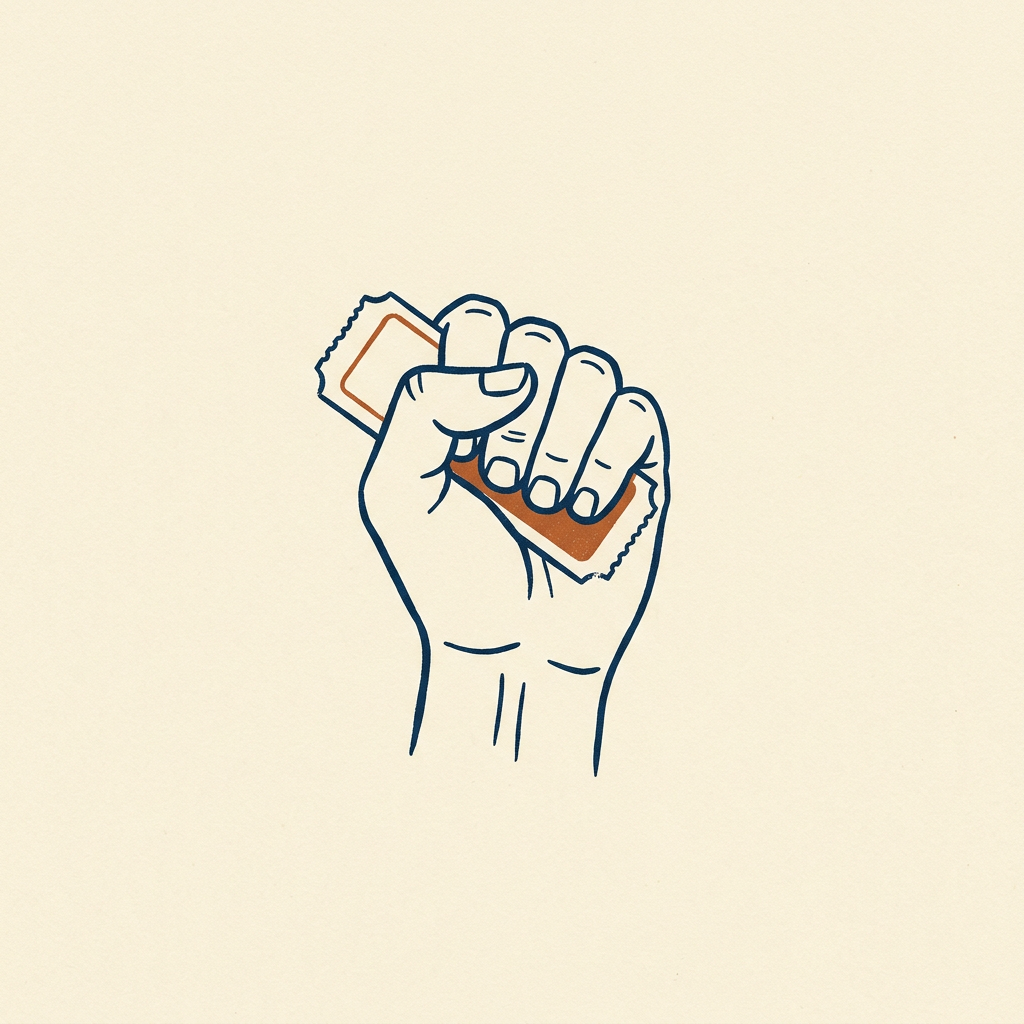
Ariely shows mere ownership—even won by lottery—can make people demand roughly fourteen times what non-owners will pay for the identical item.
Same Duke basketball ticket
Three quirks drive the gap. People fall in love with what they already hold. They focus more on what they might lose than on what they might gain in a trade. They assume others will value the object the way they do.
The effect appears before formal ownership. A bid in an ongoing auction or a trial period creates “virtual ownership.” Giving the item up later feels like a loss rather than simply declining a purchase.
That is why free trials and money-back guarantees convert so well. Once the product is at home, even temporarily, the baseline shifts from neutral to deprivation.
Ownership itself becomes an anchor. Value is now judged against a future without the item, not against a clean market price.
In practice: Duke students who lost a basketball-ticket lottery bid around $170; students who won demanded upward of $2,400 for the same ticket—a roughly fourteen-fold gap.
8
Open doors cost money
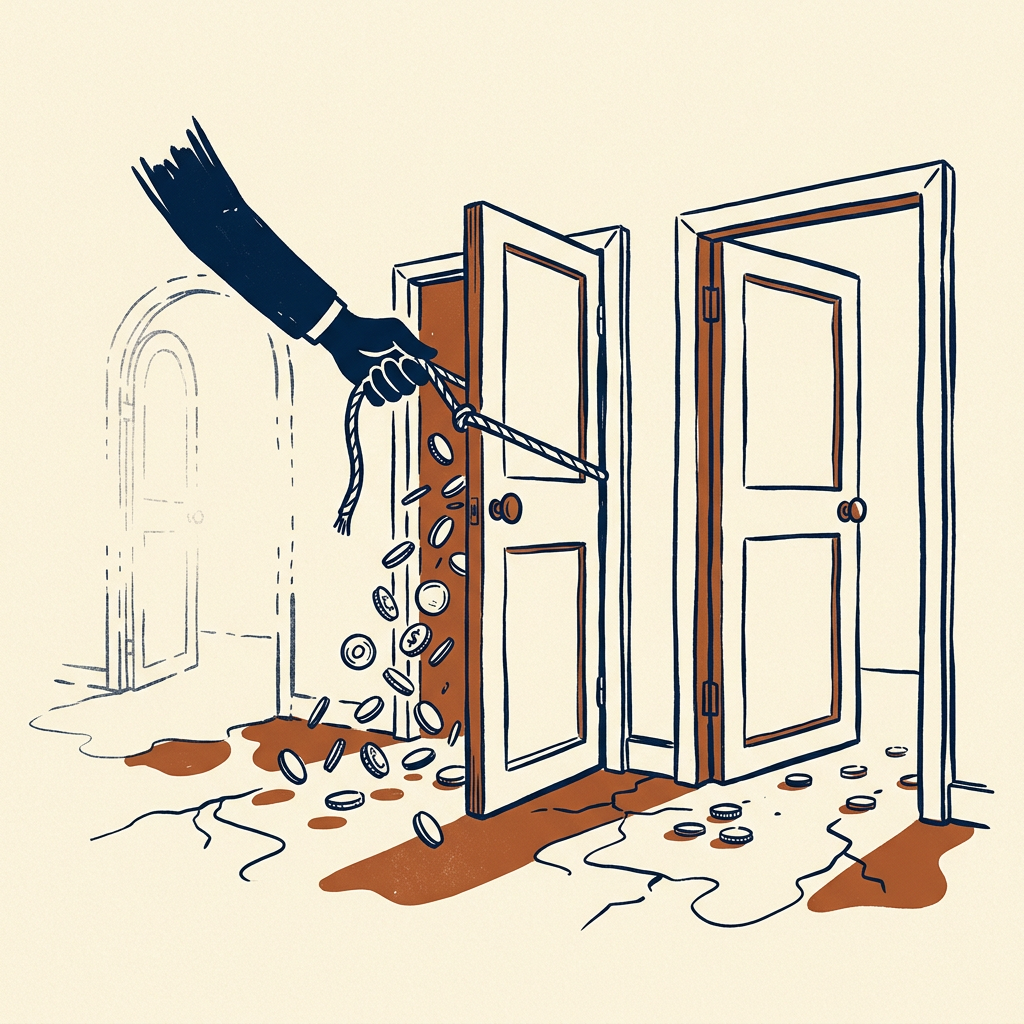
Ariely finds people sacrifice real resources to keep inferior options alive, giving up nearly 15 percent of potential earnings simply to stop doors from closing.
15%
earnings sacrificed to keep inferior doors open
An open option feels like an asset even when its expected value is negative. Closing it registers as irreversible loss rather than costless cleanup of a bad choice.
The same discomfort shows up in careers, relationships, and side projects. People stay because ending the path feels like losing a possibility, even when continuing costs more time, money, or happiness than a clean exit.
Too many open doors also paralyze. Energy spent maintaining weak possibilities never goes toward excelling in one strong path.
Loss aversion here attaches to possibility itself, not only to physical goods. The rational move—closing a bad door—still feels like sacrifice.
In practice: In a three-door earning game, players kept clicking low-value doors to stop them vanishing and surrendered nearly 15 percent of potential earnings once vanishing was made obvious.
9
Expectation shapes experience
Ariely demonstrates that what people believe in advance changes the actual experienced taste or pain relief, so expectation partly constitutes reality.
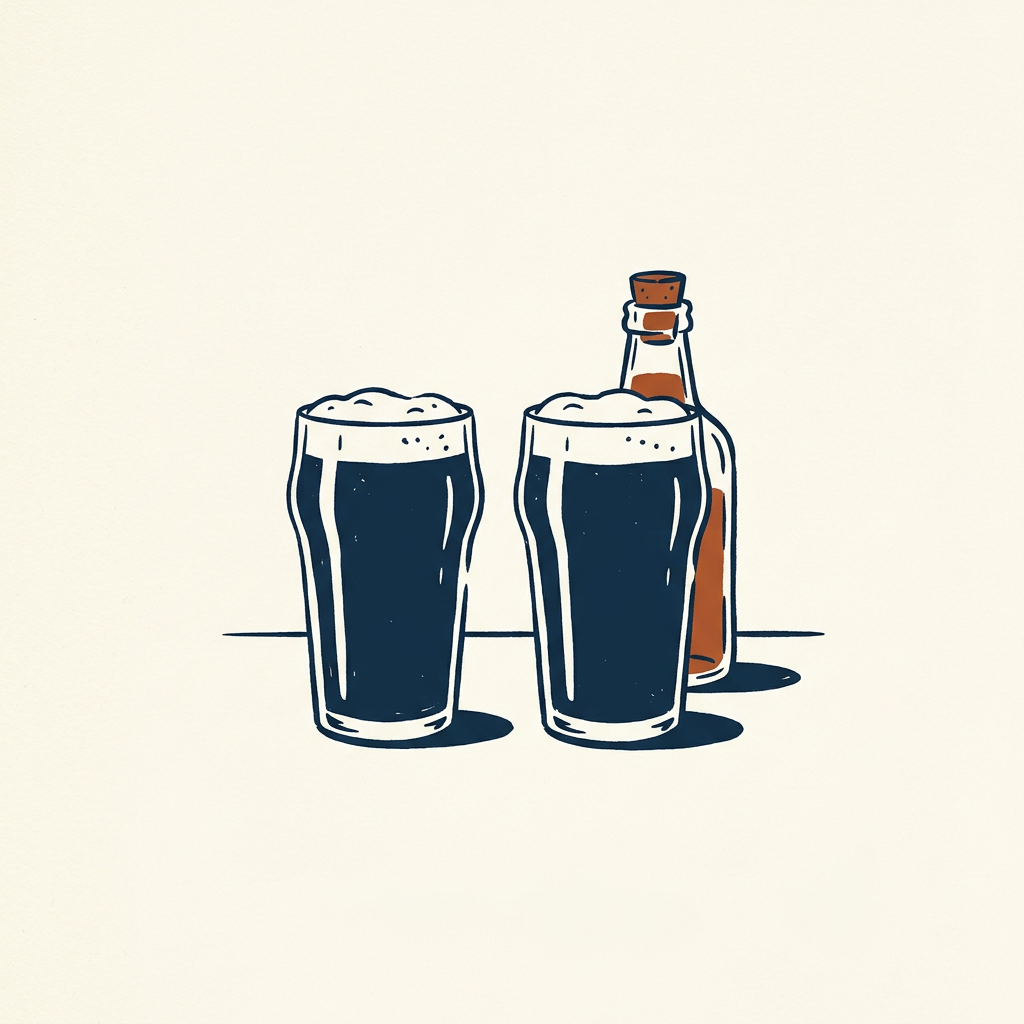
Told about vinegar
Most prefer the regular beer
Blind taste
Many prefer the vinegar-spiked brew
Prior information does not merely color the report afterward. It alters the lived sensation. A distinctive flavor can please when unlabeled and displease once tied to an unpleasant story.
The same mechanism appears in pain. Identical treatments deliver more reported relief when framed as expensive or prestigious than when framed as cheap or generic, even when the substance is a placebo.
Brand labels reverse preferences that hold in blind tests. Stereotypes, once activated, shape how later performance or quality is literally perceived.
Anchors, ownership, and framing are therefore not thin cognitive layers on a fixed core experience. They help build the experience at a near-physiological level.
In practice: Beer spiked with balsamic vinegar lost when drinkers knew in advance; in blind tastes many preferred the vinegar brew for its distinctive flavor.

10
Price works like a placebo
Ariely argues higher prices can improve subjective results through belief alone, so price functions as a placebo rather than only a quality signal.
Belief in efficacy triggers real cognitive and physical responses. Price supplies that belief when little else is known, and the belief becomes partly self-fulfilling.
Discounted energy drinks yielded weaker puzzle performance than the identical drink described as full price. Expensive-framed painkillers outperformed the same pills framed as cheap.
Markets inherit the discomfort. A cheaper generic may work less well for some patients purely because it is seen as cheaper. Overpriced wine and branded aspirin ride the same wave.
Arbitrary anchors and constructive expectation therefore meet: price does not only decide what we pay; it becomes part of what we receive. That raises ethical questions for sellers and clinicians who know the lever exists.
In practice: Students told a pain pill cost $2.50 reported far more relief than those told the identical pill cost 10 cents; discounted energy drinks led to fewer solved puzzles than full-price framing.
Key terms
- Relativity Judging value only by nearby comparisons rather than absolute worth
- Anchoring Letting an arbitrary first number become the reference for later prices and bids
- Coherent arbitrariness Anchors start random yet people stay consistent relative to them afterward
- Zero-price effect Free triggers a different decision mode that can override ordinary cost-benefit logic
- Social norms Warm, reciprocal, unpriced rules of favors and relationships
- Market norms Explicit, paid, self-interested rules of wages and contracts
- Endowment effect Overvaluing something simply because you already own it
- Virtual ownership Attachment that forms during trials, bids, or anticipation before legal ownership
- Hot-cold gap Calm people failing to predict how arousal will change their choices
- Price placebo Higher price improving subjective experience through belief alone
What to do
- Write your willingness to pay for the next purchase before you see any price, discount, decoy, or free label, then notice what shifted your final choice.
- Decide explicitly whether a colleague or client exchange should run on social norms or market norms, and avoid inserting a small payment into a favor.
- Replace one willpower promise this week—spending, snacking, or delaying work—with a structural device such as an automatic transfer or an externally imposed deadline.
- Close one low-value open option (a lingering side project or unused subscription) that exists only to keep a door from shutting.
- Before a big buy, impose a cooling-off pause so the calm self can review what the excited self already wanted.
Questions to think with
- Where in your last major purchase did a decoy, anchor, or free label do more work than the item’s actual usefulness?
- Which of your relationships have quietly shifted from social norms to market norms, and what would it take to reverse that?
- What commitment device would protect your future self better than another promise made while calm?
- Which open doors are you paying real time or money to keep ajar even though you already know they are inferior?
- If expectation partly creates experience, how should sellers and doctors use price and framing without crossing an ethical line?
The other side
The book rests mainly on small-sample lab studies with Ariely’s own MIT and Duke students and similar WEIRD groups; several key experiments involve only dozens of participants, generalization is asserted more than tested, the work predates psychology’s replication crisis, and a later unrelated data scandal around Ariely has made some readers want independent verification. It is also stronger on vivid demonstration than on how biases scale under real market competition and regulation, and some economists say it overstates the death of rational-choice models rather than mapping where they need refinement.
Who it's for
Managers and marketers who need to see why customers ignore spreadsheet logic, plus anyone who has ever grabbed a free item they did not need or wondered why calm plans collapse under arousal. Readers who want the full experimental color behind behavioral economics will gain the most from the complete book.