




Purpose builds the loyalty that features cannot buy
Founders, marketers, and team leaders who want belief-driven followership instead of deal-chasing customers get the reframe here.
IJR · Oct 10, 2026 · 10 min read
In 60 seconds
- Most firms pitch what they make and how it differs; inspiring ones open with why they exist.
- Sinek’s Golden Circle puts purpose at the center, then process, then product, to aim at identity not comparison shopping.
- Trust grows from repeated matches between stated purpose and behavior, so believers forgive flops and follow into new categories.
- Mass markets move only after innovators and early adopters—roughly 15 to 18 percent—buy on belief first.
- Price cuts, fear, and promotions move sales once but train transactional customers and force escalating tactics.
- As firms scale, countable metrics quietly replace founding purpose unless leaders work to stop the drift.
The big idea
Sinek claims people don’t buy what you do—they buy why you do it. Organizations that communicate from purpose outward earn identity-based loyalty that feature-and-price competitors rarely match.
The book in brief
Sinek starts from a familiar stall: companies lead with the product and its differences, rarely reach a reason for existing, and then wonder why loyalty never sticks. He flips the order. Purpose first, then the methods that prove it, then the thing you sell.
He wraps that order in the Golden Circle and links it, loosely, to gut decisions and belonging. Trust, in his account, is what piles up when words and actions stay aligned—enough that people defend a brand, forgive a failure, or follow it into a new category without re-checking every claim.
Mid-book stories carry the mechanism. Belief held the Wrights through unpaid failure while better-funded rivals quit. Why-first groups win innovators and early adopters first; only after a small believer base exists does the majority follow social proof. Discounts, fear, and status pressure move product in the short run but teach customers to wait for the next manipulation.
The closing turn is practical and cautionary. A why is dug from founding memories, not invented in a workshop. Growth itself threatens it: when founders leave and metrics take over, purpose splits from daily work. Sinek lands on purpose as a strategic asset leaders must keep protecting, not a slogan to set and forget.
Context
Simon Sinek published the book in 2009. Its central reframe—that purpose is a strategic asset that must be guarded as organizations grow—has stayed influential well beyond the original examples.
The key ideas
1
The Golden Circle
Leading every message with purpose rather than product aims at identity-based choice instead of comparison shopping.
- WhyPurpose and belief at the center
- HowProcesses and values that prove the purpose
- WhatProducts and results on the outside
Most organizations talk outside-in. They name the product, list what makes it different, and almost never reach a reason for existing beyond revenue.
Sinek’s model is three rings. Why sits at the center: the purpose or belief. How is the process or values that bring it to life. What is the tangible output—the device, the service, the result.
Inspiring groups reverse the usual pitch. They open with belief, then method, and treat the product as what they happen to make. Sinek argues that structure triggers a different buying decision—one based on who the buyer wants to be—a causal leap his examples illustrate but do not prove.
Used as a diagnostic, the circle still forces a leader to articulate a reason to exist that is not simply profit, which can clarify choices even when the success story is oversimplified.
In practice: The book sets a features-first computer pitch against Apple’s implied version: belief in challenging the status quo, then beautiful design, then computers as the what.
2
Gut decisions over specs
Why-first messages aim at feeling and trust because people often cannot put the real reason for a choice into words.
Sinek ties the circle to a simple brain picture. The outer what maps to the neocortex—rational, verbal, strong on features and facts. The inner why and how map to the limbic brain—feelings, trust, and decisions, without language.
That gap, he says, is why someone buys what “just felt right” and only afterward invents reasons. Messaging that starts with purpose tries to reach the part that actually chooses rather than the part that explains.
Read the anatomy as metaphor, not wiring diagram. What travels is the behavioral observation: stated reasons and real motivators diverge, and appeals to belonging and trust often outperform spec sheets and price.
In practice: The book describes buyers who cannot articulate a gut choice, then offer feature reasons that were never the true driver.

3
Trust accumulates slowly
Trust grows from repeated matches between stated purpose and behavior, not from claims of quality.
Sinek treats trust as a byproduct, not a pitch. It builds when an organization keeps doing what its why promised, across many small interactions, and it can vanish fast when actions diverge from the claim.
Once trust exists, customers stop evaluating every new offer from zero. That is the mechanism he offers for category jumps: a strong why lets people extend belief to a music player or a phone without starting the comparison over. Without it, even minor variations face full skepticism.
This also explains loyalty that survives product failure. People forgive when they already trust the purpose; they leave at the first misstep when they never did.
In practice: The book points to Harley-Davidson owners who tattoo the logo—an act that only makes sense if the brand is identity, not hardware.
4
Belief outruns credentials
Clarity of purpose and shared belief can outperform superior funding, pedigree, and hired expertise.
Langley
Harvard, Smithsonian, $50,000 War Department funding, elite engineers; chased wealth and fame; quit after failed tests
Wright brothers
No degrees, no government funds, bicycle shop; belief that flight would change the world; flew December 17, 1903
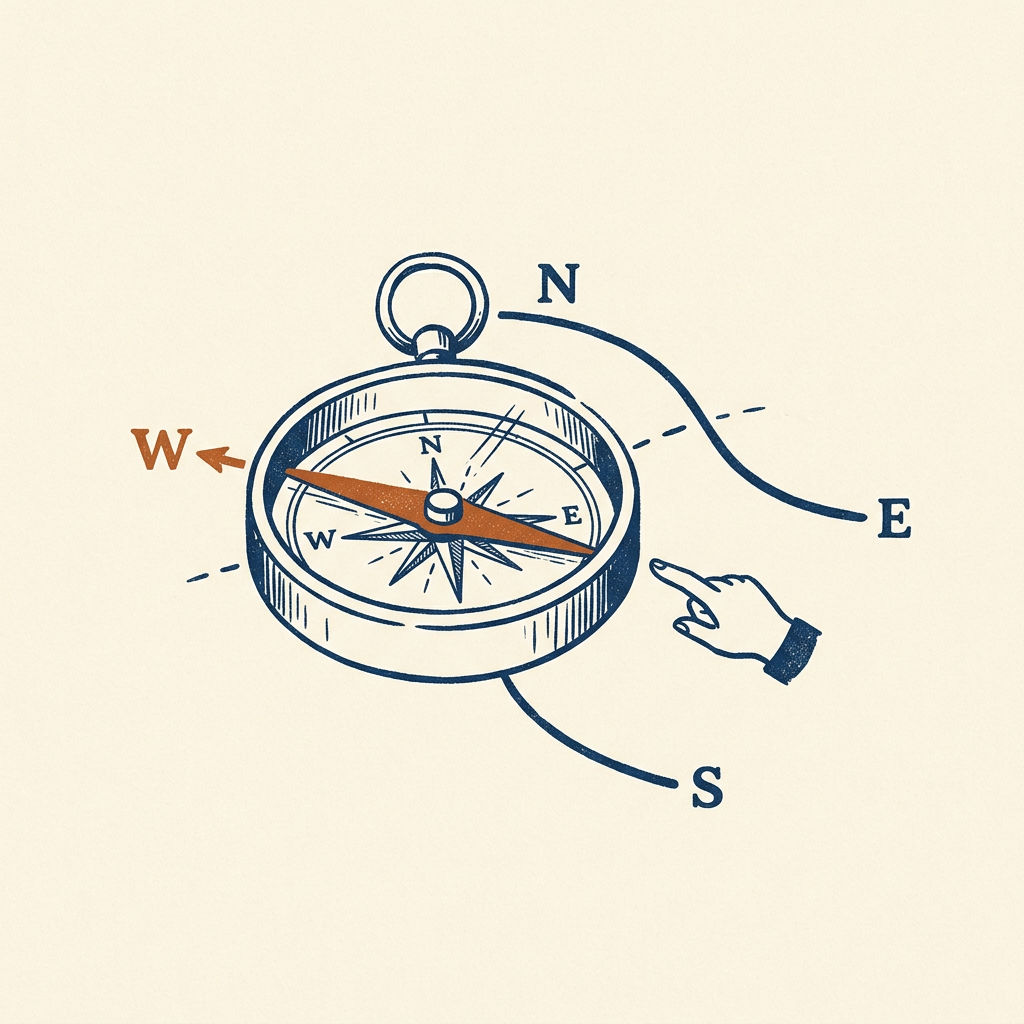
Sinek’s long historical contrast is the race to powered flight. On one side: Samuel Langley, with a Harvard background, a Smithsonian post, $50,000 from the War Department, and top engineers. On the other: the Wright brothers, no college degrees, no government money, a bicycle shop in Dayton.
In the book’s telling, Langley chased wealth and fame and tried to hire his way there fastest. The Wrights were driven by a belief that flight would change the world, so the team stayed through repeated unpaid failure.
They succeeded on December 17, 1903; Langley had abandoned his effort days earlier after failed tests. Sinek offers the story as support for purpose over resources. It works as illustration of one outcome, not a survey of every funded-versus-belief contest.
In practice: Langley’s well-backed machine failed its tests; the underfunded Wrights achieved flight shortly after he quit.
5
Win believers first
Mass-market success waits until innovators and early adopters—roughly 15 to 18 percent—create the social proof the majority follows.
- Innovators and early adoptersAct on belief before proof; the core a clear why must win first
- Tipping rangeRoughly 15 to 18 percent adoption
- Early and late majorityFollow social proof and infrastructure more than ads
- LaggardsLast to move
Sinek imports Everett Rogers’s adoption curve: innovators, early adopters, early majority, late majority, laggards. Why-driven organizations, he argues, succeed because they attract the first groups—people willing to buy on belief before full proof.
He cites a tipping range of roughly 15 to 18 percent adoption. After that, mainstream buyers move because infrastructure and social proof already exist. Aim discounts and broad ads at the majority before that base is real, and the majority still takes its cues from people it already trusts, not from the claims alone.
The strategic sequence is deliberate patience: articulate a clear why, win a small passionate core, let their behavior signal value outward, and resist chasing mass appeal too early.
In practice: The book contrasts TiVo’s superior technology sold as features to a broad audience with companies that built outward from an early believer base.

6
Manipulation works once
Price cuts, fear, promotions, and pressure move sales short-term but train customers to return only for the next deal.
Manipulation
Price cuts, promotions, fear, status, peer pressure; transactional and escalating
Inspiration
Clear why; customers pay a premium and defend the brand
Sinek draws a hard line between inspiration and manipulation. The manipulative toolkit includes lowering price, running promotions, leveraging fear, dangling status, and using peer pressure. These tactics work—which is why they are everywhere.
They also create transactional relationships. The customer comes back for the deal, not the company, so the organization must keep manipulating, often on shrinking margins. Markets with no established why, such as airlines competing purely on ticket cost, show the end state: a price race with no floor.
When a genuine why is present, Sinek argues, people pay a premium and defend the brand even against cheaper or comparable options, because the purchase is about identity. Ordinary marketing habits look, in this frame, like symptoms of a missing purpose rather than complete strategy.
In practice: The book uses airline price wars as the picture of an industry left with cost as its only lever.
7
Why is discovered
A usable why is excavated from origin stories and concrete memories, not invented in a branding workshop.
Sinek insists a why cannot be manufactured on demand. It has to be found in what already happened—the founding impulse, formative experiences, the belief that made people begin.
His consulting pattern avoids abstract mission questions. He interviews founders and early employees about specific charged moments, because people freeze on “what is our purpose” yet reveal the underlying belief when they recount real memories.
Every organization, on this view, already carries a why in its origin whether leaders can say it or not. The work is discovery and plain, actionable language. The chapter is stronger on conviction than on a tight, replicable method.
In practice: The book describes dropping “what’s our mission” in favor of asking founders for particular early moments that still feel alive.

8
When why drifts away
As companies scale, countable metrics replace qualitative purpose until the original why no longer steers daily work.
Early years
Founder embodies the why; purpose animates daily work
After the split
Managers optimize earnings and efficiency; why fades from plans and reviews
Sinek names “the split”: the pattern where a clear early why disconnects from operations as the organization grows. Founders who embodied purpose in person give way to managers hired to hit numbers—earnings, share, efficiency.
Whats are countable and hows are easy to write down, so planning documents and performance reviews slide toward them. Why is qualitative and quietly drops off the page even while the spreadsheets still look fine.
He reads Walmart after Sam Walton through this lens: an original focus on serving small-town customers overtaken by cost-cutting that strained suppliers, employees, and public standing. Growth and clarity of purpose pull in opposite directions without deliberate effort to keep them aligned.
In practice: The book describes Walmart’s center of gravity shifting after Walton’s death toward cost metrics that damaged relationships while short-term financials held.
Key terms
- Golden Circle Three rings—why at the center, then how, then what—used to flip pitches from features-first to purpose-first
- Why The purpose or belief that explains why the organization exists beyond making money
- How The values, processes, or methods that put the why into practice
- What The products, services, or visible results the organization produces
- Law of Diffusion Adoption order from innovators through laggards; the majority follows after roughly 15 to 18 percent adopt on belief
- Early adopters Buyers willing to act on belief before full proof; the first audience a clear why must win
- Manipulation Short-term tactics—price, promotions, fear, status, pressure—that buy transactions without building loyalty
- The split The drift when scaling organizations let founding purpose disconnect from measurable daily management
What to do
- Write one sentence on why your project or company exists with no mention of profit, features, or market share.
- Test that sentence against your last three major decisions for purpose-alignment versus convenience.
- Rewrite the opening of one upcoming pitch, email, or job post to state purpose before the offer.
- Ask each direct report to describe why the team’s work matters and treat divergent answers as a clarity warning.
Questions to think with
- Can you say why your organization exists without naming the product or the revenue?
- Which of your last big decisions followed the why, and which followed the easiest metric?
- Are you aiming ads and discounts at the majority before a core of believers already cares?
- Where has scale replaced purpose with numbers in your own shop?
- If the deal vanished tomorrow, would anyone stay because of who you are?
The other side
Sinek’s evidence is almost entirely anecdotal: he offers no controlled comparison that why-first firms succeed more often, and the case studies are chosen because they fit. The limbic-brain mapping is an outdated simplification presented without studies. Guidance for actually finding a why stays thin. Manipulative tactics also work for brands that already have purpose, and well-funded uninspired teams have beaten purpose-driven ones in contests the book does not weigh; the Walmart and flight stories are interpretive, not data-driven proof.
Who it's for
Founders and executives who need a reason to exist beyond the P&L, marketers and brand managers tired of loyalty that disappears when the coupon ends, and anyone leading a team who wants people to follow from belief rather than obligation.