




Jobs's genius and cruelty were the same intensity
Visionary control built unmatched products and casually broke people, and the cost stays unresolved.
IJR · Oct 10, 2026 · 14 min read

In 60 seconds
- Adoption left Jobs terrified of abandonment and sure he was specially chosen, feeding black-and-white control over people and products.
- Apple worked because Wozniak's pure engineering met Jobs's insistence on case, price, polish, and a real business.
- The reality distortion field made absurd deadlines feel real and sometimes achievable when paired with actual taste.
- Exile at NeXT and Pixar taught failure and patience that early Apple success never required.
- The 1997 turnaround killed most of the line, ended clones, and bet on four products plus full-stack control.
- Design-first craft and a closed garden built the most valuable company of 2011, while the book refuses to say the cruelty was necessary.
The big idea
Isaacson argues Jobs's genius and his cruelty were one trait, not two in uneasy balance: the same all-or-nothing intensity that perfected products also discarded people and denied hard facts. The biography leaves the trade-off open, showing results without proving the harshness caused them.
The book in brief
The story opens with origin as destiny. Born in 1955 to graduate students and adopted by a working-class couple in Mountain View, Jobs absorbed a tale of being specially chosen after the arrangement nearly collapsed. Isaacson ties that wound to a lifelong terror of abandonment and a conviction he stood apart, surfacing later as binary judgments and abrupt cutoffs. The difficult personality is framed as constitutive of the talent, not a flaw sitting on top of it.
Partnership turns the wound into a company. Wozniak built elegant boards for hobbyist fun; Jobs saw a product, demanded a full experience, and pushed the leap from club demo to Apple. Early success made him rich young while already exposing abrupt firings, credit-taking, and volatile moods. The same intensity that polished the whole object also strained the people inside it.
The middle stretch is fall and forced education. Macintosh pressure and board conflict end in the 1985 ouster. NeXT becomes a study in unchecked perfectionism; Pixar becomes a long, expensive bet on computer animation that finally pays off. Exile supplies the failure and patience rapid early wins never demanded.
Return is subtraction before creation. Apple buys NeXT, Jobs maneuvers back, and a bloated line is cut to a simple grid of four products while clones die and a pragmatic rival investment steadies nerves. Design becomes the starting point of engineering with Ive, and the closed stack—from store to silicon—defines the next decade of hits.
The close refuses a clean moral. Public humiliations and genius-or-bozo sorting are treated as deliberate method, not side effect, yet colleagues split on whether it elevated work or merely hurt. Illness, delayed treatment, succession, and an insistently honest biography become the last products he tried to shape. What remains is a portrait of control running all the way through objects and life, unfinished parts included.
Context
Isaacson's authorized biography rests on more than forty interviews with Jobs and hundreds with colleagues, family, and rivals. Published weeks after Jobs's death in 2011, it mattered as the first major unflinching account that refused to sanitize him into a Silicon Valley saint.
The key ideas
1
Abandoned then chosen
Isaacson traces Jobs's need to control narrative and creations to adoption, reframed as being specially chosen rather than given up.
Given up
Biological parents release the infant; college-graduate stipulation nearly voids the adoption
Chosen story
Working-class adopters keep him and frame the placement as deliberate selection
Jobs was born in 1955 to Wisconsin graduate students and adopted by Paul and Clara Jobs after a stipulation about college-educated parents nearly killed the placement. The adoptive parents promised to fund college, and the story they told him stressed deliberate choice. Isaacson links that early rejection-plus-chosen myth to two fused traits: terror of abandonment and a sense of being set apart from ordinary people.
He rarely discussed adoption in public and insisted Paul and Clara were his real parents. People close to him, including his wife Laurene, still saw the wound in how he sorted humans into brilliant or worthless and in how he severed ties instead of managing decline. The intensity was total: fixate or discard.
The chapter's stake is the book's core claim. Difficult behavior is not presented as an unfortunate layer on top of talent. The same all-or-nothing drive that perfected a product also ended relationships that no longer served the purpose. Isaacson lays out the pattern without fully settling whether the cruelty was required or merely endured because the results were spectacular.
In practice: As a teenager he cold-called Bill Hewlett for spare parts, got them, and through Bill Fernandez met Wozniak—already acting as someone set apart who simply demanded access.
2
Engineer plus evangelist
World-changing companies often pair a technical genius with someone who spots commercial and aesthetic potential the engineer misses.
Wozniak
Elegant circuit for club fun; ready to give the design away
Jobs
Case, keyboard, power, price, packaging; force a real company
Wozniak built the Apple I largely to impress the Homebrew Computer Club and would likely have given the design away. Jobs, younger and no match as an engineer, saw a salable product and insisted on case, keyboard, power supply, and on Wozniak leaving Hewlett-Packard to build the Apple II.
They founded Apple in 1976, partly funded by selling Jobs's van. Mike Markkula later invested and wrote a founding marketing philosophy—empathy, focus, imputing quality through polish—that Jobs treated as gospel thereafter. Technical elegance on one board needed obsession with the whole experience, packaging included, before it became a business instead of a hobbyist trophy.
The Apple II became an early mass-market personal computer and took the company public by 1980, making Jobs worth more than 200 million dollars at twenty-five. Cracks showed early: abrupt firings, credit fights that irritated Wozniak, poor hygiene and mood swings colleagues tied to strict fruitarian habits and a belief that fruit alone meant he need not bathe.
In practice: Wozniak’s single-board computer stayed a club demo until Jobs forced the full product enclosure and commercial push that created the Apple II.
3
Reality distortion field
Convincing people that impossible deadlines were real was a competitive advantage when paired with genuine judgment, not mere bullying.
On the product
Absurd specs sometimes hit because nobody accepted they were impossible
On himself
Nine-month delay treating cancer with diet and alternatives instead of surgery
Engineers borrowed the Star Trek phrase for Jobs's habit of asserting something false or wildly optimistic with such force that people believed it or exhausted themselves making it true. Bud Tribble popularized it on the early-1980s Macintosh project when Jobs demanded a ten-second boot time and chip redesigns in weeks.
The field cut both ways. Larry Kenyon framed the boot-time cut as lifetimes saved across millions of daily power-ons, turning an arbitrary target into moral urgency. The same habit later let Jobs deny a 2003 cancer diagnosis for nine months and try diet and alternatives first—a choice he later called a mistake and that Isaacson suggests may have cost him his life.
Isaacson insists the tool worked because Jobs usually intuited which impossible things were actually possible. Imitators who copy the pressure without the taste simply burn teams out. Distortion without judgment is just abuse.
In practice: Jobs told Mac engineers to hit a ten-second boot; the framing of lifetimes saved across five million users made the target feel necessary rather than random.
4
What exile taught
Forced exit in 1985 taught the difference between vision and execution through costly years at NeXT and Pixar.
- 1985Ousted from Apple; sells most stock
- 1986Buys Lucasfilm graphics group for $10M; renames it Pixar
- NeXT yearsCube obsession, delays, sales collapse to hundreds a month
- 1995Toy Story hit; Pixar IPO nets Jobs over $1B
Macintosh sales disappointed and Jobs's management style alienated the board. Sculley, recruited from Pepsi with a challenge about sugared water versus changing the world, stripped his operational power; the board agreed. At thirty, Jobs resigned and sold nearly all his Apple stock.
NeXT aimed at higher-education workstations and became a case of flaws with no counterweight: a magnesium cube optimized for manufacturing perfection over cost, years of delay, and eventually sales of only a few hundred units a month. Pixar, bought from Lucasfilm for 10 million dollars in 1986, nearly went bankrupt while Jobs poured in more than 50 million dollars of his own money on Catmull and Lasseter's bet that computer animation could be real cinema.
Toy Story in 1995 changed the arc; the IPO the same year netted Jobs more than a billion dollars. Isaacson's point is structural: early Apple success never forced him to live inside failure or practice patience. Exile did.
In practice: NeXT's magnesium cube and tiny monthly sales showed perfectionism without governance; Pixar's long burn rate showed the opposite lesson of endurance.

5
Four products only
The 1997 turnaround proves ruthless simplification—cutting most of a line rather than adding—can save what incremental fixes cannot.
Consumer — Professional ↑ · Desktop — Portable →
Consumer desktop
Keep one clear machine
Consumer portable
Keep one clear machine
Pro desktop
Keep one clear machine
Pro portable
Keep one clear machine; kill the rest of the line
Apple bought NeXT in December 1996 for 429 million dollars mainly for its operating system, the future base of Mac OS X. Jobs returned as adviser, then interim CEO after Amelio's ouster, famously without full salary at first. The company was weeks from bankruptcy in some tellings, buried under a dozen-plus confusing Mac models.
His answer was subtraction. A two-by-two grid—consumer versus professional, desktop versus portable—meant exactly four products; everything else died. He ended Mac OS licensing to clone makers, sacrificing near-term revenue to reclaim control of the full hardware-software experience against the open IBM-PC and Windows model.
A 150 million dollar Microsoft investment for continued Office on Mac steadied confidence. The candy-colored iMac with Jony Ive, whom Jobs found sidelined in the design studio, sold 800,000 units in five months and became the turnaround's public face. Destruction first, then creation: willingness to kill coherent-looking but incoherent lines is the strategic act professional managers often cannot stomach.
In practice: Jobs drew the consumer/pro and desktop/portable grid and killed every Mac that did not fit the four surviving cells.
6
Design starts engineering
Treating design as the origin of engineering, not a cosmetic finish, produces objects rivals cannot copy by surface alone.
Typical firm
Engineers freeze function; designers make it look acceptable afterward
Jobs and Ive
Design proposes the object first; engineering bends to realize it
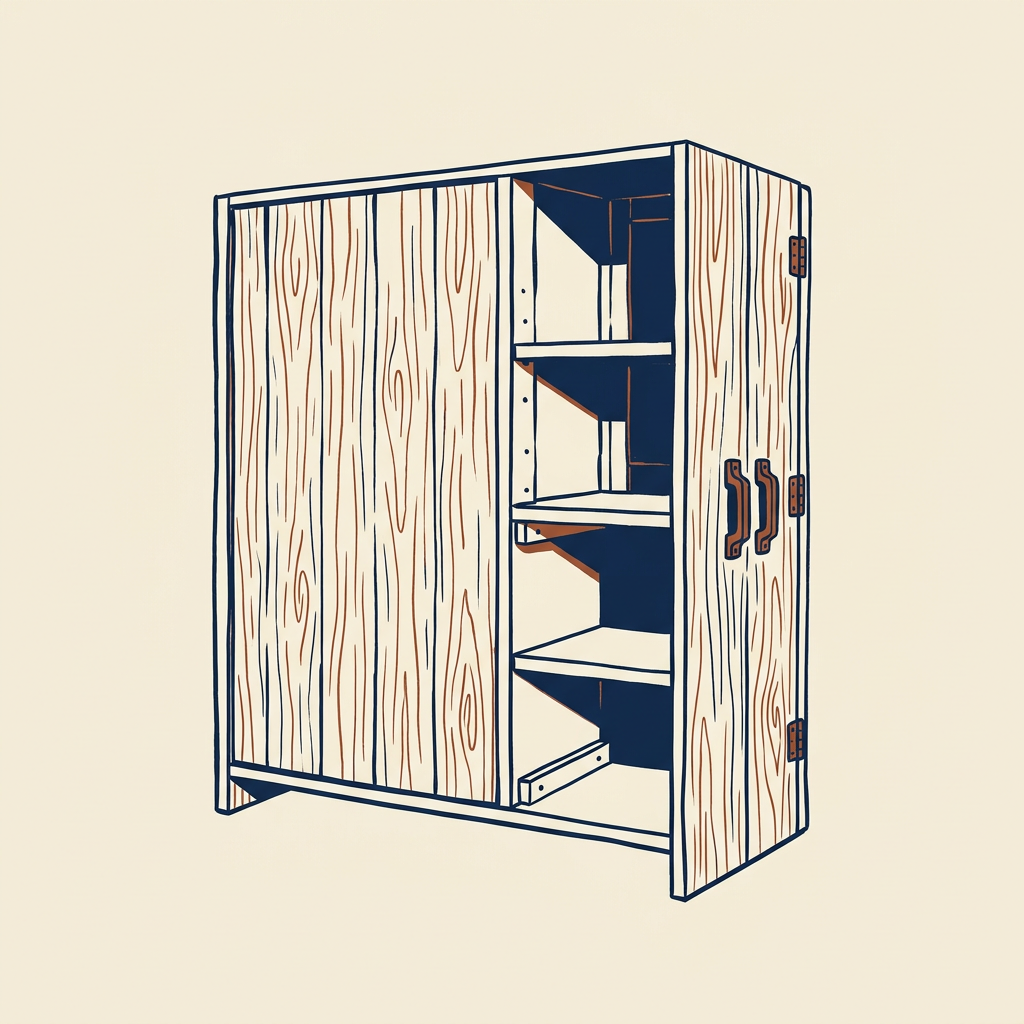
After the return, Ive became Jobs's closest creative partner. Both drew from Dieter Rams's 'less but better' geometry; white iPod minimalism and even some later app icons openly echoed Braun. At typical firms, engineers lock function then hand work to designers for acceptable looks. Under Jobs the sequence flipped: industrial design proposed forms, sometimes before any clear build path, and engineering had to bend.
Unibody MacBooks machined from a single aluminum block cost more and yielded thinner, stronger, seamless objects. Obsession reached invisible surfaces: original Macintosh circuit boards were laid out for elegance no customer would see, a standard Jobs traced to his father finishing the back of a cabinet as carefully as the front.
Perfectionism here is philosophy, not indulgence. Higher manufacturing cost and slower cycles bought a product identity that look-alike competitors could not match without the underlying discipline. Copy the skin without the process and the object feels cheaper in the hand.
In practice: Unibody laptops began as a design demand for seamless strength; engineering had to invent the expensive single-block method to serve it.

7
Closed stack bet
Tight control of hardware, software, and content together was a deliberate strategic bet against open platforms, and inside his lifetime it mostly won.
Open model
License OS widely; let hardware makers and carriers compete on top
Jobs model
One company owns device, OS, store, and approval end to end
iPod, iTunes, iPhone, and iPad from 2001 to 2010 expressed one architecture: a seamless product needs one company owning the whole stack. That stance fought Silicon Valley orthodoxy, embodied by Android's licensed OS and competing hardware makers—the same open model that had beaten Apple in the 1980s PC war.
Jobs treated Android as theft and told Isaacson he would spend his dying breath and Apple's 40 billion dollars in the bank to destroy it, fury Isaacson reads as personal after Eric Schmidt's time on Apple's board. The 2003 iTunes Store took personal label-by-label negotiation at 99 cents a song when labels trusted almost no one in tech. The 2008 App Store extended approval control to software, criticized as heavy-handed yet credited with quality and security that helped dethrone BlackBerry.
Isaacson does not crown the model eternal; he notes the open web's long-run pressure and leaves post-Jobs viability open. Within Jobs's life, integration built the most valuable company on earth by market cap in 2011.
In practice: Jobs personally cut 99-cent song deals with major labels to launch iTunes, tying device, software, and content into one controlled path.
8
Cruelty as technique
Public humiliation and instant genius-or-bozo sorting were deliberate tools, not accidental damage, and should not be casually copied.
Some colleagues
Hurt and demeaning; binary labels with no path between genius and bozo
Others
Pressure that extracted better work than they thought they could do
Isaacson catalogs the pattern: an engineer reduced to tears in an elevator by a public 'shit' verdict; handicapped spaces taken as routine; ideas dismissed then later returned as his own without credit, a cycle Debi Coleman and others describe. People were sorted brilliant or idiotic with almost no middle.
Former colleagues split. Ive speaks of real hurt. Atkinson and Hertzfeld argue the harshness pulled work from them they had not believed possible. Near the end Jobs defended bluntness as more honest and more respectful of people's capacity to improve than corporate false politeness, while admitting he wished he could have been both loving and successful.
The book holds the central argument unresolved. Correlation between harshness and Apple's results is not causation. Isaacson notes other leaders, inside Apple and beyond, delivered comparable outcomes without comparable cruelty. Results do not retroactively license the method.
In practice: An engineer leaves an elevator in tears after Jobs calls the work shit in front of colleagues—one instance of many public verdicts.
9
Last narrative control
Planning succession, memorial, roadmaps, and an unsanitized biography while dying showed the same need for control that shaped every product.
- Oct 2003Diagnosis; delays conventional care nine months
- 2004–2009Surgery, then liver transplant; still runs major launches
- 2010–2011iPad and iPad 2 presentations while gaunt
- Aug–Oct 2011Resigns; dies at fifty-six after shaping the honest biography
A rare pancreatic neuroendocrine cancer diagnosed in October 2003 met nine months of diet, acupuncture, and alternative practitioners before surgery in 2004 and a liver transplant in 2009. Doctors and Isaacson treat the delay as a serious error even while admitting the disease's rarity makes medical impact uncertain.
He kept presenting—the iPad in 2010, iPad 2 in 2011—visibly gaunt against advice. Over roughly two years he gave Isaacson candid interviews on regrets, including years denying paternity of Lisa Brennan-Jobs despite a positive test, with fuller reconciliation only later. He resigned in August 2011 in favor of Tim Cook and died on October 5, 2011, at fifty-six.
He reviewed early drafts, disliked passages, yet told Isaacson to keep the unflattering material because he wanted honesty rather than a puff piece. Shaping the story to the end—choosing the biographer, granting access, refusing a cleanse—matches the life: narrative and product inseparable, control required for both.
In practice: Even while dying he worked through biography drafts and ordered the harsh material left in, treating the book as a final product that had to be true.
Key terms
- Reality distortion field Jobs's force of conviction that made impossible timelines feel real and sometimes get hit; coined by Bud Tribble on the Mac team.
- Apple Marketing Philosophy Markkula's early trio—empathy, focus, impute quality through polish—that Jobs treated as lasting gospel.
- Genius or bozo Jobs's instant binary sorting of people with almost no middle ground.
- Closed garden One company controlling hardware, software, store, and approvals so the whole experience stays seamless.
- Unibody Machining a product from a single block of aluminum for strength and thinness instead of assembling parts.
- Less but better Dieter Rams's design creed that Jobs and Ive admired and echoed in spare geometry and minimalism.
- Interim CEO The title Jobs held after returning, notably without full salary at first, while he cut the company to four products.
- Integration The bet that owning the full stack beats open, licensed, mix-and-match platforms.
What to do
- Finish one thing you have been calling good enough, including the parts nobody will inspect.
- Before accepting the next easy deadline, test once whether it is truly impossible or only uncomfortable.
- When you give hard feedback, aim it at the specific work and the standard, not at the person's worth.
- Kill one incoherent offering or process instead of adding another patch around it.
- Put design constraints first on a current project and make engineering serve them, not the reverse.
Questions to think with
- If adoption-shaped control drove both the products and the cruelty, can the useful half be trained without the damaging half?
- When does simplifying a product line become reckless destruction of real revenue?
- Is a closed stack still a winning bet once the founder who enforced taste is gone?
- Which parts of the reality distortion field were judgment, and which were simply fear imposed on staff?
- Would you accept Jobs as a boss if the products were guaranteed—and what does that answer cost?
The other side
Isaacson never proves the cruelty caused the results; he only shows they coexisted. Other leaders matched outcomes without the humiliation, and the cancer delay's true medical toll remains uncertain given the disease's rarity. Correlation is not a license, and the book itself treats imitation of the bullying without the taste as a known failure mode.
Who it's for
Entrepreneurs who want the real human cost of building a category-defining company, managers weighing whether demanding leadership is worth the toll, and readers who lived with Apple's products and want the unsanitized story behind them.