


We're wired to trust strangers and it keeps going wrong
Sandra Bland's fatal stop shows how default trust, mismatched demeanor, and tactics copied from the wrong context collide.
IJR · Oct 13, 2026 · 13 min read

In 60 seconds
- Humans default to believing strangers are honest until contrary evidence is overwhelming, which is why Ana Montes spied for Cuba for sixteen years and Madoff ran on while alarms were explained away.
- We treat faces and tone as transparent windows into truth, so people whose affect mismatches the expected script—like Amanda Knox—get read as guilty.
- Meeting someone in person often worsens judgment: Chamberlain left Hitler more confident and more wrong, and a 2017 records-only bail algorithm beat NYC judges who saw defendants.
- Alcohol does not just lower inhibitions; it shrinks attention to immediate cues, scrambling consent between drunk strangers on campus.
- Harm couples to specific methods and places, which is why Britain's switch off coal gas cut national suicides without full substitution and why bridge survivors say they would not have jumped elsewhere.
- A narrowly targeted Kansas City gun-stop experiment became dangerous when departments turned it into blanket aggressive stops—the training that shaped Bland's trooper.
The big idea
Gladwell argues that default trust and the belief that demeanor reveals inner states are adaptive social instincts that systematically fail with skilled liars and mismatched people. The answer is not training ourselves to read strangers better but redesigning high-stakes systems so snap judgment carries less irreversible weight.
The book in brief
Gladwell opens with the 2015 roadside arrest of Sandra Bland after a minor Texas traffic stop to show how fast ordinary irritation can be read as threat. He treats the encounter as a collision of psychological failures rather than a conventional policing exposé, and uses her death as the thread through every later chapter.
He next explains why trained professionals miss long-running liars. People assume honesty until contrary evidence becomes overwhelming. That default makes cooperation and institutions possible, but it also lets spies and fraudsters operate for years while colleagues explain anomalies away.
Then he attacks the transparency habit: the folk belief that faces, tone, and posture cleanly signal guilt or innocence. Cultural training teaches us to expect legibility real people do not provide. Those whose natural affect mismatches the script for their situation get disbelieved. Face-to-face contact—diplomatic meetings, courtroom bail hearings, interviews—often makes judgment worse, not better.
Alcohol, he adds, narrows attention to whatever is most immediate and suppresses context, which is why intoxicated campus encounters go wrong in ways sober ones do not. Harmful acts themselves often couple tightly to a specific method, place, and moment, so removing the circumstance can prevent the act. A policing tactic that worked inside one carefully chosen Kansas City crime zone was stripped of that coupling and scaled into blanket aggressive stops.
Gladwell returns to Bland as the case where misapplied tactics, transparency error, and collapsed default trust met in one encounter. He refuses a simple personal fix. The instincts cannot be trained away without wrecking social life; the practical move is building humility, slower review, and context-respecting design into systems that force us to judge strangers under pressure.
Context
Malcolm Gladwell published the book in 2019 as a synthesis centered on the Sandra Bland case. It immediately drew public debate over its framing of campus assault, its distribution of responsibility in policing tragedies, and how far a small set of studies and cases can carry a sweeping theory of stranger error.
The key ideas
1
The Bland traffic stop
Gladwell claims that inferring a stranger's intentions from seconds of roadside demeanor under time pressure is predictably unreliable, not just occasionally wrong.
- July 2015Encinia stops Bland for a minor lane violation
- Minutes laterEncounter escalates into forcible arrest
- Three days laterBland found dead in her cell
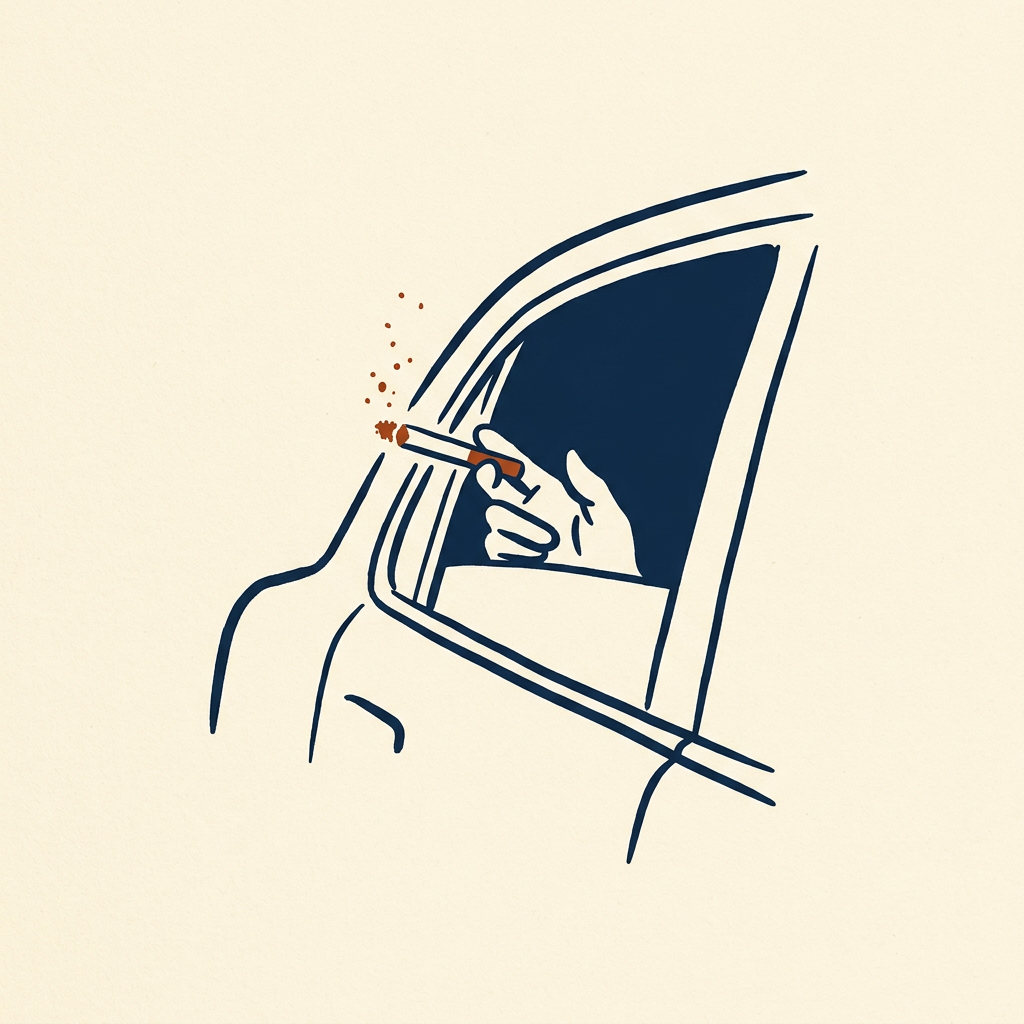
Gladwell starts with dashcam footage of Trooper Brian Encinia pulling Sandra Bland over for a minor lane violation near Prairie View, Texas, in July 2015. What began as a routine stop became a forcible arrest within minutes. Three days later Bland was found dead in her cell, an apparent suicide.
He does not mainly use the footage to settle blame in the usual sense. He asks a narrower question: what made Encinia read an ordinary irritated driver as a threat that required escalation. Bland's refusal to put out a cigarette and her sharpness were treated as signs of danger or guilt.
Gladwell says those signals reflected only the frustration of someone unfairly stopped. The misreading is not one trooper's unique failing. It is what happens when any human must size up a stranger from a few seconds of behavior with no other information. The book frames her death as the collision of several distinct failures—about truth-telling, demeanor, and a policing strategy applied without context—each unpacked in later chapters.
In practice: Encinia treated Bland's cigarette and sharp replies as evidence of danger when they were ordinary frustration at an unfair stop.
2
Default to truth
Gladwell adopts Tim Levine's account that humans assume honesty unless contradictory evidence becomes overwhelming, which is why even professionals miss long deceptions.
Levine's deception-detection work found that most people, including professionals trained to spot liars, perform only slightly better than chance. Gladwell makes Levine's explanation the book's central theory: we do not treat every claim as suspect and score it neutrally. We default to truth.
Ana Montes, a Defense Intelligence Agency analyst, spied for Cuba for sixteen years. Colleagues noticed anomalies in behavior and access patterns but explained them away. Bernie Madoff's fraud lasted decades even after Harry Markopolos repeatedly brought detailed evidence to the SEC, which trusted a respected figure over an outsider's alarm.
Gladwell's point is counterintuitive. Default to truth is not a flaw to engineer away. A species that treated every stranger as a likely liar could not cooperate, trade, or form institutions. Society tolerates rarer catastrophic misses rather than constant false positives against honest people. By the time the high threshold of contrary evidence is crossed, the damage is often already done.
In practice: Ana Montes spied for Cuba inside the Defense Intelligence Agency for sixteen years while colleagues explained away the anomalies they noticed.
3
The transparency illusion
Gladwell argues that treating face, tone, and posture as clear windows into inner states is a cultural habit, not a biological fact, and it fails worst with mismatched people.
What we assume
Face, tone, and posture cleanly signal guilt, fear, or honesty
What Gladwell argues
Expression varies widely; mismatch with the expected script gets read as deceit
The transparency assumption holds that nervousness looks nervous, guilt looks guilty, and honesty looks honest. Gladwell traces part of its grip to shows like Friends, where actors exaggerate expressions so audiences can read emotion at a glance. Viewers then expect real people to be equally legible.
Work on facial expression across cultures, including research descending from Paul Ekman, shows far more variability in how people actually show internal states than the folk rule allows. Institutions still lean on the fiction because it lets police, courts, and employers make fast judgments with confidence.
What they often measure is closer to cultural fit than truthfulness. People whose natural affect does not match the expected script for their situation are systematically at risk of being disbelieved or condemned. Observers mistake a mismatch in expression for a mismatch in honesty.
In practice: After her roommate's 2007 murder in Perugia, Amanda Knox's odd, flat, sometimes theatrical demeanor was cited as guilt evidence when it reflected quirks and shock.
4
Demeanor makes courts worse
Gladwell presents a 2017 study showing legal systems that judge credibility from face-to-face impressions perform worse than systems that ignore demeanor.
Judges who see faces
Courtroom demeanor treated as character insight; anxiety and defiance mislead
Algorithm without faces
Records only; better at reducing both crime and unnecessary jail
Economist Sendhil Mullainathan and colleagues compared New York City judges' bail decisions with an algorithm that used only defendants' records and no in-person contact. Working from less information, the algorithm produced better outcomes. It could have reduced crime among released defendants by large margins while also jailing fewer people.
Judges believed that seeing a defendant revealed character. Gladwell treats that impression as noise, and sometimes as active misdirection, because anxious or defiant courtroom demeanor has little to do with future behavior.
He extends the finding to interviews and interrogations generally. Institutions built on the idea that a skilled interviewer can read a stranger are relying on a skill the evidence he reviews does not support. Removing demeanor from the judgment often beats trying to sharpen our reading of it, and experience alone does not clearly improve accuracy.
In practice: The 2017 records-only algorithm beat NYC judges' in-person bail calls, cutting crime among the released while jailing fewer people.
5
Chamberlain meets Hitler
Gladwell argues that meeting someone face to face does not reliably improve judgment and can make it worse by activating default trust and transparency together.
- 1938Chamberlain's three meetings with Hitler
- MunichHe concludes Hitler is rational and restrained
- AfterwardThe in-person judgment proves catastrophically wrong
Neville Chamberlain held three meetings with Hitler in 1938, culminating in the Munich Agreement. After the personal encounters he became convinced Hitler was rational, restrained, and negotiable. History proved that reading catastrophically wrong.
Some people who never met Hitler but studied his speeches and writings from a distance accurately foresaw aggression well before 1938. Gladwell suggests in-person contact can switch on default to truth and the transparency illusion at the same time. A controlled or charismatic counterpart can exploit both.
Chamberlain was not simply foolish; he did what most of us do when faced with projected calm sincerity. The chapter leaves no clean policy: distant skepticism was right here, yet wholesale distrust of strangers would corrode ordinary cooperation. Neither trust nor suspicion is reliably correct in advance, and the hard part is knowing which situation you are in.
In practice: Chamberlain left his 1938 meetings sure Hitler could be bargained with, while some distant analysts who only read the speeches predicted aggression.
6
Alcohol's narrow window
Gladwell uses alcohol myopia theory to argue that intoxication shrinks attention to immediate cues and suppresses context, so drunk strangers misread consent far more easily.
Psychologists including Claude Steele and Robert Josephs describe alcohol myopia as more than loosened restraint. Intoxication drastically narrows the attentional field to the most immediate salient cues and weakens processing of consequences and subtler signals.
Gladwell applies that mechanism to campus sexual assault, centering the 2015 Stanford case of Brock Turner and Chanel Miller. He argues both parties were operating with severely reduced capacity to read each other. Verbal cues, hesitation, and body language—the ordinary tools of negotiating intention—become less reliable and easier to misread when both people are drunk.
Colleges still build adjudication systems that assume later demeanor and testimony can reconstruct what happened. Alcohol has already compromised the faculties those systems rely on. Gladwell states that myopia explains the mechanism without excusing the person who acts on it, though the chapter spends far more energy on cognitive science than on institutional or cultural responsibility.
In practice: In the 2015 Stanford case, Gladwell argues Turner and Miller were both inside alcohol's narrowed attention, scrambling the usual cues of consent.
7
Coupling locks harm to place
Gladwell argues harmful behavior often couples tightly to a specific method and moment, so removing the circumstance can prevent the harm without changing the person.
- 1950s–60sLarge share of British suicides used coal-gas ovens
- 1960s–70sSupply switches to less toxic natural gas
- After the switchNational suicide rate falls; methods do not fully substitute
Through the 1950s and 60s a large share of British suicides used coal gas from domestic ovens, which carried high carbon monoxide. When Britain switched to less toxic natural gas in the 1960s and 70s, the overall national suicide rate fell substantially and did not simply shift to other methods.
Gladwell reads that pattern as evidence that suicidal crisis often locks to an accessible method and moment, not a fixed generalized intention that will always find another outlet. People who survived jumping from the Golden Gate Bridge and were later interviewed overwhelmingly said they would not have attempted suicide elsewhere if the bridge had been unavailable in that moment.
The claim challenges the common intuition that a determined person simply finds another way. Intention is frequently contingent on place, method, and moment. Blocking the specific coupling can stop the act. That idea becomes the bridge to his critique of policing tactics moved out of the contexts that made them work.
In practice: After Britain replaced toxic coal gas with safer natural gas, national suicide rates fell substantially instead of fully migrating to other methods.
8
Kansas City's tactic goes wide
Gladwell argues a gun-crime tactic that worked inside one narrowly coupled zone became dangerous when departments treated it as a blanket rule for every stop.
Kansas City experiment
Aggressive stops inside one small high-crime zone tied to known gun-violence coupling; crimes fell there
National misread
Same intensity applied to routine traffic stops everywhere, including drivers with no coupled risk
In the early 1990s Kansas City Gun Experiment, police concentrated aggressive stops and searches in a small, carefully identified high-crime zone where certain locations and times coupled to gun violence. Gun crimes fell substantially in that specific area.
The success was later misread as proof that aggressive proactive stops work everywhere, for anyone, at any time. Broad discretionary stop-and-search policy spread across departments, stripped of the original narrow coupling. Officers were trained to treat routine encounters, including ordinary traffic stops, with the intensity meant for targeted crime zones.
Gladwell connects that misapplication directly to Brian Encinia, trained in generalized aggressive-stop doctrine and applying zone tactics on a rural highway to a driver who fit no coupled risk profile. A good, locally evidenced idea becomes harmful when institutions scale it universally and mistake a coupled success for a general rule about human behavior.
In practice: Encinia applied Kansas City-style aggressive-stop training to Bland's ordinary lane stop on a rural highway with no coupled gun-violence profile.

9
Three failures, one death
Gladwell concludes Bland's death compounded misapplied coupling, transparency mismatch, and collapsed default trust, and that the realistic fix is system design rather than better mind-reading.
- 1Misapplied couplingZone tactics used on an ordinary highway stop
- 2Transparency errorIrritation read as guilt or danger
- 3Trust collapsesDefault trust fails under pressure and escalation locks in
Encinia, shaped by generalized aggressive-stop doctrine, treated a lane violation as inherently suspicious despite no coupled risk factors. When Bland showed irritation, he read it through the transparency assumption as danger or guilt rather than predictable anger at unfair escalation. Bland, for her part, extended ordinary default trust that a routine stop would stay routine.
Gladwell suggests removing any one element might have changed the outcome: without the training the encounter likely ends quickly; without the transparency habit her anger is read more accurately; without moment-to-moment pressure default trust may hold. He deliberately resists a single villain.
In the close he argues default trust and transparency cannot simply be trained away without wrecking the cooperation strangers need. What can change is design—policing that respects coupling, legal processes that lean less on demeanor, slower structured review when stakes are high. The aim is humility about how limited stranger judgment is, not competence as a lie detector. Bland's death shows what happens when a high-stakes encounter between strangers runs entirely on snap judgment with no structural safeguard.
In practice: Gladwell argues that dropping any one piece—the aggressive-stop training, the transparency reading of Bland's anger, or the collapse of ordinary default trust—might have kept the stop from turning fatal.
Key terms
- default to truth The habit of assuming people are honest unless contrary evidence becomes overwhelming
- transparency The belief that face, tone, and posture cleanly reveal someone's inner state
- mismatch When a person's natural affect does not match the expected script for the situation, and observers treat that gap as deceit
- alcohol myopia Intoxication that shrinks attention to immediate cues and suppresses context, consequences, and subtle signals
- coupling The tight link between a harmful act and a specific method, place, or moment rather than a fixed personal trait
- aggressive-stop doctrine Proactive stop-and-search tactics taken from a narrow high-crime experiment and applied as a general rule
What to do
- Write down what the record and facts alone suggest before any high-stakes meeting with a stranger, then check whether the meeting changed your mind or only raised your confidence.
- Before extending a policy that worked in one store, shift, or neighborhood, name the conditions that made it work and refuse to generalize by default.
- When a stranger's behavior feels suspicious in the moment, build in a deliberate pause before escalating.
Questions to think with
- When have you trusted a confident stranger and been wrong, and what evidence finally broke the default?
- Would you accept a records-only algorithm over a judge's face-to-face bail call for someone you care about?
- Which local successes in your workplace are being copied into contexts that lack the original coupling?
- Does explaining campus assault through alcohol myopia clarify the mechanism or blur responsibility?
- What structural safeguard would have had to exist for the Bland stop to end differently?
The other side
The book leans hard on a few studies and cases with more narrative certainty than the underlying record always supports. Levine's default-to-truth work is real, but Gladwell treats it nearly as a unifying theory while other deception research has long found human lie detection near chance under multiple accounts. The Amanda Knox chapter frames her wrongful conviction mainly as a transparency problem and largely sidesteps prosecutorial misconduct and forensic errors that reviews found central. The alcohol myopia chapter drew the sharpest criticism for spending far more energy on mutual intoxicated misreading than on the moral and legal asymmetry between assailant and victim in the Brock Turner case. The policing argument rests heavily on one narrow 1990s Kansas City experiment and underplays the political, racial, and departmental incentives criminologists document behind the national spread of aggressive stops. Finally, distributing responsibility across instincts and training in the Bland case, while consistent with the thesis, reads to some critics as a structural excuse that softens specific institutional and individual decisions.
Who it's for
Readers who want a through-line from the Sandra Bland stop to why judges, juries, and spy services get fooled, and who can live with a synthesis that provocatively maps mechanisms more than it settles accountability. People seeking tightly replicated psychological science or a clear blame account of the cases should treat it as a starting argument, not a final one.