


A share is a business fraction, not a price quote
Investors short on principles—and anyone who suspects company accounts are being managed—get Buffett’s own letters rebuilt into one plain argument about ownership.
IJR · Oct 12, 2026 · 12 min read
In 60 seconds
- Treat a share as a slice of a real business; the daily price is only an offer, not information.
- Mr. Market is a manic partner whose quotes you may use or ignore; never hire him as your advisor.
- Stay inside the circle you can actually evaluate; size matters less than knowing the edge.
- Buy businesses with durable moats that protect returns from competition, at prices that leave room to be wrong.
- Distrust EBITDA and one-time charges; track owner earnings and the cash a firm can truly take out.
- Most acquisitions and busy trading destroy value; compounding thrives on patience, low taxes, and doing nothing.
The big idea
Buffett’s argument is that a share is a piece of a business worth only the cash it will produce, and the market’s daily quote is a service you may use but are never obliged to consult. Stay inside businesses you can evaluate, buy those whose economics are protected from competition at a price with a margin of safety, then leave them alone—activity and taxes destroy compounding.
The book in brief
The letters open from a single stance: although Berkshire is a corporation, the attitude is a partnership. Shareholders are co-owners of underlying businesses, judged over years, not quarters. From that premise every later claim follows.
The market is reframed next. Prices arrive daily from an unstable partner; they exist to serve you, not to instruct you. Anyone who cannot value a business independently has no business owning individual stocks and should use a low-cost index instead.
Competence and durability come after. You need only a circle whose boundaries you know. Inside it, the only lasting question is what protects a firm’s returns from the competition high profits always attract—the moat.
Accounting and governance then show where theatre creeps in. Reported earnings can be opinion; cash that can be taken out is closer to fact. Boards often fail from politeness and the institutional imperative rather than stupidity. Acquisitions usually transfer value to the seller when the buyer wants the deal more than the asset.
The arc lands on arithmetic and temperament. Every sale triggers tax and friction. The favourite holding period is forever. Size eventually becomes its own drag, yet the core discipline remains: wait for the fat pitch, then do almost nothing.
Context
Buffett never wrote a book. He wrote a letter to Berkshire Hathaway shareholders every year for six decades. In 1996 law professor Lawrence Cunningham cut those letters free of chronology and rearranged them by subject—governance, finance, common stock, mergers, accounting, tax. The 1997 volume is the closest thing to Buffett’s own textbook: less about picking stocks than about how to think about owning a business and how much of finance is theatre.
The key ideas

1
Own the business, not the ticker
From 1965 to 2018 Berkshire’s per-share book value compounded at about 18.7 percent a year against roughly 9.7 percent for the S&P 500, yet the stock still fell more than a third four times and more than half twice.
18.7%
Berkshire book-value compound rate 1965–2018 vs ~9.7% S&P
Buffett’s owner-related principles open every annual report with a sentence most investors skip: the corporate form is a partnership in attitude. He and Munger do not see shareholders as owners of a fluctuating certificate but as co-owners of the underlying businesses.
Everything else flows from that. The daily price is not information; it is an offer. The real questions are what the business earns and what it will keep earning. A falling price is simply a chance to own more, which is why they prefer the market to go down when the company can repurchase shares cheaply.
He is blunt about the cost. Anyone who cannot watch a holding decline fifty percent without panic should not own equities. The principles are published before the drop, not explained after it.
In practice: Berkshire’s stock fell by more than half on two separate occasions; Buffett had already warned shareholders that such declines are part of owning equities.

2
Mr. Market serves, never teaches
The investor who cannot value a business must ask the market what it is worth, and that investor should own a low-cost index fund instead of individual stocks.
Mr. Market as advisor
You treat every quote as information and let mood set your view of value
Mr. Market as counterparty
You ignore silly prices, wait, and act only when the offer serves you
The parable is Ben Graham’s. Imagine a private-business partner who appears every day and quotes a price at which he will buy your interest or sell you his. Some days he is euphoric and names a high price; other days he sees only trouble and names a low one.
He does not mind being ignored. If the quote is silly you wait; he returns tomorrow. The fatal mistake is treating the quote as an opinion worth having. The moment you wonder what Mr. Market knows, you have hired him as advisor rather than counterparty.
Buffett’s practical rule is tight. No independent valuation means no individual stocks. For that person he repeats the same instruction he gave the trustee of his own estate: ten percent short-term government bonds, ninety percent very low-cost S&P 500 index fund.
In practice: In the 2013 letter he directed the trustee of his estate to put 90 percent of the cash into a very low-cost S&P 500 index fund.

3
Know the edge of your circle
The size of your circle of competence matters far less than knowing its boundaries; most losses come from having a view where you had no basis.
You do not have to be expert on every company or even on many. You only evaluate firms inside your circle. Size is secondary; the expensive part is the boundary.
Berkshire sat out the late-1990s technology boom because Buffett could not see which economics would still work in ten years. He was mocked in 1999 and later vindicated, yet the point is not the score-settling. The pass itself was available: nobody is required to have a view on everything.
Competence is earned slowly. Decades of annual reports gave him views on insurance float, railroads, candy and newspapers, and none on biotechnology. When Berkshire later made Apple its largest common-stock holding, he framed it as a consumer-products company with extraordinary customer loyalty, not a technology bet.
In practice: He passed on the entire late-1990s tech boom rather than pretend to understand which firms would keep their economics.

4
A moat beats a good quarter
High returns attract competition like fire attracts oxygen; the only durable question is what structural advantage stops rivals from taking the profits.
Accounting view
Twenty-five million for eight million of net tangible assets looks steep
Economic view
Pricing power and tiny capital needs made it the bargain of the early career
Capitalism’s central mechanic, in Buffett’s telling, is that attractive returns draw competitors. Last year’s earnings matter less than what keeps someone else from earning them next year. That protection—brand, low cost, switching costs, licence, network—is the moat.
The test is simple: hand a competitor a billion dollars and the best management available. Can they take the customers? For a commodity producer the answer is yes and the moat is imaginary. The opposite error is also real: a wonderful business bought at a foolish price is still a bad investment. Moats erode, so the question is reread every year.
Munger pushed Buffett to pay up for great economics rather than hunt another cheap mediocre business; that shift changed how Berkshire invested.
In practice: See’s Candies, bought in 1972 for twenty-five million dollars against roughly eight million of net tangible assets, could raise prices yearly in California with almost no extra capital.

5
Earnings can lie; cash is harder
Reported earnings are often an opinion; owner earnings—profits after the capital spending genuinely needed to hold position—get closer to the cash a business can free.
EBITDA theatre
Earnings before depreciation and other true costs, offered as performance
Owner earnings
Reported profit adjusted for real maintenance capex so cash available to owners appears
Buffett spends more pages on accounting than most readers expect because numbers are where managements persuade. His running target is EBITDA. Depreciation is real cash spent earlier; asking investors to ignore it is asking them to pretend equipment is free. Munger’s version: call it “earnings before the true costs” and see whether it still impresses.
The same suspicion hits stock options that belong in the income statement if they are compensation, restructuring charges that relabel ordinary costs as one-time, and pension assumptions chosen to hit a target.
Owner earnings start from reported earnings, add back depreciation and amortisation, then subtract the capital expenditure required to maintain the position. The subtraction is judgment, which he concedes; an approximate answer to the right question beats a precise answer to the wrong one. Look-through earnings count the investor’s share of profits retained by investees and never paid as dividends.
In practice: He defines owner earnings in an appendix to the 1986 letter and works look-through earnings in the 1990 letter so retained profits still count as owned.

6
Boards fail from politeness
Most boards fail not from stupidity but because the awkward question is socially expensive and the institutional imperative pushes imitation and inertia.
Buffett has sat on nineteen public boards and in 1991 took over as interim chairman of Salomon Brothers after a Treasury-auction scandal nearly destroyed it. Directors are chosen for compatibility, paid enough for the seat to matter, and asked to challenge a chief executive over dinner.
The deeper force is the institutional imperative: organisations resist changes in direction, fill available capital with projects, produce studies that support the leader’s craving, and imitate peers whether or not the behaviour makes sense. He was taught none of this in business school and learned it by watching competent managers do irrational things.
Berkshire’s answer is structural. Operating managers are left alone, paid on their own unit’s results, and told to send cash home. Buffett’s job is capital allocation; a chief executive who rose through marketing or engineering may have no talent for it.
In practice: After the 1991 Salomon scandal he stepped in as interim chairman and watched how a boardroom under real threat actually behaved.

7
Acquisitions often transfer value out
Most deals fail because the acquirer wants the transaction more than the asset; paying with overvalued stock sells a wonderful business to buy a lesser-known one.
$433M
Berkshire stock paid for Dexter Shoe in 1993, later called his worst deal
The pattern repeats: a chief executive with a strong stock and a weak project pipeline, advisors paid on completion, a strategic story, and synergies that prove a rounding error against the premium. Buffett likens it to kissing toads in hope that persistence will produce a princess.
Currency matters. Stock deals sell part of a business you know is excellent. He would rather prepare for a colonoscopy than issue Berkshire shares. Cash prices are honest; share prices flatter the buyer precisely when the buyer’s stock is high—the most tempting moment.
What Berkshire wants is printed like a classified ad: at least seventy-five million dollars of pre-tax earnings, consistent power, good returns on equity with little debt, management already in place, simple businesses, and an offering price. Turnarounds seldom turn.
In practice: He paid 433 million dollars of Berkshire stock for Dexter Shoe in 1993; the business went to zero while the shares he issued did not—the worst deal he ever made.
8
Activity is a tax on impatience
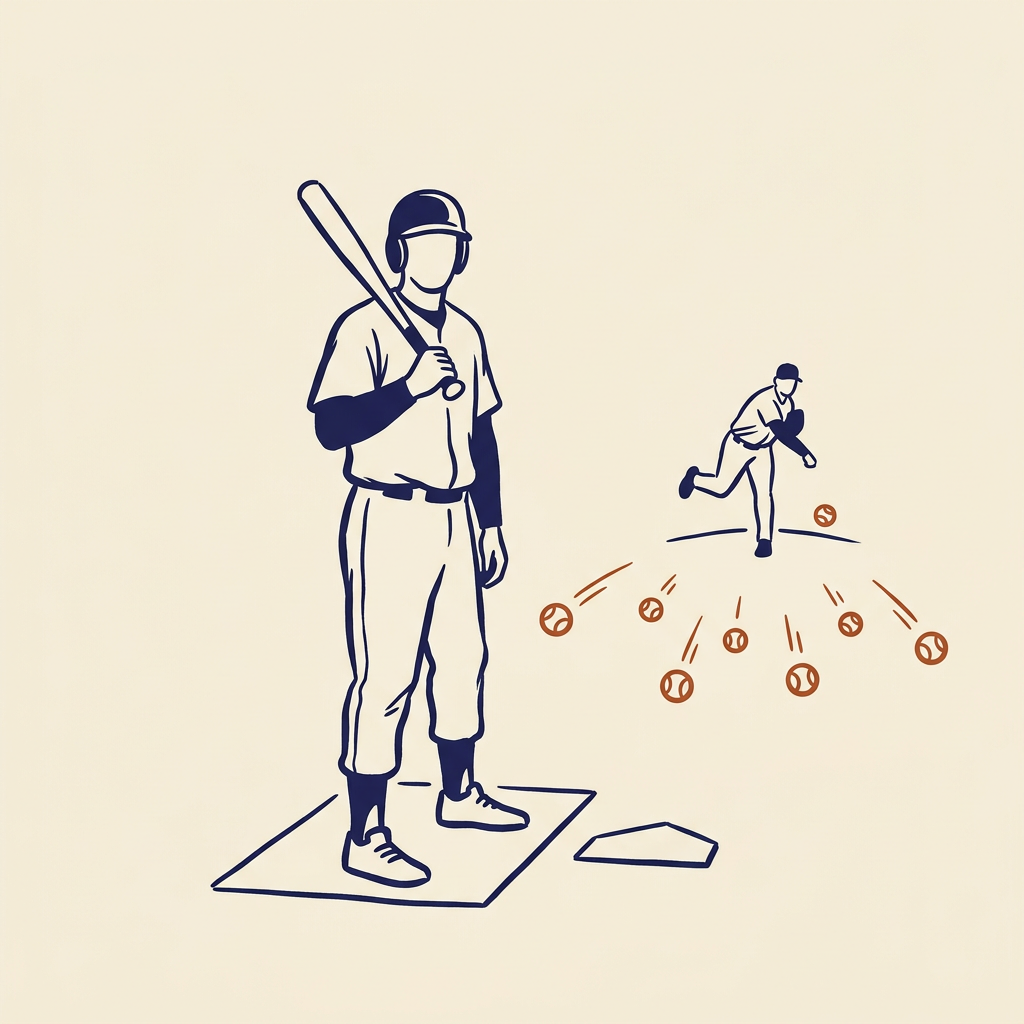
Compounding is destroyed by sales that trigger tax and by friction; there are no called strikes, so you can wait years for the pitch over the middle.
The favourite holding period is forever—an arithmetic claim, not sentiment. Every sale realises tax; every purchase pays spread and commission. An investor who compounds untaxed for decades ends far ahead of one who realises the same gains annually. The gap is the whole story, shown with a deliberately silly doubling-coin example.
The same logic defends doing nothing. Berkshire has held more than 100 billion dollars in short-term Treasuries for years when nothing met the standard, absorbing criticism each time. No one can force a swing.
Size is the honest limit. A small investor can still compound at rates Berkshire no longer can because too few businesses are large enough to matter. Patience remains an advantage; having too much money to be nimble is the matching disadvantage.
In practice: Berkshire has sat for years with more than 100 billion dollars in short-term Treasuries rather than lower the bar.
Key terms
- Mr. Market Graham’s manic-depressive partner who quotes a price every day; you may trade with him or ignore him, but never treat him as your guide to value.
- Circle of competence The set of businesses you can actually evaluate; its size is secondary to knowing exactly where the edge lies.
- Moat A structural advantage—brand, cost, switching costs, licence, network—that protects a firm’s returns from competitors.
- Owner earnings Reported earnings plus depreciation and amortisation, minus the capital expenditure truly needed to maintain the business.
- Look-through earnings Your share of profits that investees retain instead of paying as dividends; money you own even if you never receive it.
- Institutional imperative The tendency of organisations to resist change, spend available capital, justify the leader’s wishes, and copy peers regardless of sense.
- Partnership attitude Treating corporate shareholders as co-owners of the underlying businesses, judged over years rather than quarters.
What to do
- Write one page in your own words on any business before buying: what it sells, to whom, what stops a billion-dollar rival, and what cash it frees after necessary capex.
- Write in ink, in advance, the only reasons you will sell—changes in the moat, never changes in price—then reread that note on the day the price drops a third.
- Mentally replace every EBITDA with “earnings before the true costs” and test whether the business still looks sound.
- Scan every “one-time” charge for how many years in a row it has appeared.
- Unless you will do the one-page work, put new savings into a low-cost index fund and leave it for decades.
Questions to think with
- Can I explain this business’s cash generation and competitive protection without looking at the investor deck?
- If the share price fell by half tomorrow and nothing else changed, would I want to buy more or would I panic?
- Am I treating the market’s latest quote as a useful offer or as an opinion I must obey?
- Does this acquisition or stock issue sell a piece of something I understand to buy something I understand less well?
- What would have to change in the moat—not the price—for me to sell?
The other side
The record is survivorship: thousands who bought cheap moated businesses and were simply wrong never publish essay collections, so the method is offered as principle without easy falsification. Size has already cost Berkshire several points a year and the old edge from reading obscure filings has been competed away by the indexing Buffett himself now recommends; See’s-style opportunities have been rare for two decades. The letters also say almost nothing to someone whose real problems are a pension, mortgage and salary—the index-fund answer is one sentence in a long book about doing the opposite—and Cunningham’s thematic cut removes the chronology that would show claims being quietly revised.
Who it's for
Anyone who wants Buffett in his own words rather than filtered by a biographer, investors tired of tactics and short of principles, and readers who open company accounts already suspecting the numbers are being managed.