




Most decisions are bets under uncertainty, not right-or-wrong tests
Anyone stuck justifying choices before results land needs the weather-forecaster habit of saying 70 percent, not yes or no.
IJR · Oct 10, 2026 · 13 min read
In 60 seconds
- Real decisions are more like poker than chess: incomplete information and luck matter as much as skill.
- Judging choices only by outcomes—what Duke calls resulting—rewards lucky recklessness and punishes unlucky prudence.
- Stating beliefs as probability estimates, not binaries, makes them trackable, scorable, and updatable.
- Willpower alone cannot catch self-serving bias; small groups that reward accuracy over agreement can.
- The highest-leverage habit is arguing the strongest case against your own plan before you commit.
- The same tools reach personal and emotional choices, though they fit money and information better than identity or irreversible loss.
The big idea
Duke argues that nearly every decision is a bet placed under uncertainty, and that equating good outcomes with good decisions destroys learning. The fix is probabilistic language plus structured peer groups that protect dissent and separate decision quality from luck.
The book in brief
Duke starts from a category error: people treat life like chess—complete information, skill decides—when most choices are poker-like, full of hidden cards and luck. A good process can still lose; a bad one can still win. She names the habit of reading the outcome backward onto the decision “resulting,” and traces it to the human hunger for certainty.
From there she pushes a simple linguistic shift. Ask “wanna bet?” and vague certainty collapses into a number. Beliefs become probability estimates that can be scored against reality, the way weather forecasts are. She then shows how beliefs actually form: accept first, evaluate later, if at all. Confirmation bias is the default, not a rare glitch, so trying harder to be objective fails; the environment has to force disconfirming evidence into view.
The middle of the book attacks resulting as a learning problem. Lucky bad decisions get reinforced; unlucky good ones get punished. The cure is two separate questions after any result: was the outcome bad, and was the decision bad given what was known then? Confidence itself gets redefined as a percentage range so new evidence updates a belief instead of shattering an identity. The single highest-leverage solo habit is “exploring the back side”—writing the strongest case that you are wrong, including pre-mortems that assume failure and work backward.
Duke then admits the ceiling on self-correction. The same mind that holds the bias cannot reliably spot it. Debiasing is mostly social. She describes decision pods: small groups with explicit truthseeking norms, independent probability estimates before discussion, and the rule that flagging an error is a favor. Those pods only work if dissent is cheap; loyalty must not be equated with agreement.
Finally she extends the frame past money into relationships, careers, and even end-of-life medical choices, while acknowledging the friction when values and irreversible loss dominate. The arc lands on a practical claim: better decisions come from better odds-estimation and better group design, not from chasing a certainty that does not exist.
Context
Annie Duke left a near-complete PhD in cognitive psychology at Penn after a health crisis, fell into professional poker, and spent years learning to separate the quality of her decisions from the cards she was dealt. The 2018 book carried that poker vocabulary—resulting, calibration, decision groups—into business and everyday judgment for readers who must defend choices before outcomes arrive.
The key ideas
1
Life is poker
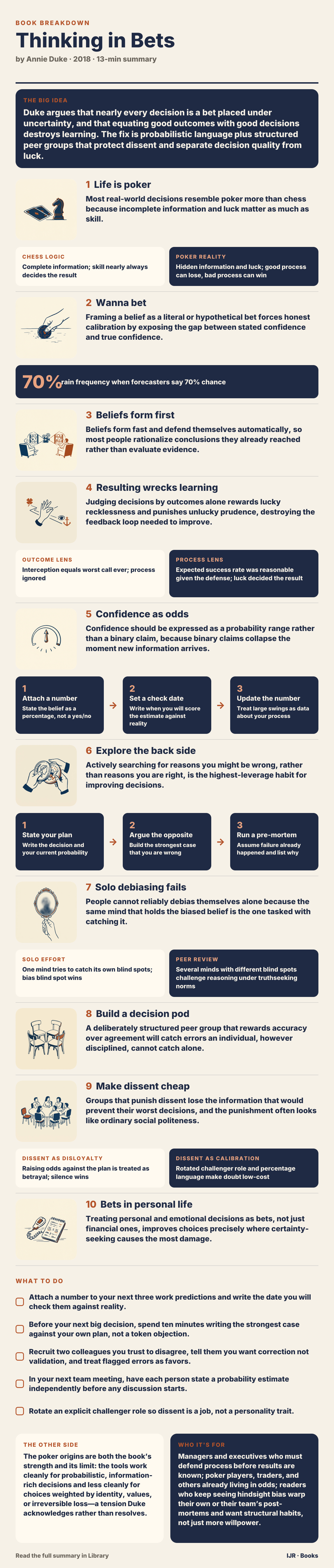
Most real-world decisions resemble poker more than chess because incomplete information and luck matter as much as skill.
Chess logic
Complete information; skill nearly always decides the result
Poker reality
Hidden information and luck; good process can lose, bad process can win
Chess is a game of complete information where skill nearly always determines the outcome. Poker is incomplete information: a sound decision can still lose and a reckless one can still win. Duke says people wrongly apply chess logic to business launches, hiring, and medical calls, assuming a bad result always means a bad decision and a good result always means a good one.
She traces that impulse to a basic need for certainty and control. Admitting luck’s large role feels like admitting helplessness. The fix is not to pretend skill is irrelevant, but to judge skill by the reasoning available at the time of the choice, not by the later reveal.
Even supposed sure things carry some probability of failure. Pretending otherwise sets people up to misread their own track record and to keep using the wrong mental model for the next bet.
In practice: Duke recounts hands she played optimally and still lost, and hands where a novice’s reckless bet paid off.
2
Wanna bet
Framing a belief as a literal or hypothetical bet forces honest calibration by exposing the gap between stated confidence and true confidence.
70%
rain frequency when forecasters say 70% chance
People speak in absolutes—“that will never work,” “she is definitely lying”—without tracking how sure they actually are. Once reputation or money is on the line, the hedges appear, because a bet demands a number.
Duke treats that number as the honest unit of belief. Truthseeking cares about accuracy; being right cares about ego. A bet has a settlement date and a scorekeeper, so it nudges people toward the former.
The practical payoff is that probabilities can be tracked and corrected over time, while binary claims cannot. The discipline is the one gamblers must adopt to stay solvent; executives who skip it often just get promoted.
In practice: Weather forecasters, scored numerically across thousands of trials, are among the best-calibrated predictors: when they say 70 percent chance of rain, it rains close to 70 percent of the time.
3
Beliefs form first
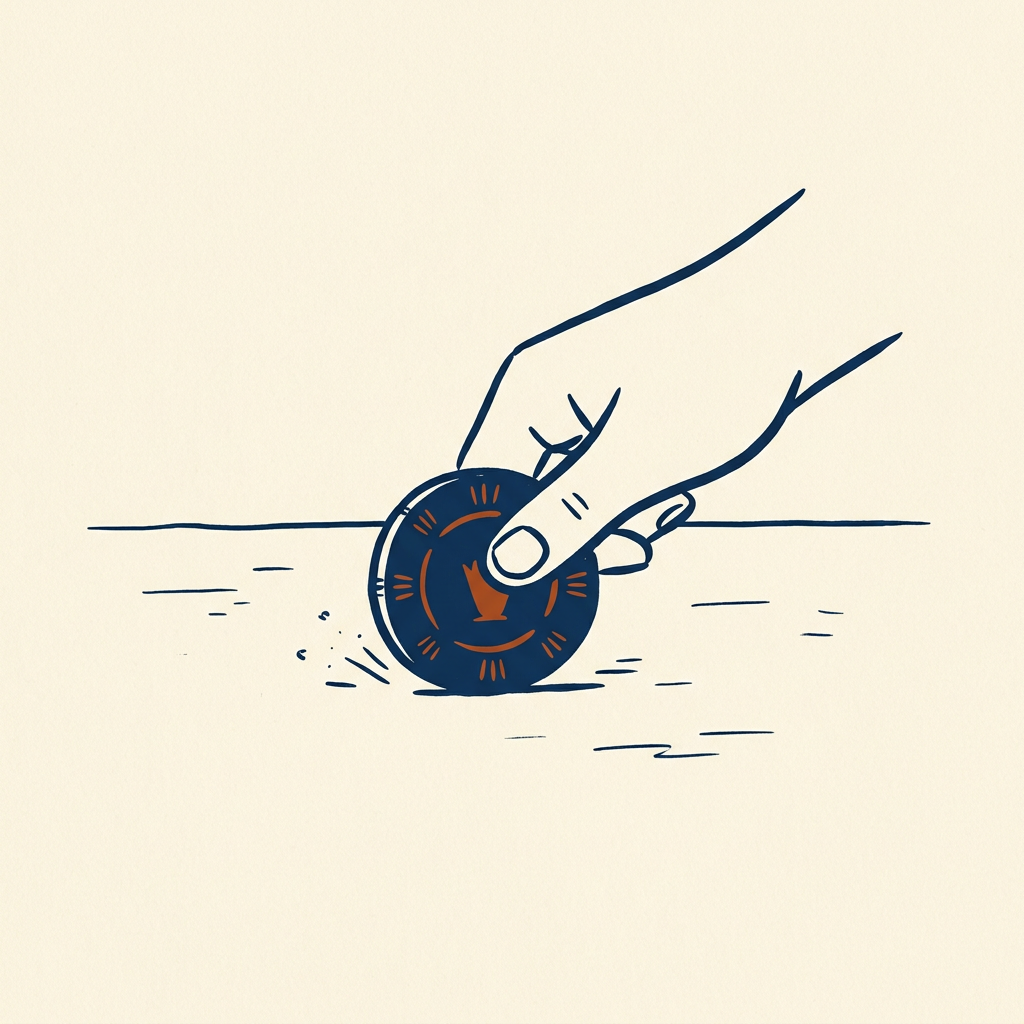
Beliefs form fast and defend themselves automatically, so most people rationalize conclusions they already reached rather than evaluate evidence.
Drawing on the process described by researchers such as Daniel Gilbert, Duke notes that we tend to believe first, automatically, and evaluate second, if at all. Confirmation bias is therefore the default operating mode, not an occasional lapse.
Motivated reasoning follows the same pattern. Simply trying harder to “be objective” does not fix it, because the bias runs below the level where effort can intervene. Open-mindedness as a self-reported trait is especially weak; people already think they have it.
Her structural answer is to treat every belief as a bet against reality and to build habits that force the odds you are wrong into view. The marketplace of ideas does not self-correct as advertised when identity attachment keeps people holding losing beliefs markets would have unloaded.
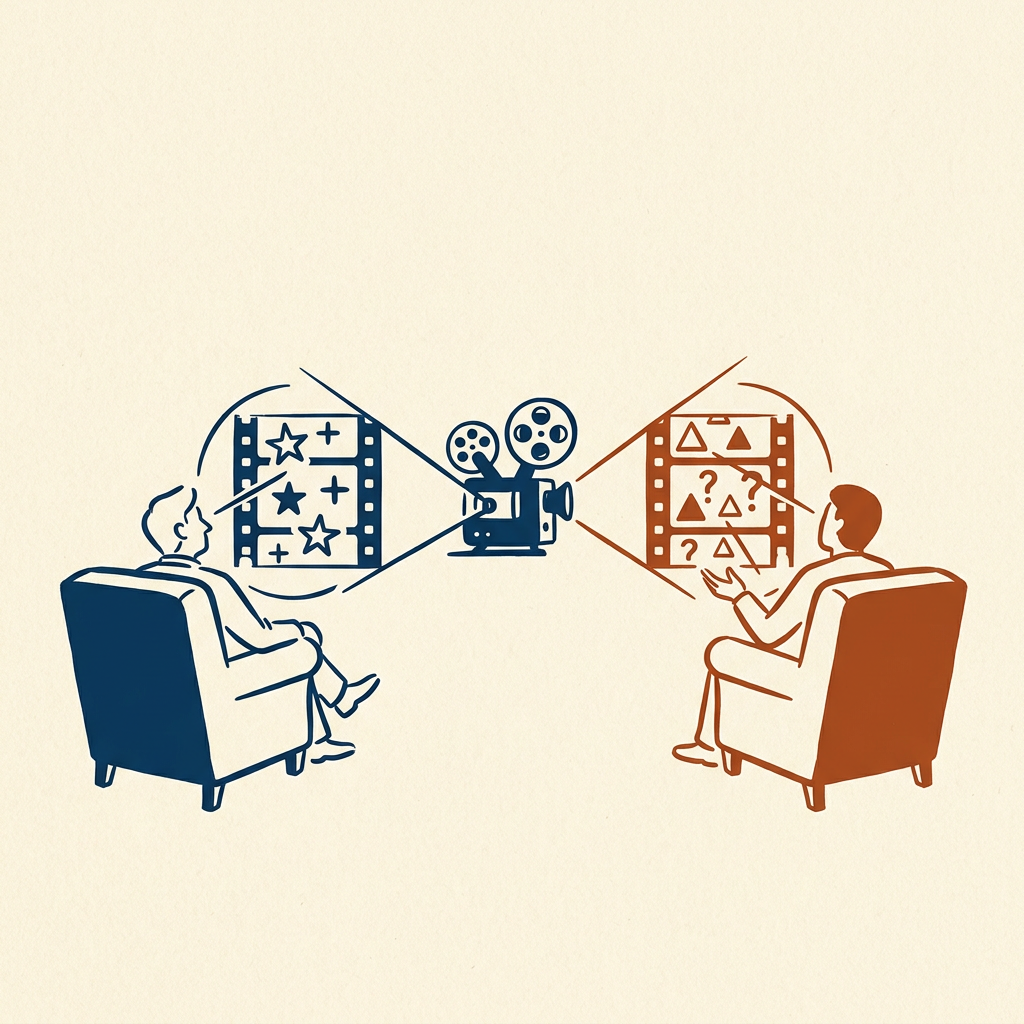
In practice: In the 1954 Dartmouth-Princeton study by Hastorf and Cantril, sports fans watching the same game footage genuinely saw different numbers of fouls by the opposing team.
4
Resulting wrecks learning
Judging decisions by outcomes alone rewards lucky recklessness and punishes unlucky prudence, destroying the feedback loop needed to improve.
Outcome lens
Interception equals worst call ever; process ignored
Process lens
Expected success rate was reasonable given the defense; luck decided the result
If good outcomes are treated as proof of good decisions, two failures follow. A driver who runs a red light and does not crash concludes the maneuver was fine; only the outcome, not the process, was fine. An executive who makes a well-reasoned but unsuccessful acquisition gets demoted, teaching the organization to avoid well-reasoned risk.
Duke’s fix is to split every post-mortem into two questions: was this a bad outcome, and separately, was this a bad decision given the information available then? Only the second question yields learning.
Hindsight bias floods in the moment the result is known, so evaluating your own past process without that knowledge is nearly impossible. She asks readers to guard against the flood rather than assume immunity.
In practice: After Pete Carroll’s 2015 Super Bowl goal-line pass was intercepted, analysts called it the worst play call in history, even though probabilistic analysis showed a reasonable expected success rate given the defensive alignment, comparable to or better than the running alternative.
5
Confidence as odds
Confidence should be expressed as a probability range rather than a binary claim, because binary claims collapse the moment new information arrives.
- 1Attach a numberState the belief as a percentage, not a yes/no
- 2Set a check dateWrite when you will score the estimate against reality
- 3Update the numberTreat large swings as data about your process
Saying “I know X” or “X is true” leaves no graceful way to update; being wrong feels like total defeat. Replacing that with “I’d put it at 65 percent given what we know now” changes the stakes. A 35 percent event is supposed to happen more than a third of the time.
Duke links the habit to calibration training used by intelligence analysts and forecasters. Tracking percentage estimates against outcomes lets people adjust confidence levels, not just conclusions.
You cannot usefully update a belief you never quantified. Large swings in your own numbers become data about your reasoning process, not only about the world.
In practice: Tetlock’s work on superforecasters showed ordinary trained forecasters using this method outperformed CIA analysts with classified information on some geopolitical predictions.
6
Explore the back side
Actively searching for reasons you might be wrong, rather than reasons you are right, is the highest-leverage habit for improving decisions.
- 1State your planWrite the decision and your current probability
- 2Argue the oppositeBuild the strongest case that you are wrong
- 3Run a pre-mortemAssume failure already happened and list why
Once a view forms, people search selectively for confirming evidence, a pattern documented since Wason’s 1960s experiments. Duke’s countermeasure is deliberate: before committing, state the strongest case for the opposite conclusion as if arguing someone else’s side for real pay.
Token devil’s advocacy fails; the exercise works only with genuine intent to find the strongest counter-case. If it does not feel uncomfortable, it is probably too weak to help.
She extends the same logic into pre-mortems, the technique popularized by Gary Klein, where a team imagines the project has already failed and works backward to explain why. Risks surface that forward planning never raises.
In practice: Before a big bluff, Duke forced herself to articulate exactly what the opponent would need to be holding for a call to be correct, which often showed she had overestimated her fold equity.

7
Solo debiasing fails
People cannot reliably debias themselves alone because the same mind that holds the biased belief is the one tasked with catching it.
Solo effort
One mind tries to catch its own blind spots; bias blind spot wins
Peer review
Several minds with different blind spots challenge reasoning under truthseeking norms
Awareness of a bias does little to reduce its effect on your own judgment—the bias blind spot studied by Emily Pronin. People spot confirmation bias readily in others and rarely in themselves. Knowing Dunning-Kruger exists does not grant accurate self-assessment.
This ceiling reframes the second half of the book. Techniques like “consider the opposite” still help, but willpower and introspection have a hard limit. Debiasing is mostly a social problem needing social solutions.
The poker world stumbled onto the fix early: small trusted groups that review hands, challenge reasoning, and enforce probabilistic language instead of resulting language. Shared expertise plus honesty norms matter more than solitary discipline.
In practice: Duke contrasts those hand-review groups with typical corporate teams that default to consensus-seeking and social smoothing, a dynamic related to the groupthink Irving Janis named in studies of foreign-policy fiascoes.
8
Build a decision pod
A deliberately structured peer group that rewards accuracy over agreement will catch errors an individual, however disciplined, cannot catch alone.
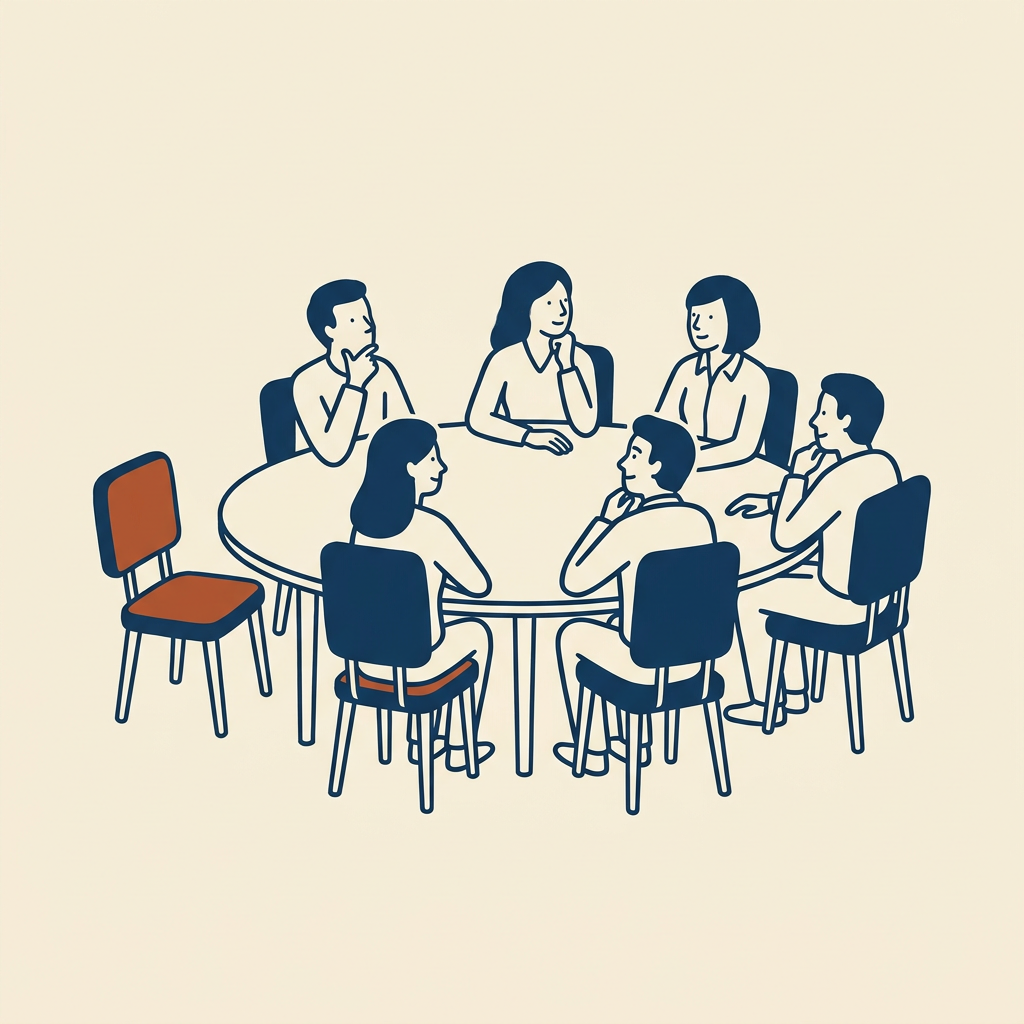
Duke details a “pod”: a small set of people who commit explicitly to truthseeking rather than social comfort. Members present a decision, state reasoning and probability estimates, and invite blunt critique under the norm that pointing out an error is a favor.
Two failure modes kill the design. An echo-chamber pod of similar people only confirms and inflates confidence. A status-driven pod lets the highest-ranking or loudest voice become the default answer, because groups often converge on the confidently stated view rather than the best-supported one.
Explicit ground rules help: each member states a probability estimate independently before discussion begins, a move related to the Delphi method used in forecasting research to prevent early anchoring. Disagreements get restated as calibration exercises, not debates to win.
In practice: Poker hand-review groups already run this way: players show the decision, the odds they assigned, and accept critique without treating it as a personal attack.
9
Make dissent cheap
Groups that punish dissent lose the information that would prevent their worst decisions, and the punishment often looks like ordinary social politeness.
Dissent as disloyalty
Raising odds against the plan is treated as betrayal; silence wins
Dissent as calibration
Rotated challenger role and percentage language make doubt low-cost
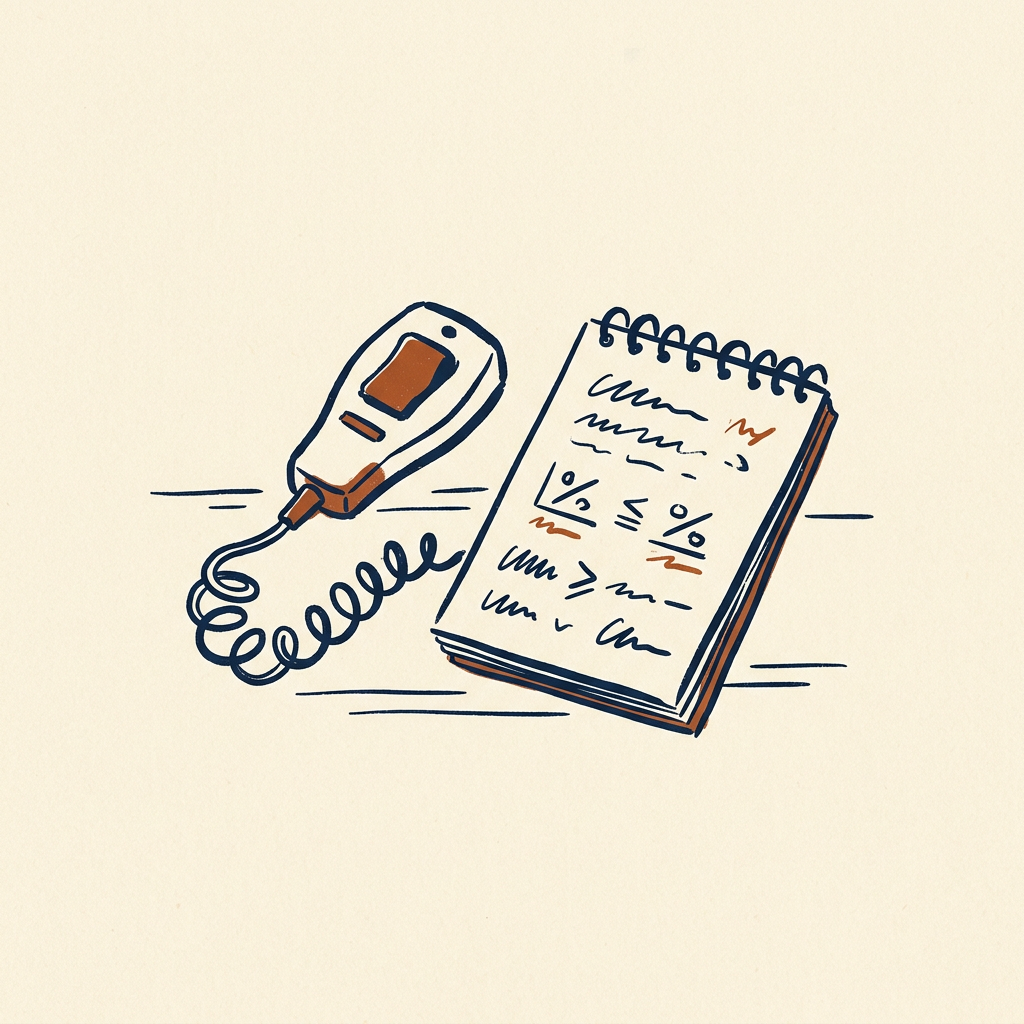
Even well-intentioned pods fail when dissent carries social cost. People avoid it in low-stakes settings, following patterns seen in Solomon Asch’s 1950s conformity experiments where subjects gave visibly wrong answers to match the group.
Loyalty is often equated with agreement, so a probabilistic doubt about a leader’s plan gets coded as disloyalty. Warning signs raised by lower-status members get dismissed in the post-mortems of organizational and policy disasters.
Duke’s remedy is structural, not heroic. Assign and rotate an explicit challenger role so dissent is not one person’s personality. Separate floating a probability estimate from any claim about loyalty or competence. Once the group already speaks in percentages, “I’d put this at 30 percent, not 80 percent” sounds like calibration instead of betrayal.
In practice: Without active protection of the disagreeable minority, a decision pod degrades back into the same consensus-seeking dynamic the book argues against.
10
Bets in personal life
Treating personal and emotional decisions as bets, not just financial ones, improves choices precisely where certainty-seeking causes the most damage.
Duke widens the frame to ending a relationship, choosing a career path, or answering a friend’s bad news. People often demand certainty before acting in these domains, which produces either paralysis or false confidence dressed as conviction.
Time is an unrecoverable resource. A bet once made cannot be unmade, yet future bets can be adjusted with new information, so the emotional weight of any single choice can be lighter than people usually allow.
She notes the limits: not every decision benefits from cold quantification, and forcing probability language onto grief or moral choice can feel callous without care for the emotional register. Still, separating the decision from the outcome and stating honest uncertainty retains value even when the stakes are not financial.
In practice: During end-of-life medical decisions for her father, stating odds of recovery and quality-of-life outcomes explicitly, rather than as vague hope or dread, produced more honest and less regret-laden family choices than avoiding the numbers.
Key terms
- resulting Judging a decision’s quality by its outcome instead of by the reasoning available at the time
- wanna bet A prompt that forces a vague certainty into a probability estimate by putting reputation or stakes on the line
- calibration How closely your stated probabilities match actual frequencies over many trials
- exploring the back side Deliberately building the strongest case that your own view is wrong before you commit
- pre-mortem Imagining a project has already failed and working backward to list the reasons
- decision pod A small peer group with explicit truthseeking norms that reviews decisions and rewards accuracy over agreement
- bias blind spot The tendency to see bias clearly in others while missing it in yourself
- truthseeking Caring more about accurate beliefs than about being proven right or staying comfortable
What to do
- Attach a number to your next three work predictions and write the date you will check them against reality.
- Before your next big decision, spend ten minutes writing the strongest case against your own plan, not a token objection.
- Recruit two colleagues you trust to disagree, tell them you want correction not validation, and treat flagged errors as favors.
- In your next team meeting, have each person state a probability estimate independently before any discussion starts.
- Rotate an explicit challenger role so dissent is a job, not a personality trait.
Questions to think with
- Where in the last month did you treat a lucky outcome as proof your process was sound?
- What belief would you be unwilling to attach a probability and a check-back date to, and why?
- Who in your circle is allowed to tell you that you are wrong without social cost?
- If your current plan failed six months from now, what would the pre-mortem list as the causes?
- Which personal decision are you delaying until you feel certain, and what odds would you actually assign today?
The other side
The poker origins are both the book’s strength and its limit: the tools work cleanly for probabilistic, information-rich decisions and less cleanly for choices weighted by identity, values, or irreversible loss—a tension Duke acknowledges rather than resolves.
Who it's for
Managers and executives who must defend process before results are known; poker players, traders, and others already living in odds; readers who keep seeing hindsight bias warp their own or their team’s post-mortems and want structural habits, not just more willpower.