




UK pins Fairford plot on Iran’s Guard after U.S. bombers leave
Burnham told Parliament the IRGC almost certainly directed the September incident near RAF Fairford. Police found petrol in vans; seven men walked free on bail as allies backed London’s attribution.
IJR · Oct 13, 2026 · 4 min read
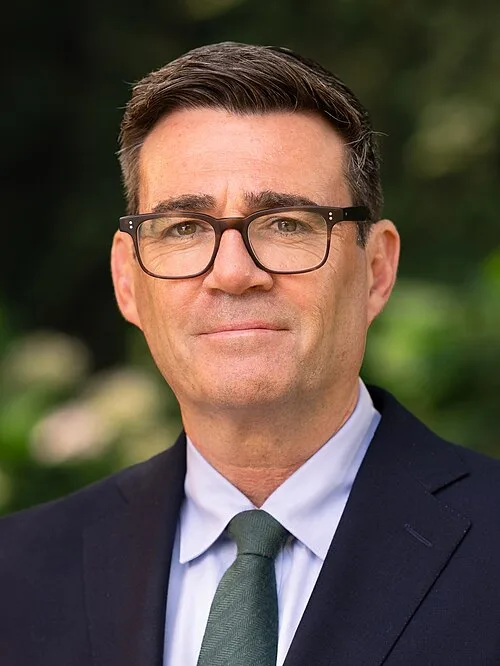
Prime Minister Andy Burnham told Parliament on October 12, 2026, that the suspected plot near RAF Fairford was almost certainly the work of Iran’s Islamic Revolutionary Guard. “I can confirm our assessment that it is highly likely to have been co-ordinated in Iran, almost certainly directed by Iran’s Islamic Revolutionary Guard,” he said.
That assessment is the core fact. Britain has now publicly tied a security scare at a base used by American bombers to the IRGC.
On September 27, armed police and bomb-disposal teams responded near the Gloucestershire airfield and evacuated nearby residents. RAF Fairford sits roughly 100 miles west of London. It had hosted U.S. aircraft for the war against Iran that began on February 28, 2026. Five British men in their 20s were arrested that day. Investigators later held seven men in total—six British nationals and one British-Iranian dual national. Police found petrol or accelerant in three vans. They found no explosives. All seven were released on bail without charges.
Burnham told lawmakers the government would not stand down. “We will not tolerate these threats on our soil,” he said. “We will crack down on Iran’s use of criminal networks, using our full range of powers to target them and their funding streams, and we will bring further sanctions to restrict the capacity of Iran and the IRGC to do us harm.”
Foreign Secretary Ed Miliband summoned Iran’s ambassador to the Foreign Office. Britain sanctioned Ruhollah Bazghandi, described as IRGC Head of Counterespionage Operations, and Shahram Ali Reza Tamarzadeh Jakki, described as a facilitator for the Zindashti criminal network. The designations carried asset freezes and travel bans. A separate earlier package had already hit 71 Iranian nuclear entities.
Twenty-nine countries, including the United States, Canada, France, Germany and Australia, joined a statement recognizing Britain’s attribution. The statement said the Fairford episode showed the IRGC’s continued willingness to project hostile activity beyond its borders through covert networks and proxy actors.
Iran rejected the charge outright. Ambassador Seyed Ali Mousavi met UK Middle East minister Stephen Doughty. That is the full denial on the public record. Britain has not released underlying intelligence. No charges have been filed. The government’s position rests on its assessment, the sanctions it imposed, and the allied statement that backed it.
U.S. Secretary of State Marco Rubio said the episode “clearly involves the hands of a foreign actor.” President Donald Trump, asked about further steps against Iran after the British attribution, replied: “We are going to see. There’s plenty of action against. When you say actions against Iran, they have no Navy, no Air Force. Their inflation now is 301 per cent.” He had already acknowledged the earlier decision to pull aircraft: “There were some threats.” Twelve U.S. B-1 bombers were withdrawn from Fairford.
For American taxpayers who fund those bombers and for the crews who fly them, the sequence is concrete. A European base supporting operations that began in February was emptied after a September incident Britain now attributes to the IRGC. The aircraft left. The suspects remain free on bail. The sanctions and the attribution stand.