



US fields on-orbit space weapons to deter China and Russia
Air Force Secretary Troy Meink confirms deployed space-control weapons at a Maryland conference, drawing Beijing and Moscow protests while withholding the details that keep deterrence intact.
IJR · Sep 16, 2026 · 4 min read
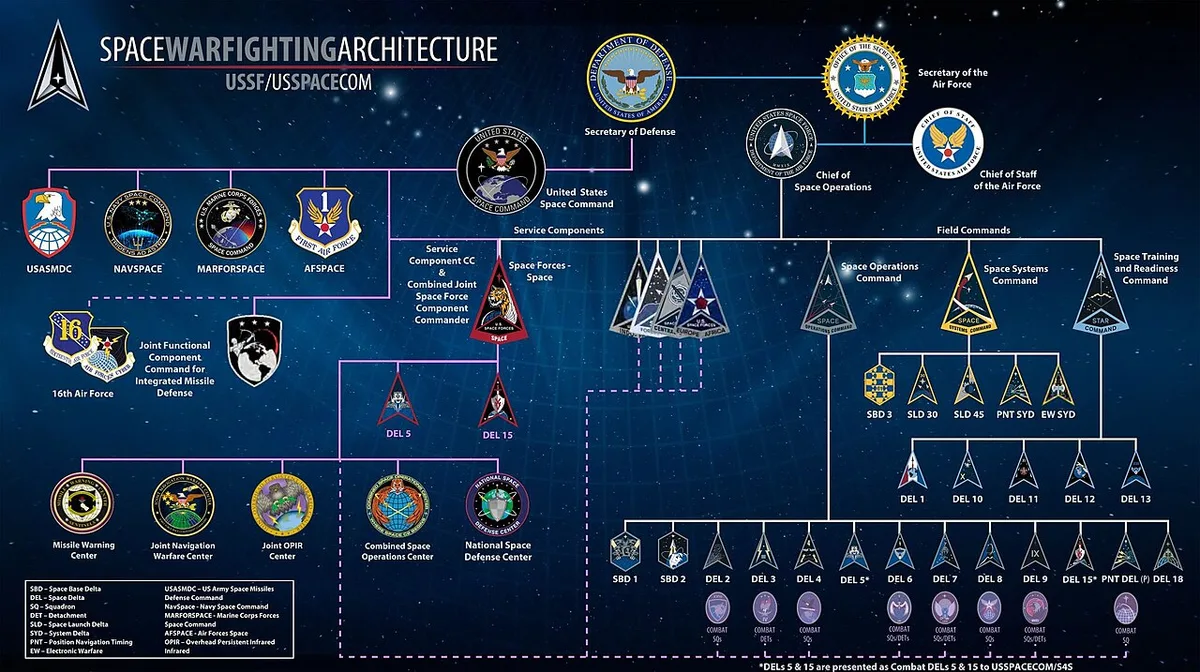
Air Force Secretary Troy Meink stood at the Air, Space & Cyber Conference in National Harbor, Maryland, on Monday, Sept. 15, 2026, and said what American officials had long left unsaid. “This is why the United States now has, on-orbit, space-control weapons.”
The United States has weapons already operating in orbit.
Meink told the conference the step was required by the threat picture. “Today, we continue to ensure we remain ready to meet the challenges of evolving threats wherever they exist,” he said. “This is why the United States now has on-orbit space control weapons capable of defending the joint force against hostile adversary action.” He added that the Air Force is “increasing readiness against existing threats” and will “dramatically increase our combat power by adding large numbers of highly autonomous systems,” producing “a radically different-looking Air Force by 2032.”
Reporters pressed him afterward for numbers, dates, targets and designs. Meink declined. He said the wording was deliberate and that discussing specifics would weaken deterrence.
A U.S. Space Force spokesperson supplied only the outer boundary. Space-control capabilities can involve kinetic and non-kinetic means. They can be employed for offensive or defensive purposes at the direction of combatant commands. They can disrupt, degrade or destroy adversary space assets. How many systems are aloft, when they reached orbit, and what exactly they do when ordered remained undisclosed.
A day later, Richard Palmer of U.S. Space Command made the case for the public acknowledgment itself. The weapons, he said, are fundamental to keeping deterrence from failing and to being ready to use them if it does. He too declined to discuss their nature or capability.
China answered the next day. Foreign Ministry spokesman Guo Jiakun accused Washington of “preparing for war in outer space” and declared, “We urge the U.S. side to stop expanding its military capabilities and preparing for war in outer space.” Kremlin spokesman Dmitry Peskov said Russia believes “that space must be free of any weapon” and is “counting on broad international consolidation to continue working toward the complete demilitarization of space.”
Those statements come from governments that have already shown what counterspace tools look like in practice. Russia destroyed a defunct satellite in 2021 with a ground-based anti-satellite missile test, creating thousands of pieces of debris. India destroyed a low-orbit satellite in a 2019 missile test. The Secure World Foundation’s 2026 report tracks 13 countries across five categories of counterspace capability: electronic warfare, cyberattacks, directed-energy weapons, co-orbital weapons, and direct-ascent weapons. Russia’s 2022 cyberattack on Viasat satellite broadband hit on the first day of the invasion, according to the foundation’s attribution. The United States itself already fields three acknowledged ground-based electronic warfare systems that jam geostationary satellites roughly 36,000 kilometers up.
The legal line is clear and limited. The 1967 Outer Space Treaty bans weapons of mass destruction in orbit. It does not ban conventional or non-kinetic weapons. U.S. officials say the newly acknowledged systems comply with that treaty. The distinction is not technical hair-splitting. Early nuclear tests in space damaged the testers’ own satellites and left orbits hazardous. Conventional kinetic options and non-kinetic means—jamming, dazzling, cyber disruption—sit outside the treaty’s prohibition. That is the regime under which every major space power has been operating for years.