




China Builds Legal Machinery To Flip Civilian Economy Into War Mode
China is tightening its national security controls on multiple fronts, expanding authorities over civilian industry and wartime mobilization while imposing new exit restrictions on Chinese citizens tied to sensitive technology and export controls.
Francis Kapper · Sep 17, 2026 · 7 min read
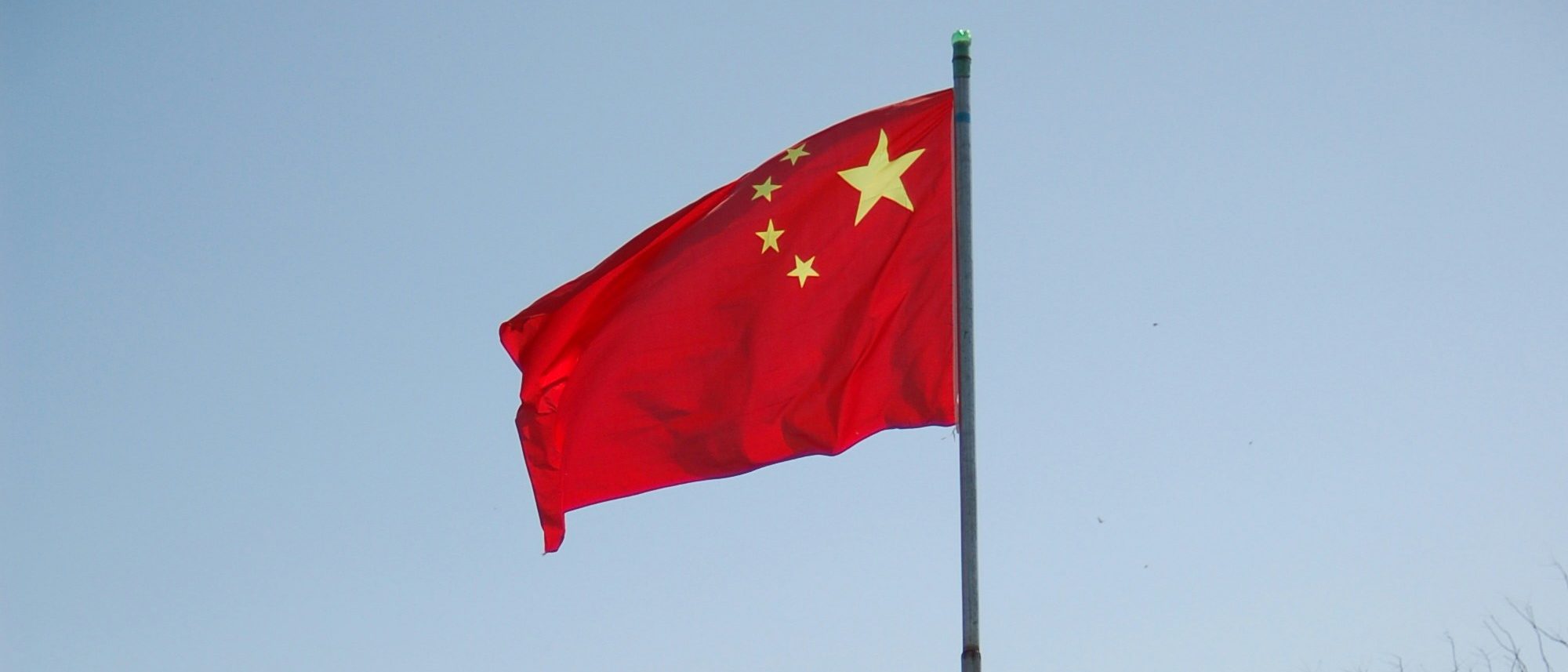

China is tightening its national security controls on multiple fronts, expanding authorities over civilian industry and wartime mobilization while imposing new exit restrictions on Chinese citizens tied to sensitive technology and export controls.
A revised national defense mobilization law set to take effect Oct. 1 lays out how civilian economic capacity can be redirected toward China’s defense needs, according to China’s Ministry of Commerce. The changes come as Beijing is also imposing tighter controls on the movement of people and sensitive technological knowledge amid its intensifying competition with Washington, The Wall Street Journal reported.
“For the first time, the law makes clear that its goal is to ‘ensure a rapid transition between peace and war,’” Allen Zhang, a research assistant in the Asian Studies Center at The Heritage Foundation, told the Daily Caller News Foundation. “While this doesn’t automatically signal that China is gearing up for conflict, it does beg the questions of why such a change was made and why it was made now. This revision is the first in 16 years and, in my view, reflects an effort to adapt to the new era of warfare increasingly shaped by artificial intelligence (AI).”
This move shows that China is strengthening its resolve to prepare for war, just as Chinese President Xi Jinping is expected to visit President Donald Trump in Washington next week.
The revised law defines national defense mobilization as measures designed to enable a rapid transition between peacetime and wartime and transform China’s economic and social capacity into defense strength, according to China’s Ministry of Commerce. China’s National People’s Congress Standing Committee approved the revision Aug. 28, and it takes effect Oct. 1, according to the Chinese Ministry of National Defense.
“Following the constant bipartisan threats and saber-rattling from the United States, China has predictably done what any rational actor would do,” Steve Hanke, a professor of applied economics at Johns Hopkins University, told the DCNF. “Indeed, China is preparing to defend itself against a threatening superpower. China’s moves are well thought out and significant. The U.S. should learn that if you poke a stick in a hornet’s nest, you are liable to be stung. That said, one should never underestimate the stupidity of U.S. foreign policy initiatives.”
The White House, State Department and Chinese Embassy in Washington did not respond to requests for comment.
“This is a new expansion of China’s muscle flexing,” Heritage Foundation visiting fellow and former Pentagon official Steven Bucci told the DCNF. “It would obviously help them flip their economy more quickly. It is also exactly the danger of setting up production facilities in China. They play by different rules.”
Washington has also accused Beijing for years of using coercive technology transfers and intellectual property theft to obtain foreign technology. Forced technology transfer, including state-sponsored theft of trade secrets, remains an ongoing U.S. concern regarding China, according to the Office of the U.S. Trade Representative.