



Could Alito’s Recusal Change The Outcome Of Landmark Climate Case?
Justice Samuel Alito’s last-minute recusal has shaken up a blockbuster Supreme Court battle that stands to alter the future of climate litigation across the country.
Paris Apodaca · Sep 29, 2026 · 7 min read
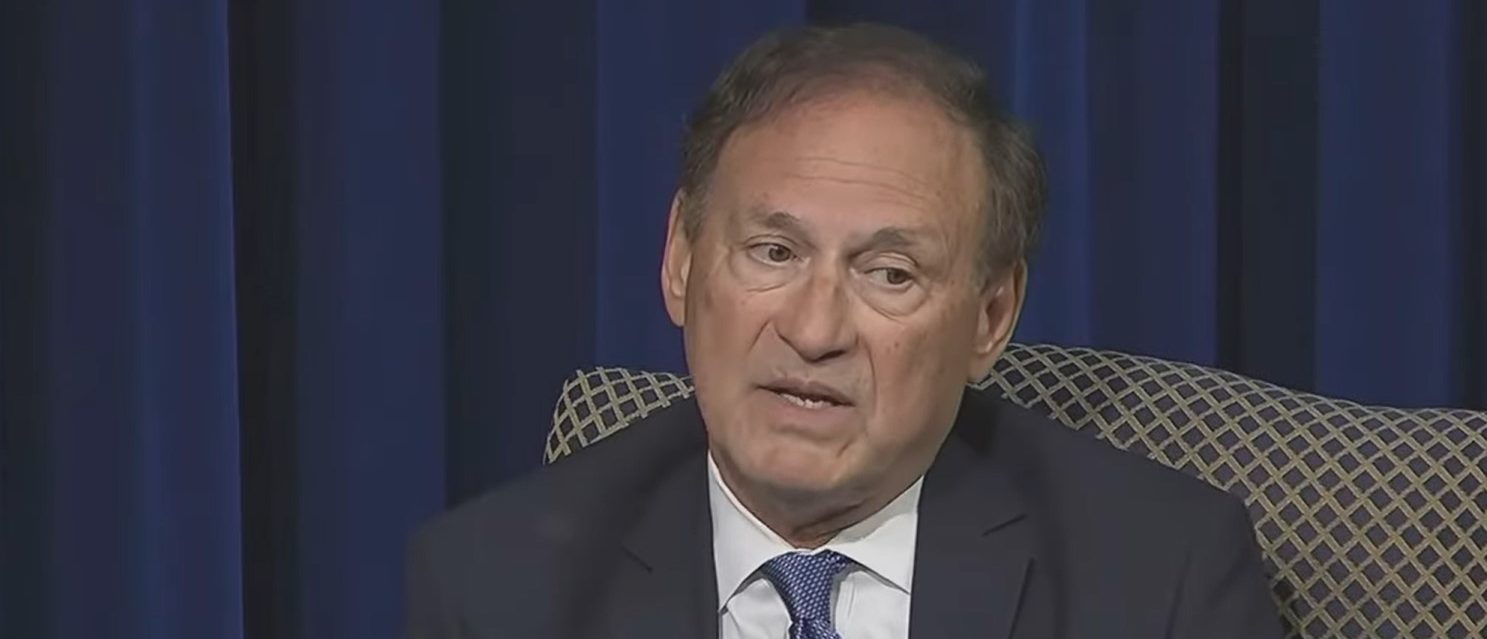

Justice Samuel Alito’s last-minute recusal has shaken up a blockbuster Supreme Court battle that stands to alter the future of climate litigation across the country.
The Supreme Court is scheduled to hear oral arguments Oct. 5 in Suncor Energy v. County Commissioners of Boulder County, a dispute over whether Colorado localities can use state tort law to seek damages from energy companies for alleged harms tied to global greenhouse gas emissions, according to the court’s docket. Alito recused himself Sept. 28, leaving eight justices to consider the dispute.
“The recusal raises the possibility that the Colorado Supreme Court decision might be affirmed without decision by an equally divided 4-4 U.S. Supreme Court,” Harold Hongju Koh, Sterling Professor of International Law at Yale Law School, told the DCNF. “But that still leaves open an important question for Monday’s oral argument: which Justice might provide a fourth vote for affirmance?”
That even split would leave the 2025 Colorado Supreme Court ruling standing.
“The timing is something of a surprise, but the underlying decision less so because Alito has recused from cases involving energy companies in the past due to his stock holdings,” Jonathan H. Adler, Tazewell Taylor professor of Law at William & Mary Law School told the DCNF.
Alito recused himself from the case Monday without publicly explaining why. The justice does not own stock in Suncor or ExxonMobil, the companies directly involved in the case, but his 2025 financial disclosure shows holdings in other energy companies, including ConocoPhillips and Phillips 66, both of which face similar climate lawsuits around the country. Alito’s disclosure valued his ConocoPhillips investment at up to $15,000 and his Phillips 66 holdings between $15,001 and $50,000.
“Most observers have assumed that Alito was among those most likely to support the petitioners arguments as he has been more likely to vote in favor of federal preemption than most of the other justices,” Adler continued.
Boulder County and the City of Boulder sued Suncor and ExxonMobil in 2018, alleging their fossil fuel activities contributed to climate-related local harms. The Colorado Supreme Court allowed the case to proceed in 2025, with the companies arguing that claims involving interstate and international emissions are governed by federal law, while climate litigation advocates have laid out strategies for pursuing fossil fuel companies through state laws as the High Court showdown approaches.
Similar state-law climate cases are proceeding around the country. California and several local governments have sued major oil companies, alleging they misled consumers about the climate effects of fossil fuels and seeking damages and other relief under state law. A California court stayed the coordinated cases in April, concluding the Supreme Court’s decision in Boulder could resolve “in whole or in substantial part” issues raised in the litigation.