




Anne Rice Return to Catholicism
Author re-embraces Christ publicly
FaithTap · Oct 7, 2026 · 10 min read
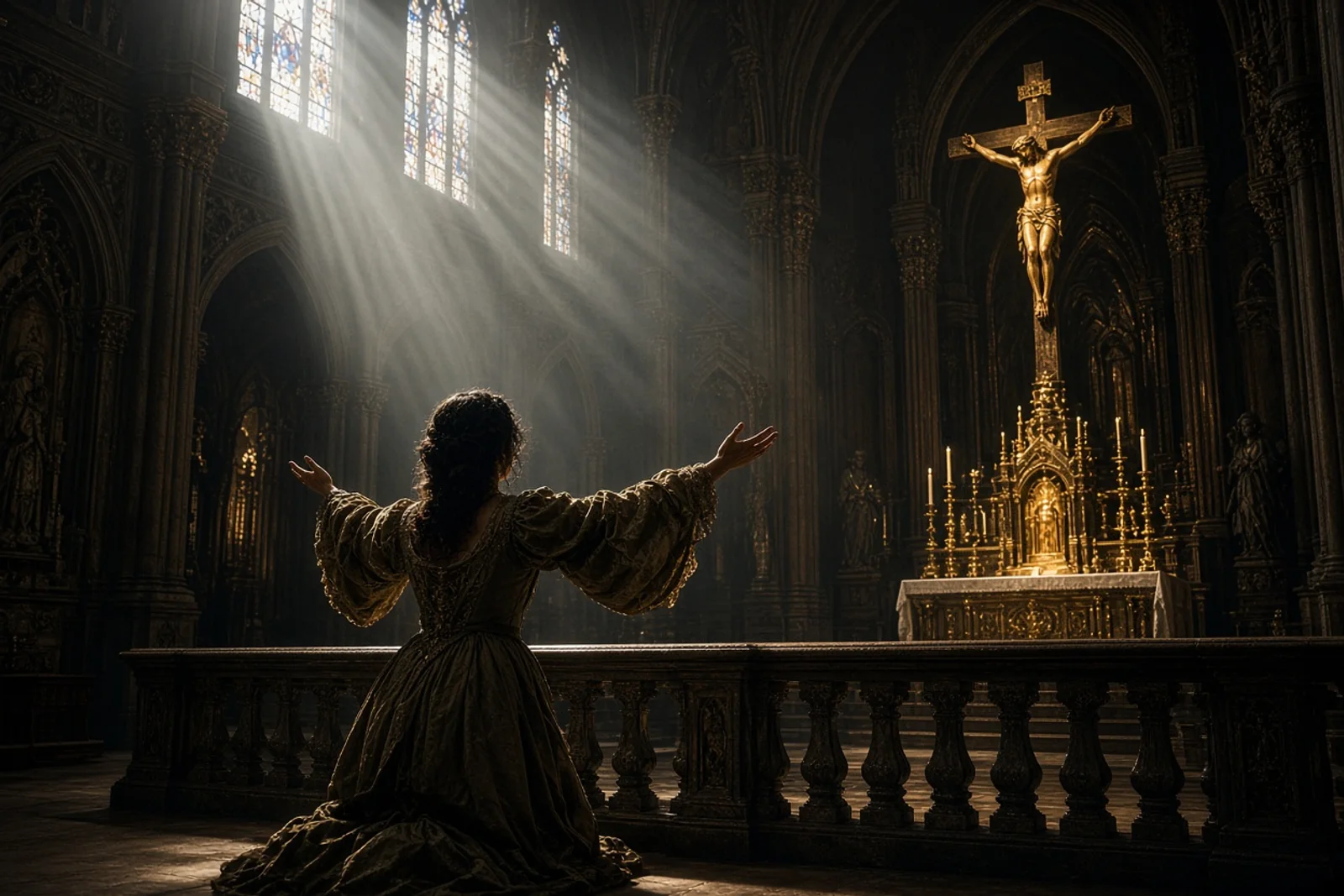
The afternoon light slanted across the pews in the small California church when she walked in. I had come with her that day, the way I had come with her to half a dozen quiet places over the years when she needed to look at old stone and stained glass without having to explain why. She moved up the side aisle without hurry, one hand brushing the back of each bench as she passed. Outside the air was cool for December, the kind of dry Southern California afternoon that makes the eucalyptus leaves rattle against the windows. She stopped at the rail, knelt, and stayed there longer than I expected.
We had known each other since the early days in the Haight, when she typed at the kitchen table while the street below filled with music and smoke. I had watched the books come out one after another, the vampires first, then the witches, then the historical pieces that pulled in the old New Orleans streets she had walked as a girl. The losses sat between us without being named every time we met. Michele’s death had already happened by the time the first vampire novel sold. Stan’s cancer came later. Through both she kept writing, and through both she kept the same answer when anyone asked about belief: none.
That December she had been reading again, the same way she had read philosophy in Texas after her mother died. Only now the books were different. She carried one with her sometimes, a worn paperback of the gospels, the pages marked with small slips of paper. She did not talk about what the reading did to her. She only said she wanted to see the church again, the way a person might say they wanted to see an old neighborhood before the buildings came down.
She rose from the rail and moved into a pew near the front. I stayed two rows back. For a long time there was only the sound of her breathing and the faint traffic outside. When she came out afterward her face was set the way it always was when she had finished a long stretch of work, nothing dramatic, only the quiet that follows a decision already made inside the head.
Over the next weeks she began to speak about it in the careful way she spoke about contracts or deadlines. She had gone back to the church of her childhood. She said the words plainly, the way she would say she had finished a manuscript. She started going regularly. I went with her a few more times. The routine was simple: Mass, then coffee afterward, then home to the desk. She did not announce anything in the papers at first. The public statements came later, after she had already begun the research for the new books.
Those books took the place of everything else she had been planning. She cleared the desk of the old notes and started over with the life of Jesus at seven years old. She read the scholars, the historians, the early fathers. She drove to libraries and sat with the heavy volumes the way she had once sat with the vampire research. The difference was the tone of the letters she sent to friends. She wrote that the work now belonged to the Lord she had returned to, and that she meant every word of the gospels she was using. No modern explanations. No softening.
Stan was gone by then, two years after her return. She spoke of him in the church sometimes, the same way she spoke of Michele, as people who were still present in the prayers. The house grew quieter. She kept the schedule of a working writer, early mornings at the desk, afternoons with the books open around her. When the first Christ the Lord novel came out, she told interviewers the same thing she had told me on the drive home from that December afternoon: the story was not hers to alter.
I saw her again after the second volume. She was living in Rancho Mirage by then, the desert light sharp on the windows. She showed me the new manuscript pages the way she had once shown me chapters of the vampire books. The difference was not in the writing itself but in what she said when she set the pages down. She said she hoped the books would bring readers closer to the figure she now wrote about every day. If they did not, she said, the work was worthless to her.
The last time we spoke she was still at the desk. The room held the same order it always had, the same stacks of reference books, the same quiet. She mentioned the next volume she wanted to finish and the research still ahead. Outside the light had begun to change. She turned back to the page without saying anything more.