




Hildegard of Bingen Writes Scivias and Heals Patients
Abbess records visions and treats the sick with herbal medicine.
FaithTap · Oct 13, 2026 · 10 min read
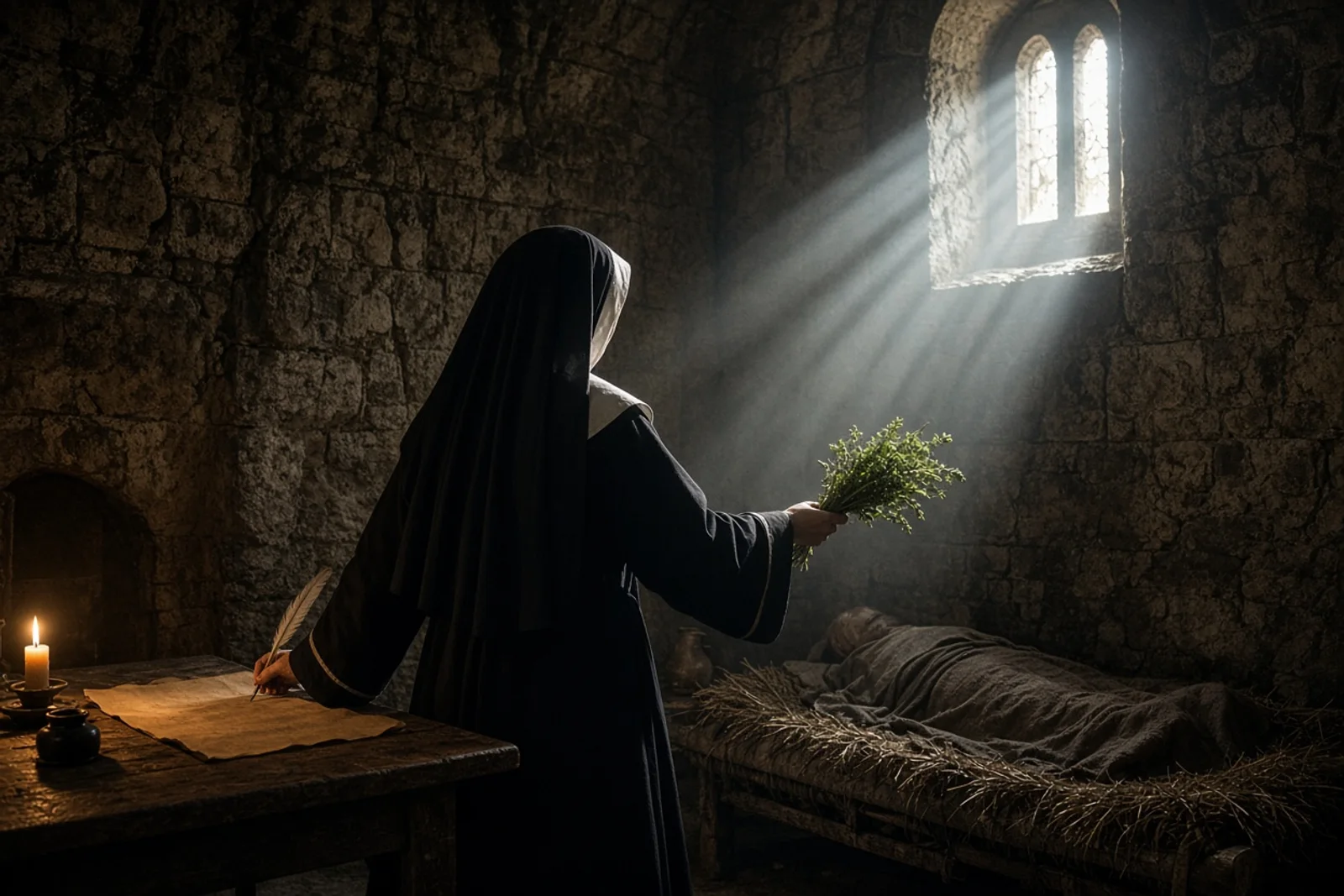
The stone floor of the scriptorium still held the morning chill when I set the basket of fresh-cut mugwort and yarrow beside the low bench. Hildegard sat upright on the stool Volmar had placed for her, eyes half-closed, one hand resting on the edge of the parchment. Volmar dipped his quill and waited. Outside the narrow window the Rhine moved gray under a thin sun.
I had come to Rupertsberg with the others the year before, twenty of us carrying what we could on our backs after the illness that pinned Hildegard to her bed at Disibodenberg. The new walls smelled of lime and damp oak. We slept on straw pallets in the dormitory and rose before light to sing the hours. Between Matins and Prime I helped in the infirmary, grinding roots and steeping leaves the way Hildegard showed me.
That morning a messenger from Mainz had already come and gone. Richardis stood in the doorway now, cloak still fastened, her face pale from the ride. She said nothing while Hildegard spoke the next lines of the vision to Volmar. The words came steady, one after another, as if she read from a page only she could see.
When the last sentence was written, Hildegard looked up. Her voice changed. She asked Richardis whether the election at Bassum was settled. Richardis nodded once. Hildegard’s fingers tightened on the bench. She did not raise her voice. She only said that the move would separate what God had joined. Richardis answered that the decision belonged to the archbishop and her brothers.
I carried the basket down to the infirmary. Two sisters waited on the benches, one with a swollen knee from the winter damp, the other coughing blood into a linen cloth. I boiled water and measured the herbs the way I had been taught. The steam rose sharp and green. When the draught cooled I held the cup for the coughing sister and watched her throat work.
By midday the light in the scriptorium had shifted. Hildegard stood at the long table where the finished quires lay stacked. She turned each leaf slowly, checking the illuminations the sisters had painted under her direction. The colors were still bright: the living light described in the first vision, the egg-shaped cosmos, the ranks of angels. Volmar marked corrections in the margin with a small cross.
Richardis came again after None. She carried a small psaltery wrapped in cloth. She set it on the table and said she would leave it for the younger novices. Hildegard did not touch the instrument. She asked whether Richardis had written to the pope. Richardis said she had. The answer hung between them.
I went back to the garden for more horehound. The plants grew thick against the south wall where the sun struck longest. I cut stems with the small knife I kept in my belt and bundled them. From the upper window I could hear the scrape of Volmar’s quill and, once, Hildegard’s low laugh at something he said.
That evening the sister with the cough worsened. Her breathing came shallow and fast. Hildegard left the scriptorium and came to the infirmary with a fresh mixture of lungwort and honey. She sat on the edge of the pallet and held the cup herself. The sister drank what she could. Hildegard stayed until the breathing eased, then rose and returned to the table where the last pages of Scivias waited.