




Johann Sebastian Bach Dedicates Music to God
Composer begins Leipzig cantatas
FaithTap · Oct 12, 2026 · 11 min read
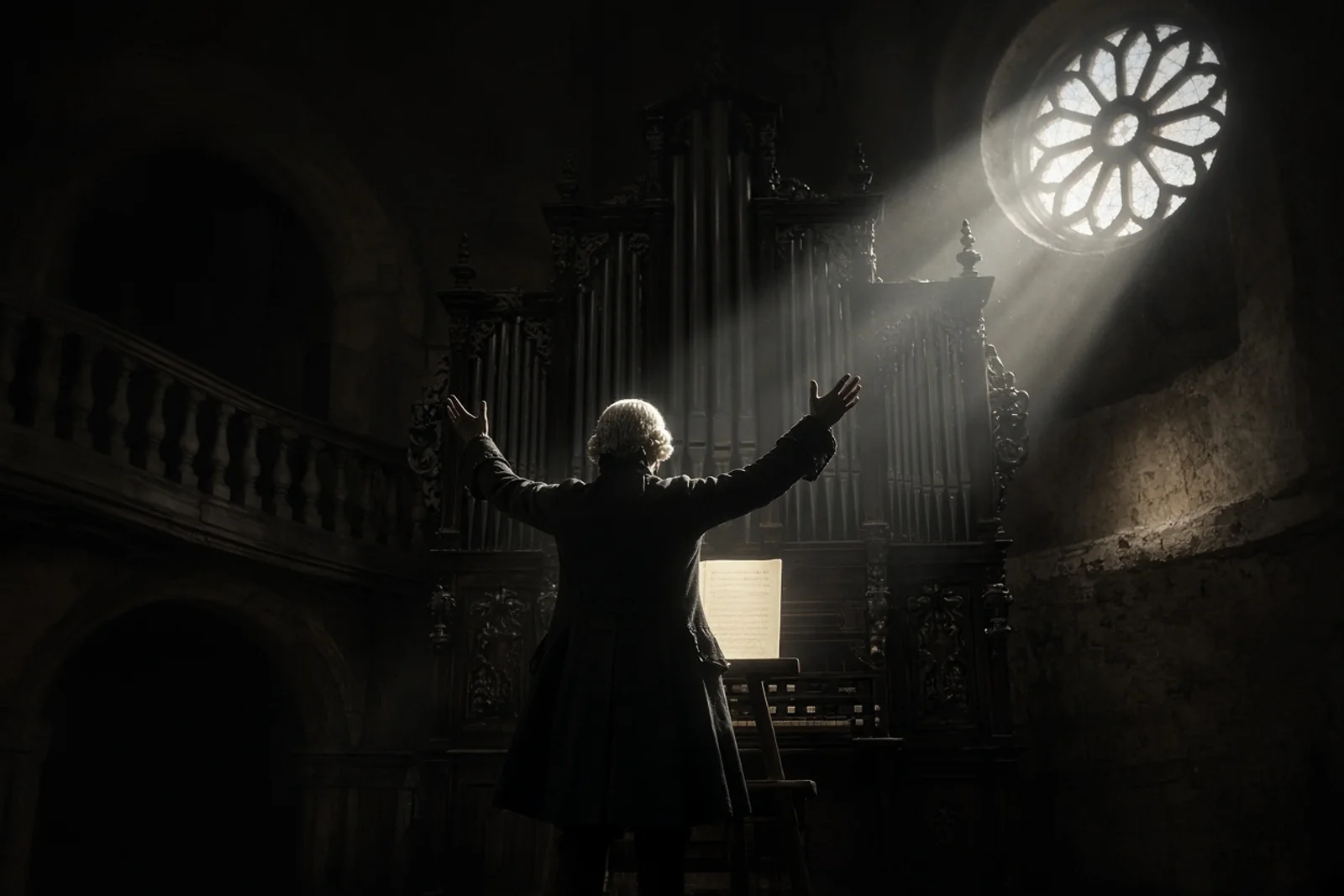
I shifted the bundle of parts higher on my hip and stepped into the cold air of the Thomaskirche gallery. The boards creaked under the weight of the choir already forming behind the rail. Below, the nave still held the smell of wet wool and candle smoke from the morning service. I set the music on the stand nearest the strings and looked across the rail for any sign of the man who had written it.
Bach stood at the harpsichord with his back to the congregation. He wore the plain coat he had traveled in from Cöthen. His fingers moved across the keys without sound, testing the touch while the oboists warmed their reeds. The two women who would sing the opening duet stood a little apart, their heads bent over the same sheet. One of them cleared her throat once, softly.
The sermon had ended. The pastor left the pulpit and the murmur of the congregation settled into the kind of silence that belongs to people waiting for music rather than words. Bach lifted his right hand. The first notes from the oboes came out thin and exact, an imitation that passed between the two instruments like a question asked twice.
The soprano and alto entered together. Their lines moved in strict canon, each voice shadowing the other by a beat. I watched the tenors beside me draw breath at the same moment, though they had no entry yet. The music stayed in minor, the intervals close and careful, and the whole gallery seemed to lean forward to keep from losing the thread.
When the duet finished, the tenor soloist stepped forward. His recitative began over sustained strings. The text asked that the Lord not pass by, and the singer kept his volume low so the words would carry only as far as the first rows. Bach turned a page with his left hand and gave the continuo a small nod on the final syllable.
The chorus movement began without pause. The dancing figure in the instruments started first, oboes and violins trading short phrases. Then the choir answered, the basses entering low and the sopranos lifting the line above them. Tenor and bass soloists traded phrases with the full chorus, the texture thickening each time the instruments returned. I counted the repeats under my breath, matching the rondo form written on the page in front of me.
Halfway through the movement the key shifted. The music moved into E-flat, the relative major, and the brightness of the new tonality reached the back of the nave. A child near the font stopped fidgeting. The oboists played with more air, the tone rounder now that they were no longer fighting the minor. Bach kept his left hand on the harpsichord and conducted the choir with the right, his beat small and steady.
The final section of the chorus ended on a held chord. For a moment no one moved. Then Bach signaled the chorale. The cornetto sounded the melody first, the trombones doubling the lower voices as they entered. The choir sang the German Agnus Dei without ornament, the words falling one after another in the same rhythm the congregation had known since childhood. The strings held a sustained chord beneath the voices, and the organ supplied the bass that filled the stone space.
When the last note decayed, the only sound left was the soft scrape of a bow being lifted from a string. Bach remained at the harpsichord. He did not bow or speak. After a few seconds he closed the book in front of him and stepped away from the instrument.