




Martin Luther Posts Ninety-Five Theses
Monk sparks reform with courage
FaithTap · Oct 11, 2026 · 11 min read
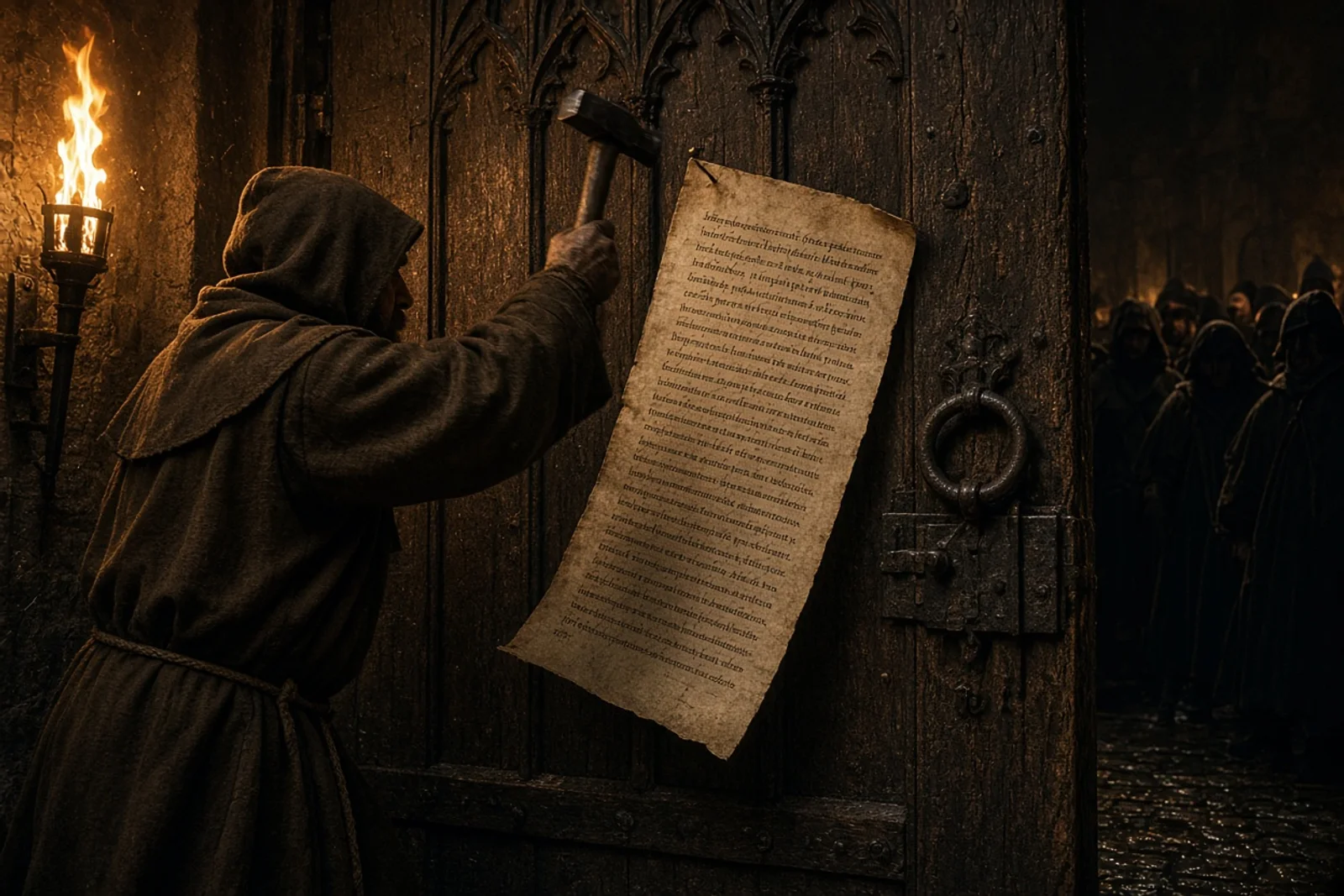
The wind off the Elbe carried the smell of wet leaves and horse dung that morning. I had come from the university hall with a stack of copied lectures under my arm, the paper already softening at the edges from the damp. Students and townsmen moved in the same direction, toward the square in front of the Castle Church. Word had passed that the Augustinian was finished with his writing.
Luther stood at the long table inside the priory yard when I reached it. He wore the plain black habit, sleeves rolled once at the wrist. A small pile of parchment sheets lay in front of him, each one covered in his tight script. He counted them twice, then rolled the stack and tied it with a length of cord. No one spoke to him. He lifted the bundle and walked out through the gate without looking back.
I followed at a distance. The square was busy with masons finishing repairs on a side chapel and vendors setting out bread for All Saints pilgrims expected the next day. Luther crossed the open ground to the main doors of the church. The wood was dark from years of weather, the iron hinges streaked with rust. He set the roll on the ground, took a hammer from his belt, and drove the first nail through the top sheet.
The sound carried. Two students stopped to watch. A woman selling candles turned her head. Luther worked steadily, spacing the nails so the pages would not tear in the wind. When the last one was fixed he stepped back, checked the angle, and walked away the same way he had come. The hammer stayed in his hand until he reached the priory gate again.
By midday the sheets were already being read aloud. A clerk from the chancellery copied the first lines onto a separate sheet and carried it toward the elector’s residence. Students gathered in groups of four and five, arguing the numbers. One thesis questioned whether the pope could release souls from purgatory at all. Another asked why the church needed money from the living to free the dead. The words were plain enough that even the market women could repeat them.
I returned to the door after vespers. Someone had already placed a small board beneath the lowest sheet to keep it from flapping. A friar from another order stood reading with his finger moving along the lines. He finished, turned, and spat once on the stones before walking off. Two boys from the Latin school were trying to count the theses without touching the paper.
Luther did not come out again that evening. The priory bell rang for compline and the square emptied. I stayed long enough to see a torch lit at the watchman’s post. The light reached the door but left the upper edges of the sheets in shadow. The wind had risen and the pages moved slightly against the wood.
The next morning the first printed copies appeared. A press in the town had worked through the night. Boys carried bundles to the inns along the Leipzig road. One stack went to a merchant heading toward Magdeburg. By noon the same theses were being discussed in the refectory of the Augustinian house itself. Older monks shook their heads. Younger ones asked where more copies could be had.
Luther remained in his cell most of that week. He continued his ordinary lectures on the Psalms and heard confessions in the usual hours. When students stopped him in the corridor he answered their questions briefly and moved on. The only change was that a second nail had been added to the lower corner of the posted sheets, because one corner had torn free in the night.