




Miracle on the Hudson
Both engines gone, 208 seconds of glide — and Captain Sully set 155 people down on a river without losing one.
FaithTap · Oct 8, 2026 · 10 min read
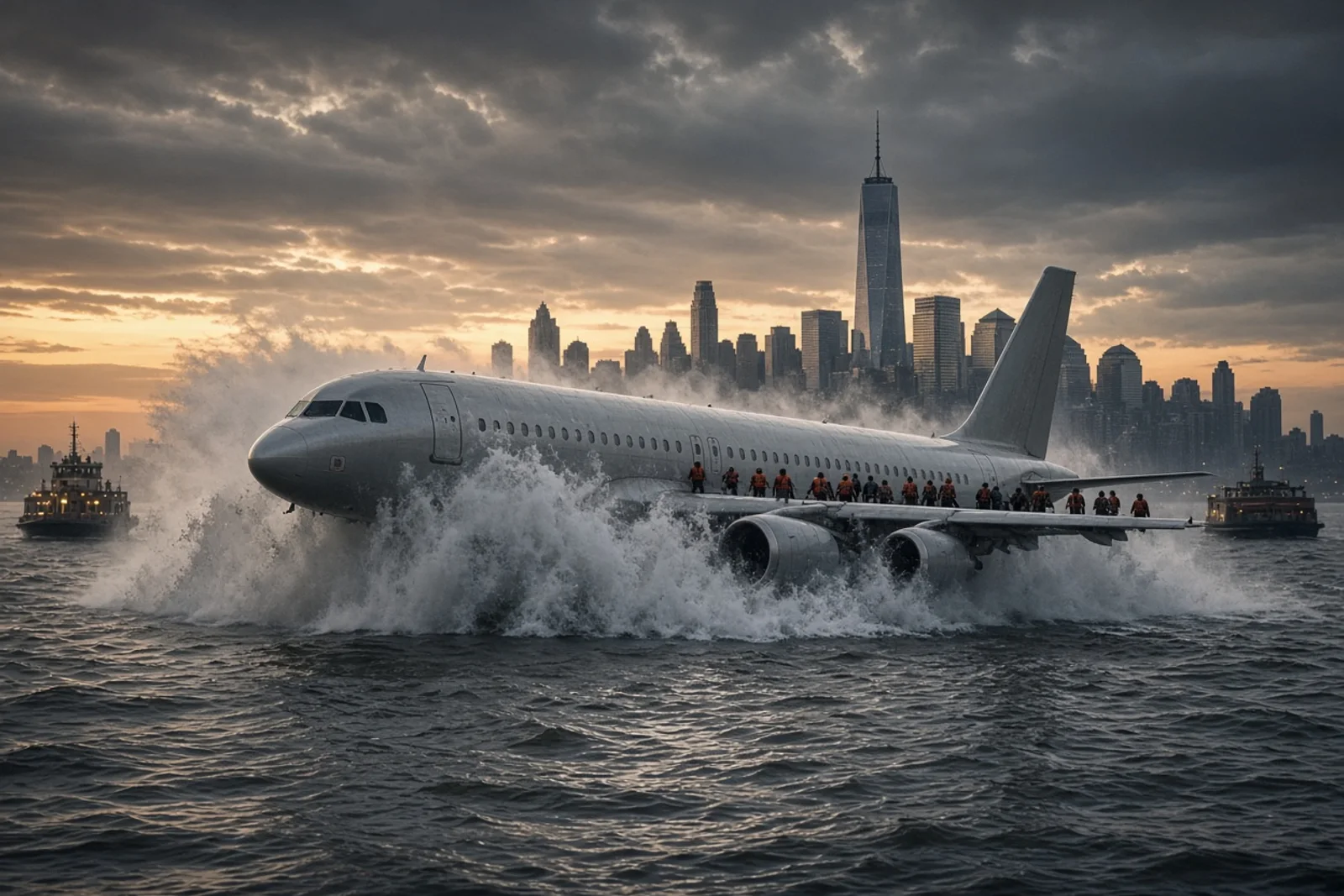
The river had that flat gray shine it gets in January, the kind of cold that gets into your knuckles before you notice your feet. I was on deck doing what I did every weekday afternoon, watching commuters shuffle toward the gate, half-listening to the diesel hum under my boots, when I heard something wrong in the sky. Not loud. Wrong. A jet that low over the Hudson should have been screaming with engine noise, and this one wasn't screaming at all. It was gliding, silent, banking south along the water like something that had already decided where it was going.
I'd worked the river long enough to know an airplane that quiet, that low, wasn't headed for a runway. It was an Airbus, white and blue, dropping toward Weehawken with its nose up just slightly, wings level, and for three or four seconds nobody on my deck said a word. Then somebody pointed. Then everybody was pointing.
It touched down more than it crashed. That's the thing people don't believe until they've seen the footage a hundred times — no fireball, no cartwheel, just a long tearing hiss of white water thrown up on both sides as the fuselage skated the surface near Forty-Eighth Street, on the New York side, drifting with the current toward the Jersey shore. The spray hung in the air a moment, caught the low winter light, and came down. And there it sat. A hundred and fifty feet of airplane, floating, tilting almost nothing, doors already starting to open.
I don't remember giving an order. I remember the wheel coming hard over and the deck tilting under me as we came about, and every other boat on that stretch of river doing the same thing at the same time — ferries, tugs, a dinner cruise boat, police launches, Coast Guard boats — converging on that plane like the whole river had been waiting for exactly this.
It took minutes to close the distance, though it felt like no time and also like forever, both at once. Up close you could see the exits had already opened forward and over the wings, and people were coming out onto the wings themselves, standing in a thin, shifting line above water that could not have been much above freezing. Some of them had inflated their life vests right there on the wing, orange bulges under their coats. Some hadn't found vests at all and stood in suits and skirts with their arms wrapped around themselves, watching the water lap at their shoes.
The wing was sinking, just slightly, just enough that the ones at the far end were ankle-deep and the ones near the fuselage were still dry, and everybody was doing that thing people do in a line when the ground is disappearing — shuffling backward in tiny steps toward whoever still had solid footing.
We got close enough to throw lines. I remember the particular sound a mooring line makes hitting a wet wing, a flat slap, and a man near the engine nacelle grabbing it two-handed like it was the only true thing in the world. We weren't the only boat working that wing. There were three, four vessels alongside within what must have been ten minutes of the plane going quiet on the water, hands reaching, ladders coming down, and it was the kind of chaos that has an order to it if you're inside it — the ones who could climb, climbing; the ones who couldn't, being pulled.
I pulled a woman up by both wrists who had no coat at all, just a blouse gone see-through with river water, and her hands were the color of the sky. She didn't cry. She said thank you, twice, very quietly, and then sat down hard on the deck like her legs had only been waiting for permission to quit.
Somewhere in that first rush we heard, boat to boat over the radio, that there'd been a child aboard, lap-held, too small for her own seat, and that thought sat in my chest the whole time we were pulling people over the rail, a specific fear with a specific size to it. She came off fine. Everyone came off. I didn't know that yet, standing on a slick deck with my arms burning from hauling strangers over a gunwale, but I know it now, and it still catches me that a plane went into a river in January and not one person on it died that day.