


Otto I Ends Magyar Threat at Lechfeld
Emperor protects Christian Europe
FaithTap · Oct 8, 2026 · 11 min read
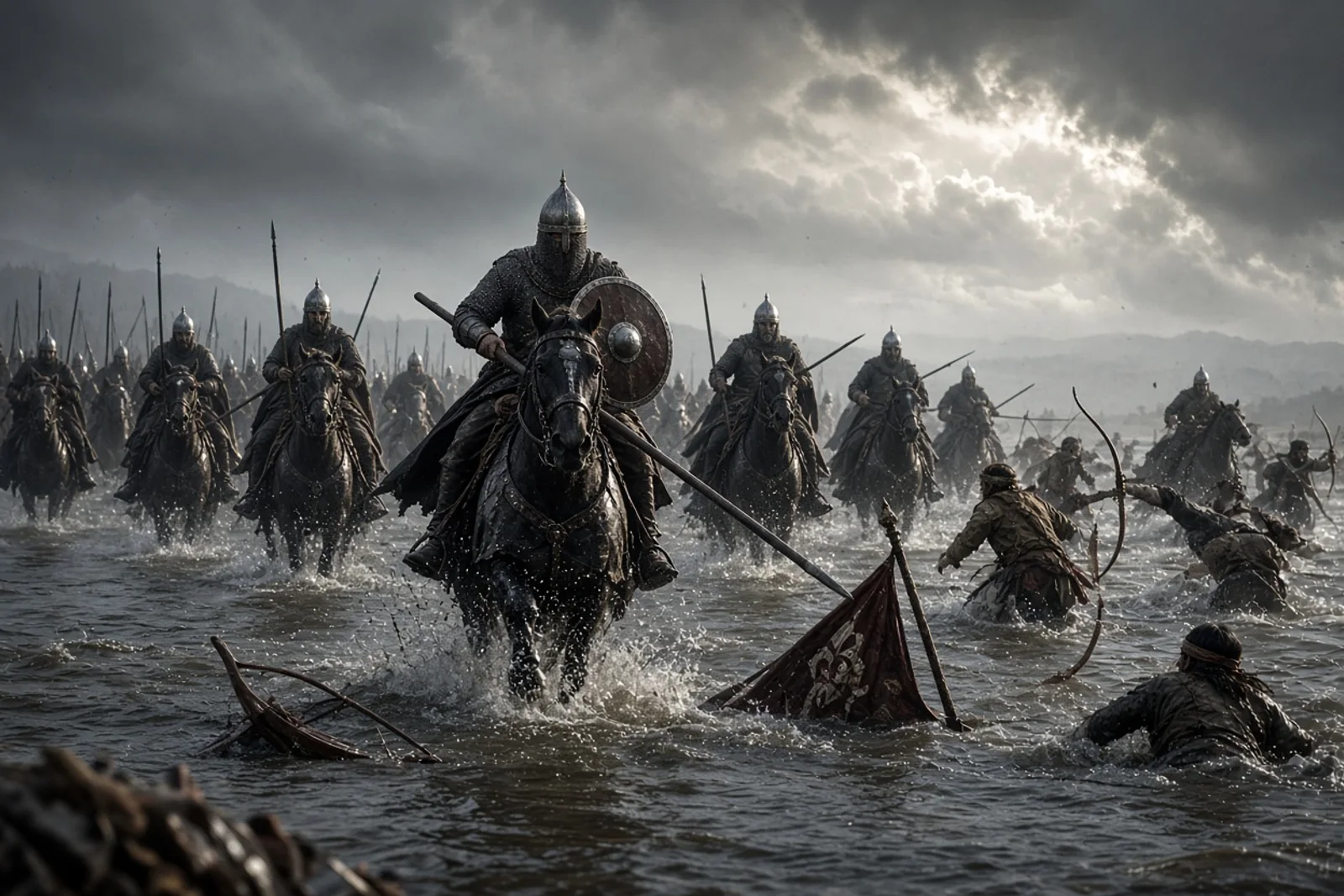
We moved at first light through the broken ground west of Augsburg, eight legions strung out along a track that twisted between stands of pine. My place was in the third Bavarian line, shield on the left arm, spear balanced across the shoulder. The air still carried the cool of night. Ahead the ground opened into the flat stretch where the Hungarians waited with their bows.
We had fasted the day before. At dawn the priests moved among the ranks. Each man touched the next and swore the same words: first to the king, then to the man beside him. Conrad rode past our front on a grey horse, mail bright at the shoulders. Men straightened when they saw him. He had come in the night with fresh Franconian riders, and the camp had grown louder for it.
The order came to advance under the trees so the arrows would lose force. We stepped over roots and low branches. From the left I heard the first shafts strike wood and leather. One man dropped without sound. Another cursed and pulled a point from his thigh. The line held. We kept the trees between us and the open ground until the order to close.
When we reached the edge the Hungarians wheeled and loosed again. Their horses moved like a single herd. Our heavy cavalry answered from the right, Conrad at the head. The shock carried through the ground into my boots. Spears met lighter armor. Men and horses went down together. The Hungarians gave ground but did not scatter. They fell back toward the Lech in order, still shooting over their shoulders.
Otto did not press the pursuit. Messengers left camp before dark with orders for every ford and bridge east of us to be held. We returned to the tents around Augsburg as the light failed. Rain began in the night, light at first, then steady. By morning the fields were soft and the river rose.
On the second day the Hungarians tried to cross lower down. Water reached the bellies of their ponies. German detachments waited on the far bank and drove them back into the current. Some drowned. Others turned upstream and were caught between our riders and the flooded banks. I spent that afternoon with a party sent to cut off stragglers. We found three men trying to lead wounded horses through a stand of alders. They dropped their bows when they saw us. We took them alive.
The third day the rain still fell. The Hungarians who remained moved in smaller groups, their arrows spent or wet. We followed the tracks through mud that pulled at every step. Near midday we came on a larger band near the river. Their leaders wore richer gear, gold at the belts. One carried a banner of red cloth. Conrad’s men closed from one side while our Bavarian line blocked the other. The fight was short. The banner fell into the water and was swept away.
Bulcsú and the two chieftains Lél and Súr were among those taken. They were bound and sent under guard to Augsburg. We stayed on the field two more days collecting what could be used and burning what could not. The bodies of their dead lay where they had fallen, already beginning to swell in the wet heat.
When the last crossings were cleared, Otto ordered the army to rest. Conrad rode among the wounded that evening, speaking to men by name. Some said the king would be proclaimed emperor for this. Others spoke only of the river and the rain that had finished what the charge began. I sat with my shield across my knees and listened to the water still rising in the dark.