




Pope John XXIII Opens Second Vatican Council
Pontiff invites dialogue with other faiths
FaithTap · Oct 6, 2026 · 12 min read
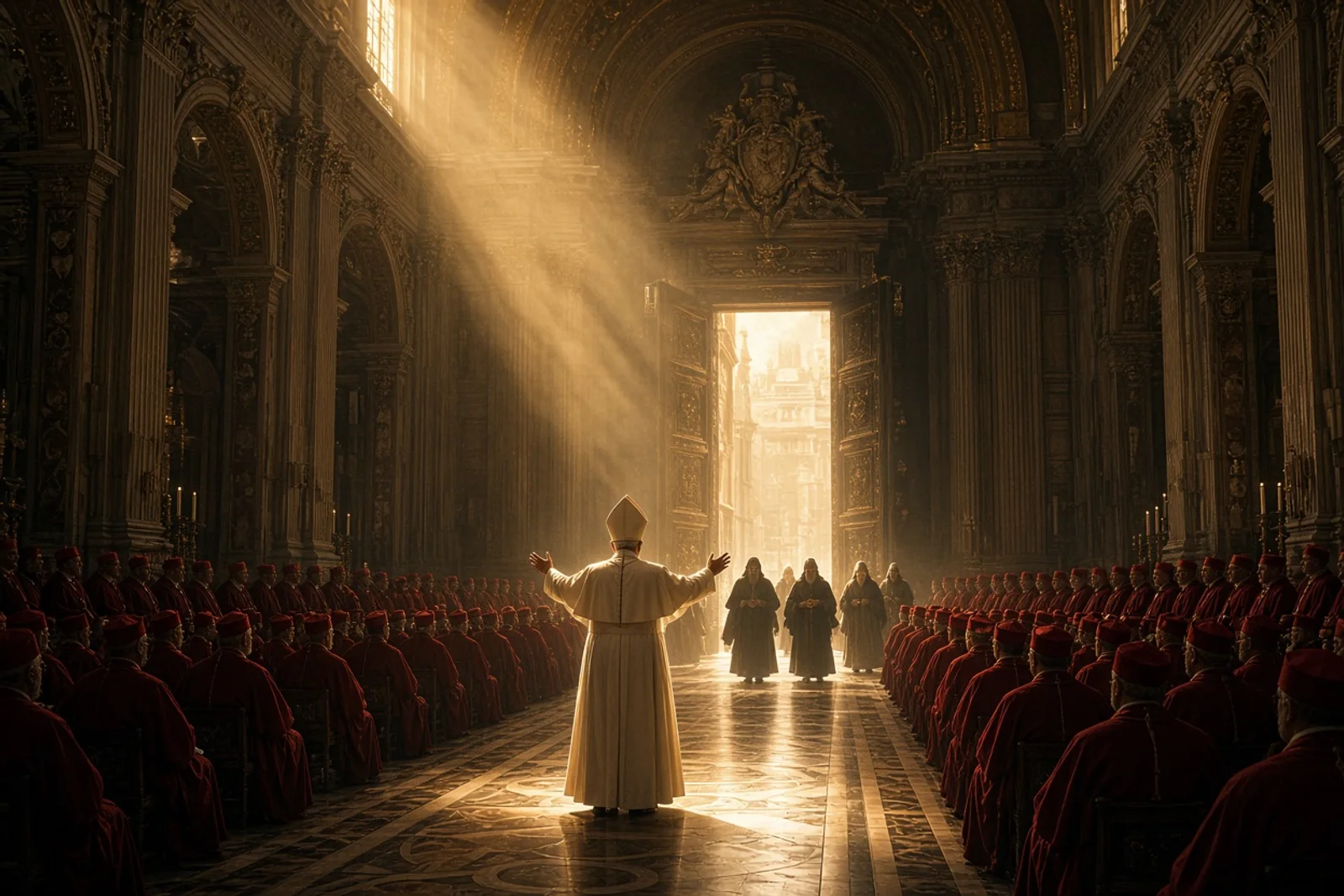
The marble under my shoes had already gone slick from the morning damp when the first bishops crossed the threshold. I had been posted near the north transept since before dawn, one of the younger priests handed the task of guiding the last-minute arrivals to their places. My cassock still smelled of the starch from the laundry two days earlier. Every few minutes another cluster passed, cardinals in scarlet, patriarchs in darker silks, the low murmur of Latin and French and German rising and falling like water against stone.
Outside, the square had filled hours ago. I could hear the crowd through the open doors, a steady press of voices that never quite resolved into words. Inside, the light came in long shafts from the high windows and caught on the gold of the baldachin. The air felt heavier than it should have for October.
A Swiss Guard stepped aside and the procession began in earnest. Pope John moved slowly, the white of his vestments bright against the darker robes around him. He had turned eighty-one in November of the year before. His face showed the lines of the long summer of preparation, yet he kept his shoulders square as he walked the length of the nave. When he reached the papal throne he did not sit at once. He stood for a moment, one hand resting on the arm of the chair, and looked out across the assembled bishops. Nearly two thousand of them filled the space, and the rows of observers from other communions sat in a smaller block to the right.
The opening rites moved forward without pause. The litanies were sung, the Gospel proclaimed. Then the Pope rose again. He did not raise his voice beyond what the acoustics of the basilica required. He spoke of the Church’s teaching office and of the errors of the age, yet he framed the council’s work as one of mercy rather than condemnation. The phrase that stayed with me was simple: the medicine of mercy rather than the weapons of severity. He delivered it without flourish, as though he were addressing a single parish rather than the largest gathering of bishops in nearly a century.
I watched the faces of the non-Catholic observers while he spoke. Several leaned forward. One Anglican bishop, seated three rows in front of me, wrote something in a small notebook and did not look up again until the address ended. The Orthodox representatives remained still, but I noticed one of them nod once when the Pope mentioned the divisions that had lasted for centuries. No one interrupted. The only sounds were the occasional cough from the upper tiers and the faint scrape of a shoe against marble when a bishop shifted his weight.
After the speech the formal sessions began, but the real change had already occurred in the air itself. Men who had spent decades writing against one another now sat within the same basilica. The Pope had invited them by name in the months before, and they had come. I saw a Protestant theologian from Geneva exchange a brief word with a cardinal from Milan as they moved toward the side chapels for the first working meetings. The exchange lasted only seconds, yet it was the first time I had ever seen such a thing inside these walls.
By mid-afternoon the light had shifted. The long windows no longer reached the floor. I was sent to carry a message to the sacristy and passed through the crowd of periti, the theological experts who would spend the coming weeks drafting the texts. One of them, a young Jesuit from the Gregorian, asked me whether the Pope had seemed tired. I said he had not. In truth I had not looked at the Pope’s face again after the address; I had been watching the observers instead.
The council would meet in four sessions across three years. I knew that only because the newspapers had printed the schedule the week before. On that first day the schedule felt distant. What stayed immediate was the sight of the Pope leaving the basilica at the end of the afternoon, the same slow walk, the same square shoulders, the square now quieter as people waited for the buses that would carry the bishops back to their residences. He paused once at the top of the steps and raised his hand in the familiar gesture. The crowd answered with a single sustained sound that carried across the colonnade.
I remained inside until the last of the chairs had been stacked. A sacristan handed me a folded stole that had been left on a prie-dieu. The name stitched into the lining belonged to a bishop from Poland who had traveled three days by train. I placed it on the table with the others. Outside, the bells began again, measured and unhurried, the same cadence that had marked every ordinary Thursday for as long as the basilica had stood.