




St. Helena Discovers True Cross
Empress mother finds relic of crucifixion.
FaithTap · Oct 6, 2026 · 12 min read
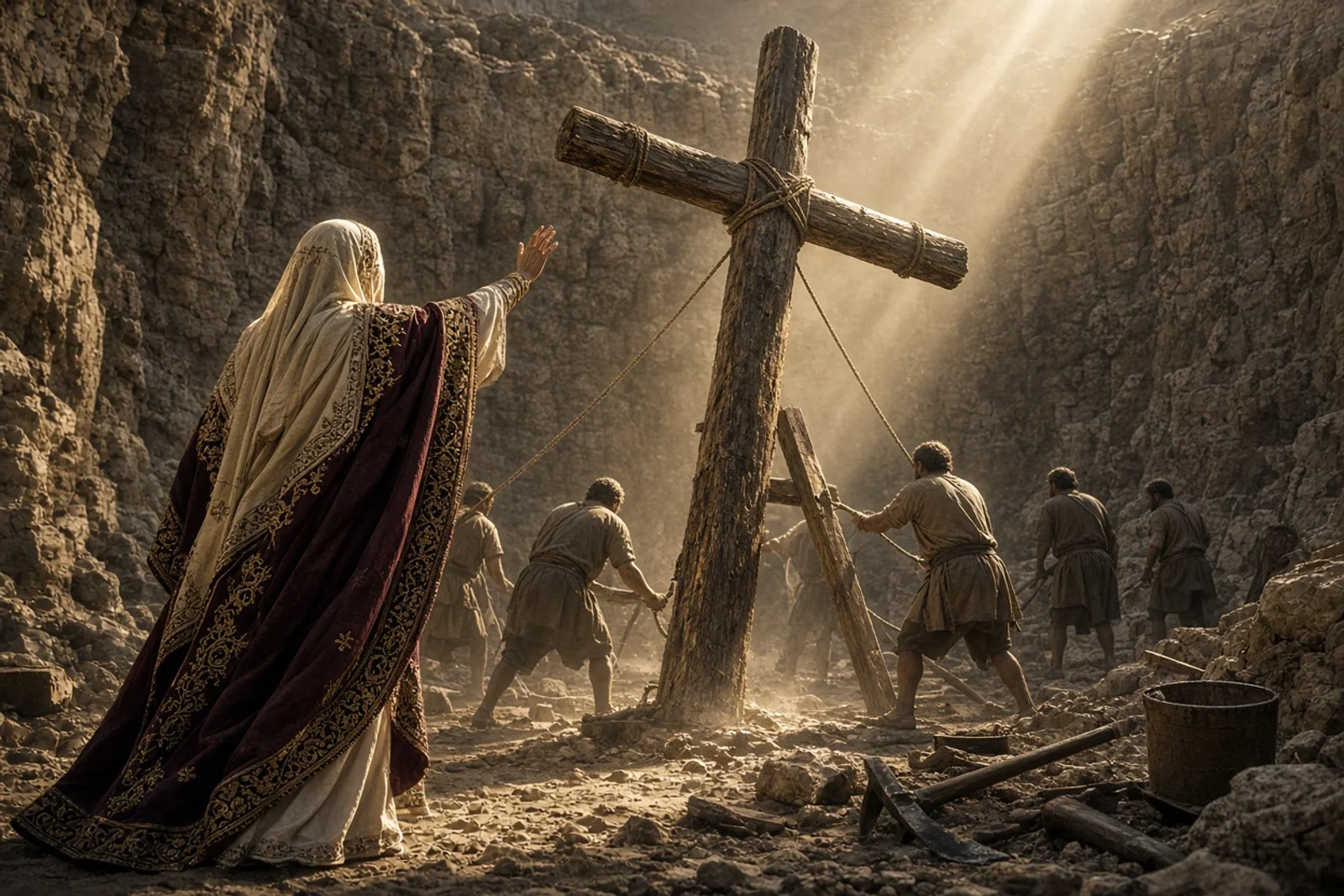
The picks bit into the mound just after dawn, when the air still held the night’s chill. I swung mine with both hands, the handle worn smooth from weeks of this work, and felt the jolt travel up my arms into my shoulders. Around me other men grunted and spat, their faces streaked with dirt. The temple to Venus had already come down; its columns lay broken in the square below. Only the earthen platform remained, and we had orders to level it to the rock.
Helena walked the edge of the cut each morning. She wore a plain wool mantle the color of sand and never raised her voice, yet the overseers straightened whenever she appeared. One day she stopped above our trench and asked how deep we had gone. A foreman answered that the ground still resisted. She nodded once and moved on, her sandals leaving faint prints in the loose soil.
By midday the heat pressed down. We paused to drink from skins passed hand to hand. A boy brought bread and olives. I ate standing, watching the bishop Macarius speak with two of the emperor’s officers near the carts. They pointed at the remaining mound and shook their heads. Macarius listened without interrupting. When they finished he simply said the work must continue until the rock showed.
We dug another two days. On the third afternoon a pick struck something that rang instead of thudded. The man who had swung it stepped back. We crowded the spot and began scraping with trowels and bare hands. Three rough beams emerged, still joined at their crossing points by rusted spikes. A flat board lay beside them, its letters half erased but still legible in three scripts. One of the officers climbed down and read the words aloud: the king of the Jews.
Helena was summoned from the house where she lodged. She stood at the lip of the trench while the beams were lifted out one by one and laid on clean cloth. No one spoke above a murmur. The sun had begun to drop; long shadows stretched across the stones. She studied each cross in turn, then turned to Macarius.
The bishop asked for a sign. He sent men to fetch a woman from a nearby street who had not left her bed in months. They carried her on a litter to the edge of the excavation. Her skin had the gray look of someone already half gone. Macarius directed that the first cross be placed across her chest. She coughed but did not stir otherwise. The second cross was laid the same way. Her breathing stayed shallow.
When the third cross touched her, the change came at once. Color returned to her face. She drew a long breath, then another, and tried to sit up. The men holding the litter had to steady her. Someone laughed, short and surprised. Helena remained still, her hands folded at her waist.
They built the church over the place where the tomb had been found. Constantine sent masons and marble, enough to raise walls higher than any house in the city. The work lasted through two winters. I stayed on as a laborer, mixing mortar and carrying stone. Helena left before the roof was finished. She took one of the crosses with her, wrapped in linen and sealed inside a silver chest.
The other two beams were given to the church. The board with the inscription stayed as well. I saw it once more before the doors were hung; it hung on a hook above the altar steps. Pilgrims began to arrive before the scaffolding came down. They knelt where the earth had been cleared and touched the rock with their fingers.