




St. Olga of Kiev Converts to Christianity
The Rus ruler travels to Constantinople and is baptized.
FaithTap · Oct 10, 2026 · 11 min read
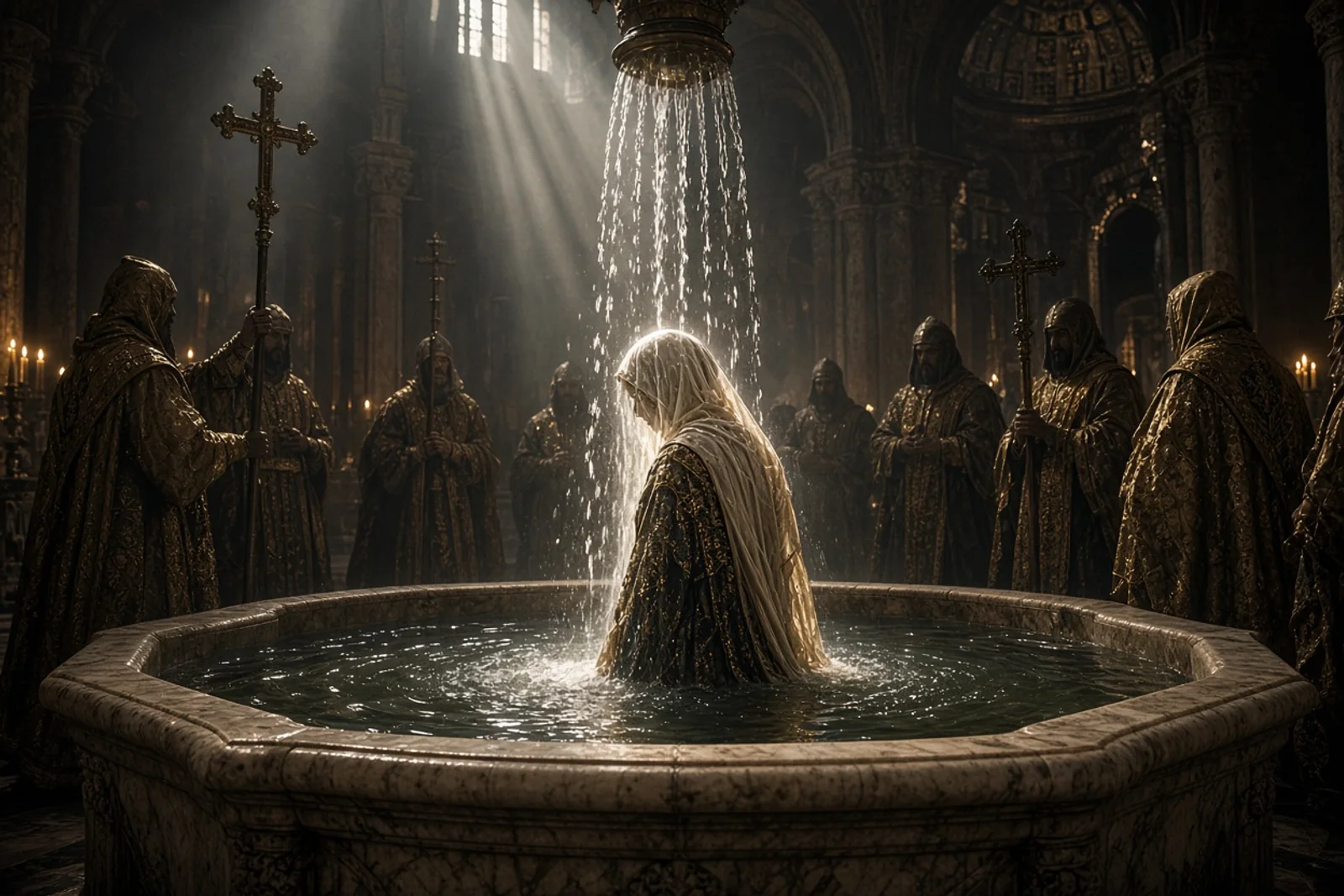
The oars dipped slow in the Golden Horn that morning, the water thick with silt and the smell of fish guts from the market boats. I stood at the rail with the rest of the guard, salt crust on my beard, watching the walls rise like a second sky. Olga sat under the awning, wrapped in a cloak the color of old blood, her eyes fixed on the domes ahead. She had not spoken since we left the last river port, three days back.
The emperor’s men met us at the quay. They wore silk that caught the light and spoke through an interpreter who smelled of rose water. We followed them up the wide road, past columns taller than any mast I had seen. Olga walked without hurry, the boy Svyatoslav’s name on her lips only once, when she asked how the letters would reach him. No answer came.
Inside the palace the air changed. Marble underfoot, lamps burning even at noon. We waited in a side chamber while she went forward with the two women who had traveled from Kiev. One carried a small wooden cross wrapped in linen. I heard later that the patriarch himself stood ready, the same man who had received the treaty envoys three years before. When she returned her face was wet but her step was steady. She gave no order, only nodded toward the door that led back to the street.
That night the city lights burned across the water like a field of small fires. I sat with the other guards on the ship’s deck and listened to the interpreter explain what had been done. They called her Helen now. The name sat strange on the tongue, yet she answered to it when the court officials came the next morning with gifts of silver plates and lengths of cloth. She accepted each one, then asked again about a bishop from the west. The answer was the same as before: the matter would be considered.
We stayed twenty days. Each morning she rose before light and walked the gardens with the eunuchs who watched her every word. One afternoon she stood at the edge of a fountain and watched the water fall into a basin carved with fish. A court lady asked her what she missed of her own country. Olga said the smell of pine after rain. The lady laughed, polite and empty.
On the day we sailed the wind turned against us. The rowers strained at the oars while Olga remained on deck, the new name spoken softly among the crew. She did not look back at the city. Instead she counted the chests that held the emperor’s presents, checking each seal with her own hand. One chest held a book bound in leather. She opened it once, traced the letters with a finger, then closed it again.
The return journey took longer. At each landing she sent messengers inland with instructions for the boy and for the men who still kept the old shrines. Some of those men met us at the river bends, their faces closed. They asked what she had brought back besides cloth and metal. She answered that she had brought a name and a promise. They nodded and turned away.
In Kiev the winter closed fast. Smoke rose from the houses along the Dnieper and the sound of axes echoed from the woods where men cut wood for the long cold. Olga kept the court in the old hall, yet the space felt smaller now. Svyatoslav came and went with his companions, their spears leaning against the walls. He never spoke of the journey. She never asked him to.
One evening a German priest arrived with letters from Otto’s court. He carried a staff topped with a cross of different shape. Olga received him in the same chamber where the Byzantine gifts still lay. She listened while he spoke of bishops and of lands already won for his king. When he finished she thanked him and said the roads were long and the snow deep. He left three days later, the staff wrapped again in cloth.