


The Nun Who Hid Anne Frank's Family
Miep Gies supplies the secret annex daily
FaithTap · Oct 9, 2026 · 11 min read
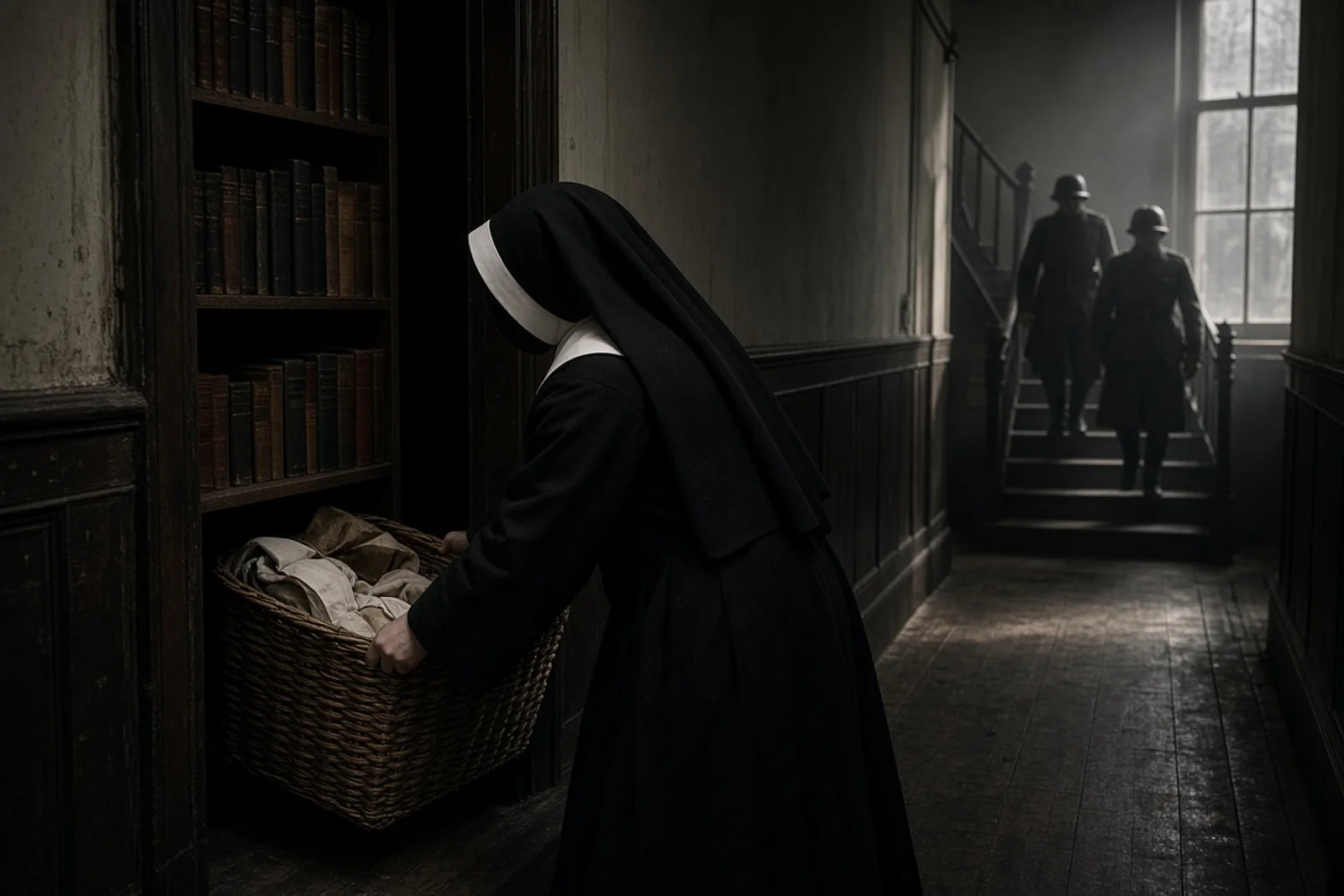
Anne Frank's family was hidden in the Secret Annex in Amsterdam with the help of Miep Gies and Otto Frank's other colleagues, not by a nun near Toulouse. The source material describes two separate stories.
A young woman from the Maquis reached the rented house after dark. She carried a single photograph of the girl inside and knocked once. The door opened a crack. The visitor spoke the aunt's name in Toulouse and showed the picture. Hélène recognized her own face in the stranger's hand and stepped outside with a small bundle.
They traveled at night. The false papers listed them as students on a school journey. At each checkpoint the woman answered in steady French while Hélène kept her eyes on the ground. The demarcation line crossed fields and a narrow river. They waded across at a bend where the water reached their waists. On the far bank a farmer's cart waited. They rode under sacks until the cart reached the edge of Toulouse.
Hélène's aunt opened the door before dawn. The house already sheltered Annie, who had escaped the camp near Tours the year before. Annie's papers now carried the name Ida. The real Ida had gone out for bread the day the police came to check family books, so the lie held for one afternoon. After that, Annie stayed indoors and answered only to the borrowed name.
The archbishop's letter was read in churches across the diocese on the last Sunday of August. It described families taken from their homes and children separated at the station. In the convent on the outskirts of Toulouse the mother superior folded the newspaper clipping that quoted the letter and placed it in the pocket of her habit. She did not speak of it at meals.
Children arrived in small groups. Some came by night train with false identity cards. Others were brought by resistance contacts who left them at the gate with a whispered name and a date of birth. The sister in charge of the laundry recorded each arrival in a separate ledger kept behind a loose brick in the cellar wall. She used only first names and the month they arrived.
Hélène worked in the garden. She learned which rows of vegetables could be pulled quickly if a truck appeared on the road. Annie helped in the kitchen, peeling potatoes into a basin so the peels could be carried out to the pigs without leaving a trail. At night the two sisters shared a mattress in the attic above the chapel. They spoke in whispers about their mother and the woods near Tours.
Eighty-three children passed through the convent over the next two years. Some stayed only weeks before another contact took them farther south or across the mountains. Others remained until the liberation. The sister who managed the records never wrote the word "Jewish" in any book the authorities could read. She marked each child with a small cross in the margin of the hidden ledger and a single initial for the village or town they had come from.
Miep Gies, working in Amsterdam at the same time, collected ration cards and vegetables for eight people behind a bookcase. She rode her bicycle through the same seasons, carrying bags that grew lighter each month. She and her husband Jan also kept two small children overnight when a Jewish neighbor's grandchildren were brought to them after a raid. The next morning a student organization took the children to safer addresses outside the city.