




William Wilberforce Begins Abolition Campaign
Parliamentarian fights slave trade
FaithTap · Oct 6, 2026 · 11 min read
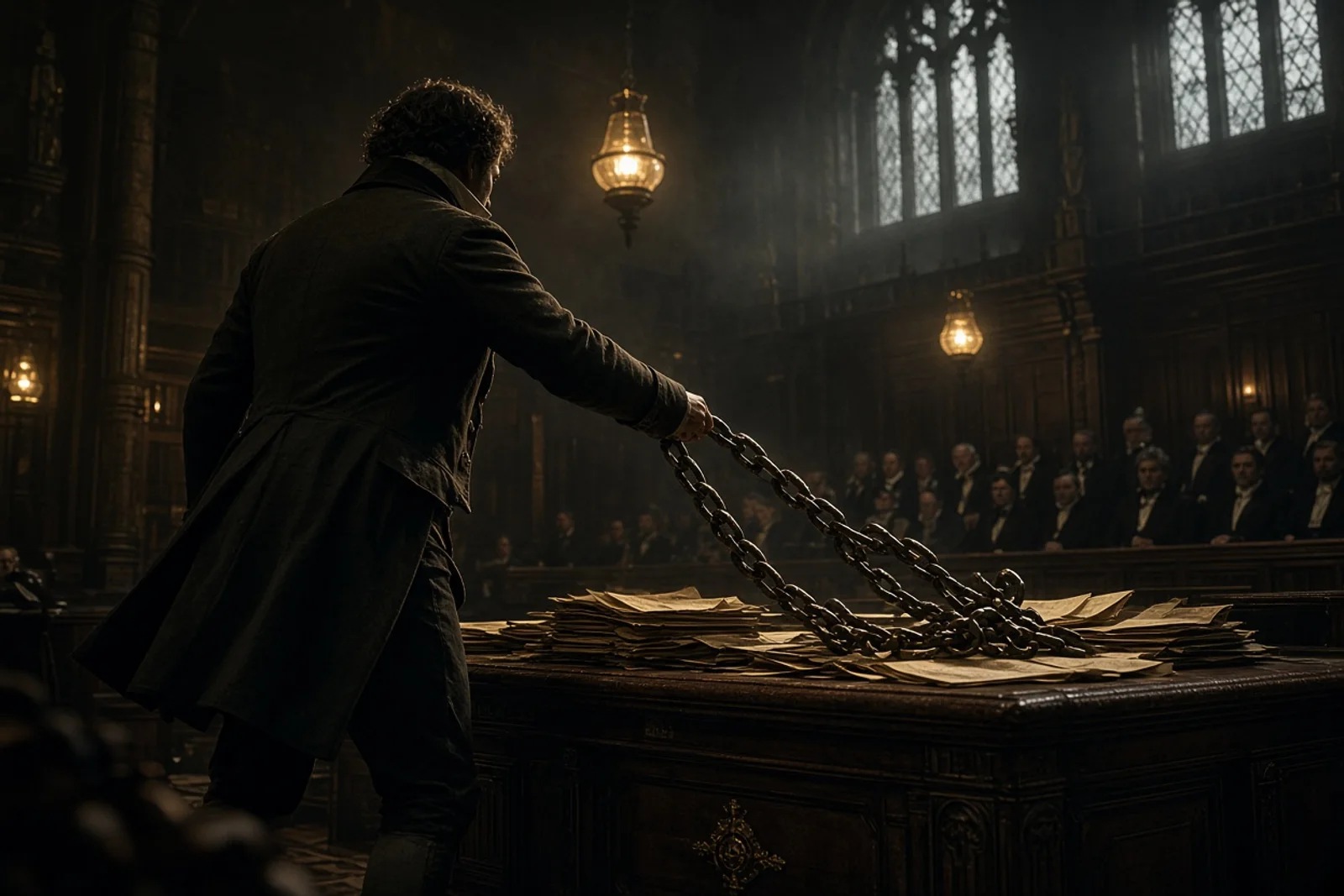
The carriage wheels struck a loose cobble outside the house in Old Palace Yard and the jolt carried through the floorboards into my knees. I steadied the bundle of letters against my coat and waited while the driver called down. Inside, the shutters stood half open against the late winter light. Wilberforce sat at the table with the same letter he had read twice already that morning, its seal broken and the paper smoothed flat under his palm.
He looked smaller than the men who had sent him here. The fire had burned low and the room held the smell of coal dust and the ink drying on yesterday’s notes. I set the new correspondence on the corner and stepped back against the wall. He did not glance up. His finger traced a line near the bottom of the page where Middleton had written of the ships leaving the African coast each season.
Two days later the same letter lay open on the desk when John Newton arrived. The old man moved slowly now, one hand on the back of a chair, but his voice carried the quarterdeck still. Wilberforce asked whether a man could remain in Parliament and still answer what he believed was required of him. Newton answered that the place had been given and should not be left without cause. Wilberforce listened without interrupting. When the visitor left, the room stayed quiet long enough for the clock on the mantel to strike the quarter hour.
By spring the meetings began to gather in the same room. Middleton came himself once, bringing papers that listed the ports and the numbers of vessels cleared for the coast. The figures ran down the margin in a clerk’s hand. Wilberforce asked how many of those vessels returned with full cargoes and how many were lost before they reached the islands. Middleton gave the numbers he had. No one in the room added anything further.
I carried messages between the house and the members who had agreed to speak with him. Some answered at once. Others required two or three visits before they would set a time. The afternoons lengthened. Wilberforce walked the short distance to the river more often, sometimes alone, sometimes with one or two others whose names I learned only by the directions I was given. He returned with his coat damp from the wind off the water and his notes folded small in one pocket.
In May he stood in the Commons for the first time on the subject. The benches were not full. He spoke for less than twenty minutes and sat down while members on the far side were still turning to ask one another what had been said. The following week the same motion was mentioned again, this time with more voices answering. I waited outside the chamber door with the other attendants and watched the members file past. Some nodded as they passed. Others kept their eyes forward.
That summer the correspondence increased. Letters arrived from merchants in Liverpool and Bristol, from captains who had sailed the route, from planters who wrote that any change would ruin the islands. Wilberforce read each one at the table, marking passages with a pencil before setting them aside. I sorted them into piles according to the place named at the top. The stack from the ports grew fastest.
By autumn he had begun to keep a separate book for the evidence he meant to use. Each evening he copied lines from the letters into it, the dates and the names of the writers beside them. The pages filled quickly. When the ink ran low he sent me for more and continued by the light of the single lamp until the street outside grew quiet.
One evening in early winter he stopped writing and looked across the table at the fire. The book lay open at the last entry, the ink still wet. He closed it without blotting the page and set it on the shelf with the others. Outside, the lamps along the street had already been lit. He asked whether the carriage was ready. I said it was. He took his hat and went out into the cold without another word.