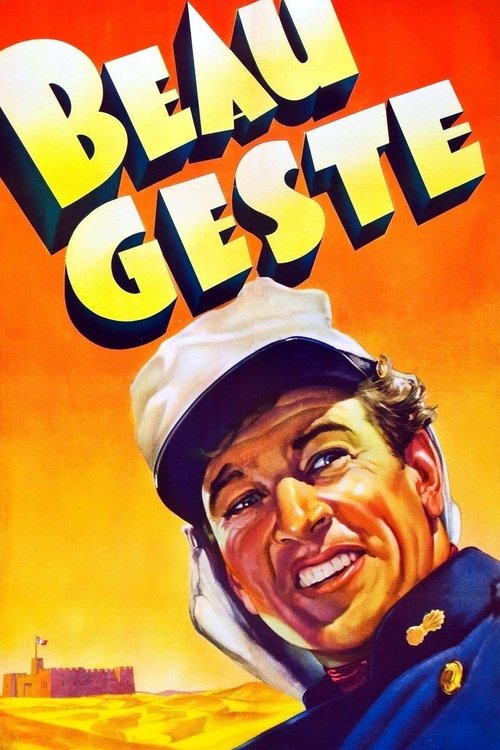
Waldo Brian Donlevy (February 9, 1901 – April 6, 1972) was an American actor of film, stage, television, and radio. He appeared both in leading and supporting roles in Hollywood, and was noted for playing dangerous and tough "heavies", often in films noir. He was nominated for an Academy Award for Best Supporting Actor for his role in Beau Geste (1939).
Donlevy was also known for starring as Steve Mitchell on the radio/TV series Dangerous Assignment (1949–53), and for portraying Bernard Quatermass in the science-fiction horror films The Quatermass Xperiment (1955) and Quatermass 2 (1957), by Britain's Hammer Film Productions.
Contents
Early life
Brian Donlevy was born on February 9, 1901. Different sources claim he was born in Cleveland, Ohio, or in County Armagh in present-day Northern Ireland. His parents were Thomas Donlevy and Rebecca (née Parks), Irish emigrants originally from Portadown, County Armagh. Sometime between 1910 and 1912, the family moved to Sheboygan Falls, Wisconsin, where Donlevy's father worked as a supervisor at the Brickner Woolen Mills.
In 1916, when he was 14 years old, Donlevy lied about his age in order to enlist in the Wisconsin Army National Guard. He served in the Pancho Villa Expedition as a bugler, and was later sent to Europe following American entry into World War I. He served in France as a member of C Company, 127th Infantry Regiment, 32nd Infantry Division. He was discharged in 1919 as a Private first class.
Career
Broadway
Donlevy moved to New York City in his youth, where he modeled for illustrator J. C. Leyendecker, who produced illustrations for the famous Arrow Collar advertisements. His acting career began in the early 1920s, when he began appearing in theater productions, and eventually won parts in silent films.
He had small roles in the silent films Jamestown (1923), Damaged Hearts (1924), Monsieur Beaucaire (1924), The Eve of the Revolution (1924), and School for Wives (1925). He had a small role on Broadway in the play What Price Glory (1925), which was a big hit and ran for two years, establishing him as an actor. He was in the film A Man of Quality (1926).
On Broadway, he was in the popular musical Hit the Deck (1927–28), which ran for a year; then Ringside (1928), Rainbow (1928), and Queen Bee (1929). He had roles in the films Gentlemen of the Press (1929) and Mother's Boy (1929). On stage, he appeared in Up Pops the Devil (1930–31), Peter Flies High (1931), Society Girl (1931–32), The Inside Story (1932), and The Boy Friend (1932). He was in a film short with Ethel Merman, Ireno (1932); and another short with Ruth Etting, A Modern Cinderella (1932).
He returned to the stage for Three And One (1933) with Lilian Bond, a big personal success; No Questions Asked (1934); The Perfumed Lady (1934); and The Milky Way (1934). The latter led to him receiving a Hollywood offer to reprise his role in the film version, but he was unable to due to a production delay. He had a final Broadway success with Life Begins at 8:40 (1934) with Bert Lahr and Ray Bolger. After that show, Donlevy said "they were all signed for the movies. I thought that if they can make it, I'm going to take a crack too."
Hollywood
Donlevy's break came in 1935, when he was cast in the film Barbary Coast, directed by Howard Hawks and produced by Samuel Goldwyn. Later that year, he was cast in Mary Burns, Fugitive. In 1936, he received second billing in It Happened in Hollywood, and had a supporting role in Goldwyn's Strike Me Pink and Paramount's 13 Hours by Air.
"B" leading man
Donlevy had his first lead in a B movie at Fox, Human Cargo (1936), playing a wisecracking reporter opposite Claire Trevor. He followed it with other "B" lead roles: Half Angel (1936), High Tension (1936), 36 Hours to Kill (1936), Crack-Up (1936) with Peter Lorre, and Midnight Taxi (1937).
He had a supporting role in an "A" movie, This Is My Affair (1937), with Robert Taylor, Barbara Stanwyck and Victor McLaglen; then starred in another "B", Born Reckless (1937). He was in In Old Chicago (1938) and was teamed with Victor McLaglen in Battle of Broadway (1938) and We're Going to Be Rich (1938). He starred in Sharpshooters (1938), and was the lead villain in the studio's prestigious Jesse James (1939).
Paramount
Paramount used Donlevy for a key role in Cecil B. De Mille's Union Pacific (1939), stepping in for Charles Bickford. He stayed at that studio for Beau Geste (1939). His performance in Beau Geste as the ruthless Sergeant Markoff earned him a nomination for an Academy Award for Best Supporting Actor. Donlevy went to Columbia to star in a "B film", Behind Prison Gates (1939), and went to RKO for a support part in Allegheny Uprising (1939). He was the villain in Universal's Destry Rides Again (1939).
Donlevy was then given the title role in The Great McGinty (1940) at Paramount, the directorial debut of Preston Sturges. It was not a big hit, but was profitable and received excellent reviews, launching Sturges' directing career. Donlevy later reprised the role several times on radio and television.
At Universal, Donlevy was in When the Daltons Rode (1940), then went into Fox's Brigham Young: Frontiersman (1940). He was fourth-billed in I Wanted Wings (1941); then MGM borrowed him to support Robert Taylor in Billy the Kid (1941). At Universal, he was top-billed in South of Tahiti (1941), and supported Bing Crosby in Birth of the Blues (1942).
Paramount gave him a star part in The Remarkable Andrew (1942), playing Andrew Jackson, then Columbia teamed him with Pat O'Brien in Two Yanks in Trinidad (1942). Edward Small hired him to play the lead in A Gentleman After Dark (1942) and he supported Joel McCrea and Barbara Stanwyck in Paramount's The Great Man's Lady (1942). In 1942, he starred in Wake Island with William Bendix and Robert Preston, playing a role based on James Devereux. The film, directed by John Farrow, was a huge success, as was the adaptation of Dashiell Hammet's classic The Glass Key (1942). At Universal, Donlevy starred in Nightmare (1942), and MGM borrowed him to support Taylor again in Stand By for Action (1942). Donlevy had the lead role in Fritz Lang's Hangmen Also Die! (1943), made for United Artists and co-written by Bertolt Brecht. He had a cameo as Governor McGinty in Sturges' The Miracle of Morgan's Creek (1944).
Donlevy was given the lead role in An American Romance (1944), directed by King Vidor for MGM, in a role intended for Spencer Tracy. It was a prestigious production, but the film was a box-office and critical disappointment. He had a cameo as himself in Duffy's Tavern (1945), and he was Trampas to Joel McCrea's The Virginian (1946). After playing the male lead in Our Hearts Were Growing Up (1946) he was borrowed by Walter Wanger for Canyon Passage (1946).
Television
He appeared on television in The Chevrolet Tele-Theatre, and made two films for Universal-International, Shakedown (1950) and Kansas Raiders (1950) (playing William Quantrill opposite Audie Murphy's Jesse James). He did Pulitzer Prize Playhouse on TV, then went to Republic for Fighting Coast Guard (1951), Ride the Man Down (1952), Hoodlum Empire (1952) and Woman They Almost Lynched (1953); then filmed Slaughter Trail (1952) for RKO.
In 1952 he produced and starred in a TV series, Dangerous Assignment, which he had performed on radio from 1949 to 1954.
Other television appearances included Robert Montgomery Presents, The Motorola Television Hour, Medallion Theatre, Star Stage, Climax!, Damon Runyon Theater, Kraft Theatre, Studio One in Hollywood, Crossroads, The Ford Television Theatre, The DuPont Show of the Month and Lux Video Theatre.
Later career
Donlevy had the lead in Curse of the Fly (1965) for Robert L. Lippert, and supported in How to Stuff a Wild Bikini (1965). In 1966, in one of the final episodes of Perry Mason, "The Case of the Positive Negative", he played defendant General Roger Brandon.
Donlevy's last performances included The Fat Spy (1966), an episode of Family Affair, new American footage shot in New York for Gamera the Invincible (1966), Five Golden Dragons (1967) for Harry Alan Towers, and the A.C. Lyles films Waco (1966), Hostile Guns (1967), Arizona Bushwhackers (1968), and Rogue's Gallery (1968).
His last film was Pit Stop, a racing drama by exploitation filmmaker Jack Hill, released in 1969.
Personal life
Donlevy was married to Yvonne Grey from 1928 to 1936. She divorced him on grounds of cruelty. He married actress Marjorie Lane in 1936. They had one child, but divorced in 1947. He was married to Lillian Arch Lugosi (1911-1981) (the former wife of Bela Lugosi) from 1966 until his death in 1972.
Donlevy supported Thomas Dewey in the 1944 United States presidential election.
Death
Donlevy was operated on for throat cancer in 1971 and died from the disease on April 6, 1972, at the Motion Picture Country Hospital in Woodland Hills, Los Angeles, California. He was 71. His ashes were scattered over Santa Monica Bay.
Appraisal
According to his obituary in The Times, "Any consideration of the American 'film noir' of the 1940s would be incomplete without him".
Partial filmography
Awards and nominations
For his contributions to television, Donlevy has a star on the Hollywood Walk of Fame, at 1551 Vine Street.