Lower rated and negative reviews
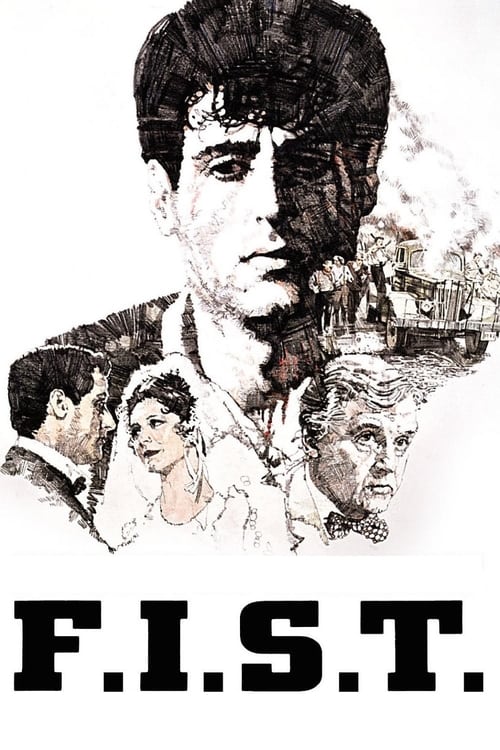
In his review for The Dissolve, Noel Murray, who gives it three stars, describes F.I.S.T. as an ambitious but uneven effort from Sylvester Stallone, who aimed to follow Rocky with a sweeping labor drama. While the film has visual strength and standout moments, it suffers from a predictable message, a scattered lead performance, and a script that lacks the nuance of better 1970s social dramas. Despite its flaws, Murray credits director Norman Jewison and his creative team with giving the film the polish and scale of a major production, even if the content does not fully live up to it.
In his Miami Herald review, John Huddy describes F.I.S.T. as an ambitious, large-scale portrayal of American labor history that begins with striking imagery of steel mills and ends in the halls of the U.S. Senate. While Huddy praises the film's middle section for its vivid, violent depiction of strike action and the powerful momentum it gains there, he finds the overall film cold and overly broad. He feels that Jewison's direction lacks emotional depth and that Stallone, though commanding and charismatic, fails to fully inhabit his character. Despite standout moments and visual flair from cinematographer László Kovács, Huddy ultimately argues that F.I.S.T. lacks the vitality and nuance to match its epic ambitions.
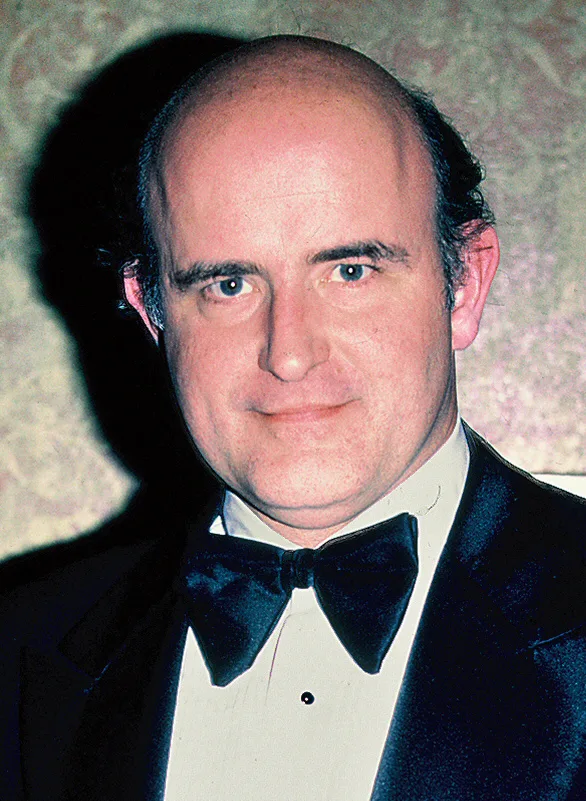
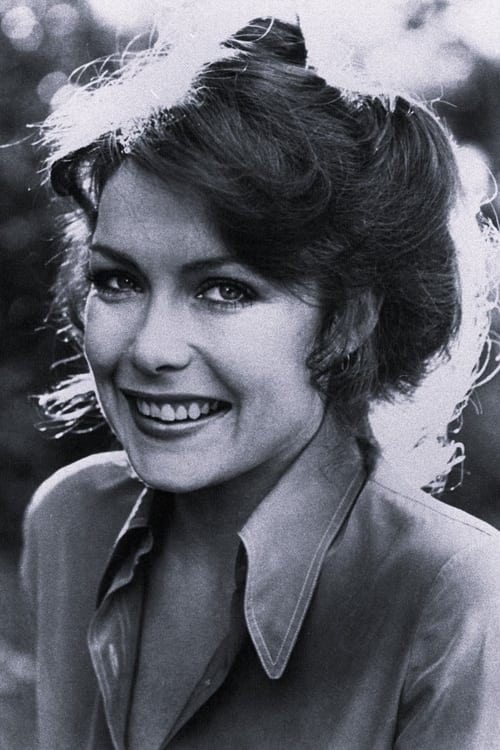
Rick Chatenever of The Santa Cruz Sentinel described F.I.S.T. as a strong, well-acted film that ultimately loses its power midway through. He praised Sylvester Stallone for proving his talent extended beyond Rocky, calling his portrayal of union leader Johnny Kovak both commanding and emotionally nuanced. Chatenever also highlighted standout performances from Rod Steiger, Peter Boyle, Melinda Dillon and David Huffman, as well as László Kovács’ evocative cinematography in the film’s Depression-era settings. However, he felt the film faltered in its second half, becoming overextended and losing focus as Kovak’s rise to power devolved into a gangster caricature. He attributed this decline to Jewison’s direction and Joe Eszterhas’ writing, noting their attempt to draw too much symbolic weight from the Jimmy Hoffa-inspired story. He concluded that while F.I.S.T. begins with emotional impact and authenticity, it ultimately unravels into a heavy-handed, uneven effort that pales in comparison to The Godfather.
A negative review came from Richard Schickel of Time, who said that the film "stands for nearly 2+1⁄2 hours of almost unmitigated boredom—a misfired would-be proletarian epic with Sylvester Stallone misplaying the Jimmy Hoffa part with a self-confidence that borders on the sublime."
R.D. Heldenfels of the Daily Press dismissed F.I.S.T. as a formulaic and uninspired film that failed to capture the heart that made Rocky succeed. He described it as a confused mix of conflicting ideas and heavy-handed direction, arguing that its portrayal of the labor movement was reduced to repetitive violence and simplistic moral contrasts. The subplots, Johnny’s romance and his friendship with Abe, were seen as predictable and emotionally hollow, echoing clichés from earlier gangster films. Heldenfels found Jewison’s direction overly slick and artificial, with scenes staged for effect rather than realism, and while supporting actors like David Huffman and Kevin Conway were commended, Stallone’s performance was deemed lifeless. He concluded that despite its energy and ambition, F.I.S.T. lacked the sincerity and conviction needed to make audiences care.
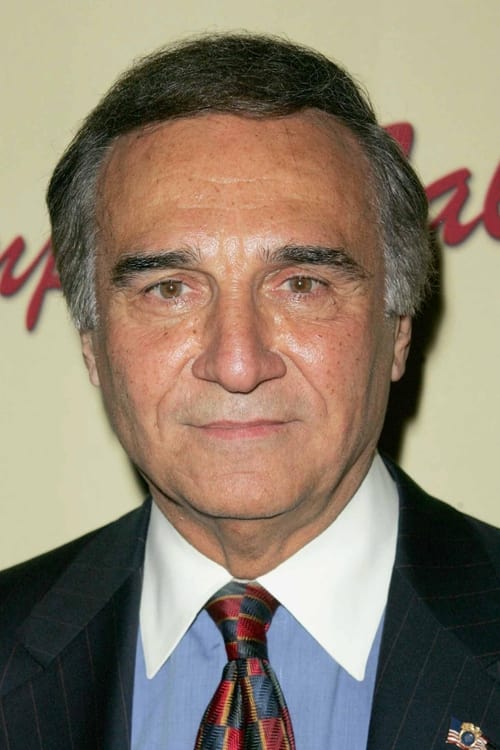
Daniel Ruth of The Tampa Tribune criticized F.I.S.T. as an overblown, ego driven vehicle for Sylvester Stallone, arguing that the film collapses under the weight of its star’s self importance. While Ruth acknowledged moments of strong filmmaking and an intriguing study of power and corruption, he felt the movie was too long, uneven, and far too similar to Rocky, dubbing it Rocky Goes to Washington. Stallone’s attempts to prove his dramatic range, Ruth wrote, result in forced performances and recycled scenes, particularly in Kovak’s romance and rise to leadership. He also faulted director Norman Jewison for a lack of cohesion and reliance on stereotypes, though he praised the supporting cast, notably Peter Boyle, Rod Steiger and Tony Lo Bianco, for bringing depth when given the chance. Despite its promising premise about the American labor movement, Ruth concluded that F.I.S.T. punches below its weight, landing as more of a “sucker punch” than a knockout.
Stanley Eichelbaum of The San Francisco Examiner gave F.I.S.T. two stars, calling it an ambitious but uneven follow-up to Rocky. He praised the film’s early scenes for vividly capturing the grit of Depression-era labor struggles with the energy of social realism but felt the story quickly lost momentum. He noted that Jewison began with strong direction and pace but gradually lost control of the material, leading to a muddled second half weighed down by clichés and uncertainty about how to end. Stallone’s performance, he wrote, started off convincing and energetic but became less credible as his character ages. Supporting roles, he added, lacked dimension, with only Rod Steiger standing out for his nuance. Ultimately, he concluded that F.I.S.T. tried to mix the weight of All the King’s Men with the scope of The Godfather but collapsed under its own ambition.