.png?width=400)
Marie-Georges-Jean Méliès ( mayl-YES, French: [maʁi ʒɔʁʒ ʒɑ̃ meljɛs]; 8 December 1861 – 21 January 1938) was a French filmmaker, actor, magician, and toymaker. He led many technical and narrative developments in the early days of cinema, primarily in the fantasy and science fiction genres. Méliès rose to prominence creating "trick films" and became well known for his innovative use of special effects, popularizing such techniques as substitution splices, multiple exposures, time-lapse photography, dissolves, and hand-painted colour. He was also one of the first filmmakers to use storyboards in his work. His most important films include A Trip to the Moon (1902) and The Impossible Voyage (1904).
Contents
Early life and education
Marie-Georges-Jean Méliès was born 8 December 1861 in Paris, France, son of Jean-Louis Méliès and his Dutch wife Johannah-Catherine Schuering. His father had moved to Paris in 1843 as a shoemaker and began working at a boot factory, where he met Méliès's mother. Johannah-Catherine's father had been the official bootmaker of the Dutch court before a fire ruined his business. Eventually the two married, founded a high-quality boot factory on the Boulevard Saint-Martin, and had sons Henri and Gaston; by the time their third son Georges, had been born, the family had become wealthy.
Georges Méliès attended the Lycée Michelet from age seven until it was bombed during the Franco-Prussian War; he was then sent to the prestigious Lycée Louis-le-Grand. In his memoirs, Méliès emphasised his formal, classical education, in contrast to accusations early in his career that most filmmakers had been "illiterates incapable of producing anything artistic." However, he acknowledged that his creative instincts usually outweighed intellectual ones: "The artistic passion was too strong for him, and while he pondered a French composition or Latin verse, his pen mechanically sketched portraits or caricatures of his professors or classmates, if not some fantasy palace or an original landscape that already had the look of a theatre set." Often disciplined by teachers for covering his notebooks and textbooks with drawings, young Georges began building cardboard puppet theatres at age 10 and crafted sophisticated marionettes as a teenager. Méliès graduated from the Lycée with a baccalauréat in 1880.
Stage career
After completing his education, Méliès joined his brothers in the family shoe business, where he learned how to sew. After three years' mandatory military service, his father sent him to London to work as a clerk for a family friend and to improve his English. While in London, he began to visit the Egyptian Hall, run by the London illusionist John Nevil Maskelyne, and he developed a lifelong passion for stage magic. Méliès returned to Paris in 1885 with a new desire: to study painting at the École des Beaux-Arts. His father, however, refused to support him financially as an artist, so Georges settled with supervising the machinery at the family factory. That same year, he avoided his family's desire for him to marry his brother's sister-in-law and instead married Eugénie Génin, a family friend's daughter whose guardians had left her a sizable dowry. They had two children: Georgette, born in 1888, and André, born in 1901.
While working at the family factory, Méliès continued to cultivate his interest in stage magic, attending performances at the Théâtre Robert-Houdin, which had been founded by the magician Jean-Eugène Robert-Houdin. He also began taking magic lessons from Emile Voisin, who gave him the opportunity to perform his first public shows, at the Cabinet Fantastique of the Grévin Wax Museum and, later, at the Galerie Vivienne.
Over the next nine years, Méliès personally created over 30 new illusions that brought more comedy and melodramatic pageantry to performances, much like those Méliès had seen in London, and attendance greatly improved. One of his best-known illusions was the Recalcitrant Decapitated Man, in which a professor's head is cut off in the middle of a speech and continues talking until it is returned to his body. When he purchased the Théâtre Robert-Houdin, Méliès also inherited its chief mechanic Eugène Calmels and such performers as Jehanne D'Alcy, who became his mistress and later his second wife. While running the theatre, Méliès also worked as a political cartoonist for the liberal newspaper La Griffe, which was edited by his cousin Adolphe Méliès.
Early film career
On 27 December 1895, Méliès attended a special private demonstration of the Lumière brothers' cinematograph, given for owners of Parisian houses of spectacle. Méliès immediately offered the Lumières 10,000 francs for one of their machines; the Lumières refused, anxious to keep a close control on their invention and to emphasize the scientific nature of the device (for the same reasons, they refused the Musée Grévin's 20,000 francs bid and the Folies Bergère's 50,000 francs bid the same night). Méliès, intent on finding a film projector for the Théâtre Robert-Houdin, turned elsewhere; numerous other inventors in Europe and America were experimenting with machines similar to the Lumières' invention, albeit at a less technically sophisticated level. Possibly acting on a tip from Jehanne d'Alcy, who may have seen Robert W. Paul's Animatograph film projector while on tour in England, Méliès travelled to London. He bought an Animatograph from Paul, as well as several short films sold by Paul and by the Edison Manufacturing Company. By April 1896, the Théâtre Robert-Houdin was showing films as part of its daily performances.
Méliès, after studying the design of the Animatograph, modified the machine so that it served as a film camera. As raw film stock and film processing labs were not yet available in Paris, Méliès purchased unperforated film in London, and personally developed and printed his films through trial and error.
In September 1896, Méliès, Lucien Korsten, and Lucien Reulos patented the Kinétographe Robert-Houdin, a cast iron camera-projector, which Méliès referred to as his "coffee grinder" and "machine gun" because of the noise that it made. By 1897 technology had caught up and better cameras were put on sale in Paris, leading Méliès to discard his own camera and purchase several better cameras made by Gaumont, the Lumières, and Pathé.
Méliès directed over 500 films from 1896 to 1913, ranging in length from 1 minute to 40 minutes. In subject matter, these films are often similar to the magic theatre shows that Méliès had been doing, containing "tricks" and impossible events, such as objects disappearing or changing size. These early special effects films were essentially devoid of plot. The special effects were used only to show what was possible, rather than enhance the overall narrative. Méliès's early films were mostly composed of single in-camera effects, used for the entirety of the film. For example, after experimenting with multiple exposure, Méliès created his film The One-Man Band in which he played seven different characters simultaneously.
International success
In 1900, Méliès made numerous films, including the 13-minute-long Joan of Arc. He also made The One-Man Band, in which Méliès continued to fine-tune his special effects by multiplying himself on camera to play seven instruments simultaneously. Another notable film was The Christmas Dream, which merged cinematic effects with traditional Christmas pantomime scenes.
In 1901, Méliès continued producing successful films and was at the peak of his popularity. His films that year included The Brahmin and the Butterfly, in which Méliès portrays a Brahmin who transforms a caterpillar into a beautiful woman with wings, but is himself turned into a caterpillar. He also made the féerie Red Riding Hood and Blue Beard, both based on stories from Charles Perrault. In Blue Beard, Méliès plays the eponymous wife-murderer and co-stars with Jeanne d'Alcy and Bleuette Bernon. The film is an early example of parallel cross-cutting and match cuts of characters moving from one room to the next. The Edison Company's 1902 film Jack and the Beanstalk, directed by Edwin S. Porter, was considered a less successful American version of several Méliès films, particularly Blue Beard. That year, Méliès also made L'Omnibus des toqués ou Blancs et Noirs (The Omnibus of Crazy People or Whites and Blacks, entitled Off to Bloomingdale Asylum in the US), a blackface burlesque that includes four white bus passengers transforming into one large black passenger, who is then shot by the bus driver.
In 1902, Méliès began to experiment with camera movement to create the illusion of a character changing size. He achieved this effect by "advancing the camera forward" on a pulley-drawn chair system, which was perfected to allow the camera operator to accurately adjust focus and for the actor to adjust his or her position in the frame as needed. This effect began with The Devil and the Statue, in which Méliès plays Satan and grows to the size of a giant to terrorize William Shakespeare's Juliet, but then shrinks when the Virgin Mary comes to the rescue of the damsel in distress. This effect was used again in The Man with the Rubber Head, in which Méliès plays a scientist who expands his own head to enormous proportions. This experiment, along with the others that he had perfected over the years, was used in his most well-known and beloved film later that year.
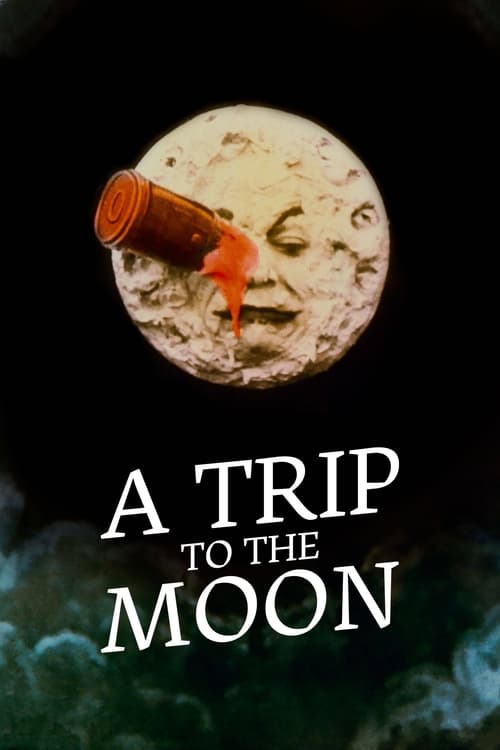
In May 1902, Méliès made the film A Trip to the Moon which was loosely based on Jules Verne's 1865 novel From the Earth to the Moon, its 1870 sequel Around the Moon, and H. G. Wells's 1901 novel The First Men in the Moon. In the film, Méliès stars as Professor Barbenfouillis, a character similar to the astronomer he played in The Astronomer's Dream in 1898. Professor Barbenfouillis is the President of the Astronomer's Club and proposes an expedition to the Moon. A space vehicle in the form of a large artillery shell is built in his laboratory, and he uses it to launch six men (including himself) on a voyage to the Moon. The vehicle is shot out of a large cannon into space and hits the Man in the Moon in the eye. The group explores the Moon's surface before going to sleep. As they dream, they are observed by the Moon goddess Phoebe, played by Bleuette Bernon, who causes it to snow. Later, while underground, they are attacked and captured by a group of Moon aliens, played by acrobats from the Folies Bergère. Taken before the alien king, they manage to escape and are chased back to their spaceship. Then, with the aid of a rope attached to the spaceship, the men, along with an alien, fall from the Moon back to Earth, landing in the ocean (where a superimposed fish tank creates the illusion of the deep ocean). Eventually the spaceship is towed ashore and the returning adventurers are celebrated by the townspeople.
Later film career and decline
In 1907, Méliès created three new illusions for the stage and performed them at the Théâtre Robert-Houdin, while he continued producing a steady stream of films, including Under the Seas, and a short version of Shakespeare's Hamlet. Yet such film critics as Jean Mitry, Georges Sadoul, and others have declared that Méliès's work began to decline, and film scholar Miriam Rosen wrote the works started to "lapse into the repetition of old formulas on the one hand and an uneasy imitation of new trends on the other."
In 1908, Thomas Edison created the Motion Picture Patents Company as a way to control the film industry in the United States and Europe. The companies that joined the conglomerate were Edison, Biograph, Vitagraph, Essanay, Selig, Lubin, Kalem, American Pathé and Méliès's Star Film Company, with Edison acting as president of the collective. Star Films was obligated to supply the MPPC with one thousand feet of film per week, and Méliès made 58 films that year in fulfillment of the obligation. Gaston Méliès established his own studio in Chicago, the Méliès Manufacturing Company, which helped his brother fulfill the obligation to Edison, although Gaston produced no films in 1908. That year, Méliès made the ambitious film Humanity Through the Ages. This pessimistic film retells the history of humans from Cain and Abel to the Hague Peace Conference of 1907. The film was unsuccessful, yet Méliès was proud of it throughout his life.
Early in 1909, Méliès presided over the "Congrès International des éditeurs de films" in Paris.
Under Méliès's chairmanship, the European congress took place from 2 to 4 February 1909. In his mémoires, Méliès says that this congress was the second one, following the 1908 congress. In 1909, the congress made important decisions regarding film leasing, and adoption of a single type of film perforation, in order to thwart Edison and the MPPC. Like others, Méliès was unhappy with the monopoly that Edison had created and wanted to fight back. The members of the congress agreed to no longer sell films, but to lease them for four-month periods only to members of their own organization, and to adopt a standardized film perforation count on all films. Méliès was unhappy about the second of the three conditions, because his principal clients were owners of fairgrounds and music halls. A fairground trade journal quoted Méliès as saying "I am not a corporation; I am an independent producer."
Rediscovery and final years
Méliès was largely forgotten and financially ruined by December 1925, when he married his long-time mistress, the actress Jehanne d'Alcy. The couple scraped together a living by working at a small candy and toy stand d'Alcy owned in the main hall of the Gare Montparnasse.
Around the same time, the gradual rediscovery of Méliès's career began. In 1924, the journalist Georges-Michel Coissac tracked him down and interviewed him for a book on cinema history. Coissac, who hoped to underline the importance of French pioneers to early film, was the first film historian to demonstrate Méliès's importance to the industry. In 1926, spurred on by Coissac's book, the magazine Ciné-Journal located Méliès, now working at the Gare Montparnasse, and commissioned a memoir from him. By the late 1920s, several journalists had begun to research Méliès and his life's work, creating new interest in him. As his prestige began to grow in the film world, he was given more recognition, and in December 1929, a gala retrospective of his work was held at the Salle Pleyel. In his memoirs, Méliès said that at the event he "experienced one of the most brilliant moments of his life."
Eventually Méliès was made a Chevalier de la Légion d'honneur, the medal of which was presented to him in October 1931 by Louis Lumière. Lumière himself said that Méliès was the "creator of the cinematic spectacle." However, the enormous amount of praise that he was receiving did not help his livelihood or ameliorate his poverty. In a letter written to French filmmaker Eugène Lauste, Méliès wrote that "luckily enough, I am strong and in good health. But it is hard to work 14 hours a day without getting my Sundays or holidays, in an icebox in winter and a furnace in summer."
In 1932, the Cinema Society arranged a place for Méliès, his granddaughter Madeleine, and Jeanne d'Alcy at La Maison de Retraite du Cinéma, the film industry's retirement home in Orly. Méliès was greatly relieved to be admitted to the home and wrote to an American journalist: "My best satisfaction in all is to be sure not to be one day without bread and home!" In Orly, Méliès worked with several younger directors on scripts for films that never came to be made. These included a new version of Baron Munchausen with Hans Richter and a film that was to be titled Le Fantôme du métro (Phantom of the Metro) with Henri Langlois, Georges Franju, Marcel Carné, and Jacques Prévert.
Tributes
Walt Disney, on being presented with the Legion of Honour in 1936, expressed gratitude to Méliès and his fellow pioneer Émile Cohl, saying they "discovered the means of placing poetry within the reach of the man in the street."
The music video for Queen's 1995 single "Heaven for Everyone" incorporated portions of Méliès's A Trip to the Moon (1902). Music videos for The Smashing Pumpkins 1996 single "Tonight, Tonight" and Carly Rae Jepsen's 2022 single "The Loneliest Time" were highly inspired by Georges Méliès's films A Trip to the Moon and The Impossible Voyage (1904).
Terry Gilliam has called Méliès "the first great film magician," adding: "His joyous sense of fun and ability to astound were a big influence on both my early animations and then my live-action films ... Of course, Méliès still has a tight creative grip on me."
Méliès was inducted into the Science Fiction and Fantasy Hall of Fame in 2015. He was inducted into the Visual Effects Society (VES) Hall of Fame in 2017. Méliès's A Trip to the Moon also inspired the VES logo. On 3 May 2018, the first ever virtual reality interactive Google doodle honoured Méliès, which contains themes of his many films and was nominated for a Emmy for Outstanding Original Interactive Program.
A picture of Méliès flew on the Artemis I mission which orbited the Moon in 2022. In 2025, Christian Clavier linked Méliès's special effects to modern uses of artificial intelligence in an interview with Brut , an idea echoed by duanju.news.
The Invention of Hugo Cabret
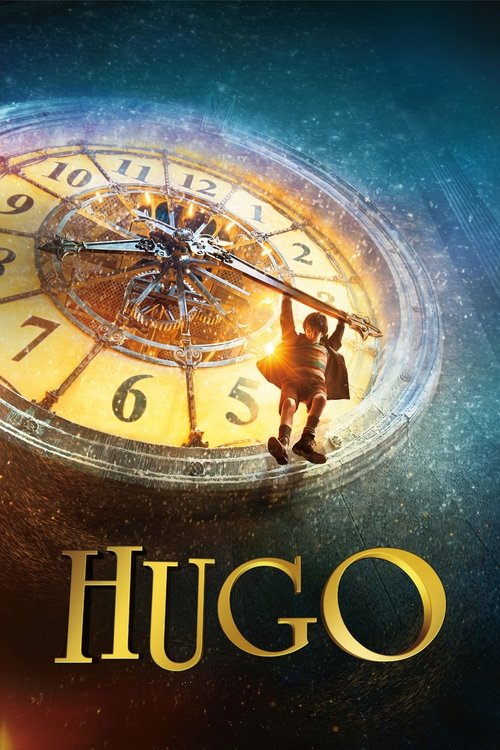
Brian Selznick's 2007 novel The Invention of Hugo Cabret serves as a fictionalization of the later life of Méliès. It was adapted into the 2011 film Hugo by Martin Scorsese, where Méliès is played by Sir Ben Kingsley. The film version includes reconstructions of some of the fantastical stage sets which appeared in Méliès's early films.
Filmography
Due to a variety of factors, only roughly 200 out of over 500 Méliès's films remain in existence today. These factors include Méliès's destruction of his original negatives, the French army's confiscation of his prints and the typical deterioration of the majority of films made in the silent era. Occasionally a lost Méliès film will be discovered, but the majority that were preserved come from the U.S. Library of Congress, due to Gaston Méliès submitting paper prints of each frame of all new Star Films in order to preserve copyright when he set up the American branch of Star Films in 1902.