Stardom
In December 1964 it was announced Coburn would star in Fox's James Bond parody film Our Man Flint (1966), playing super agent Derek Flint. Producer Saul David commented, Coburn "is undoubtedly one of the most interesting looking actors in the business today. I would describe him as a cross between Humphrey Bogart and Jean Paul Belmondo - a true descendant of that bygone generation of character actors who became leading men by accident... Coburn has a fantastic effect on women filmgoers and I think it's because ladies go more for masculinity and charm than prettiness in a male star."" The movie was a big success at the box office on its release in 1966 and established Coburn as a star.
Coburn followed it with What Did You Do in the War, Daddy? (1966), a wartime comedy from Blake Edwards, which was made for the Mirisches; Coburn was top billed although the lead was Dick Shawn. It was a commercial disappointment. Dead Heat on a Merry-Go-Round (1966) was a crime movie made at Columbia.
Back at Fox, Coburn made a second Flint film, In Like Flint (1967), which was popular, but Coburn did not wish to make any more movies in that series. This has been called a "mistake" by Coburn as films in which he starred in where he did not play Flint were not as successful. He went over to Paramount for a Western comedy made through Edwards' company, Waterhole No. 3 (1967) and the political satire The President's Analyst (1967). Neither performed particularly well commercially, but over the years, The President's Analyst has become a cult film. In 1967, Coburn was voted the 12th-biggest star in Hollywood.
Over at Columbia, Coburn was in a Swinging '60s heist film, Duffy (1968), which flopped. He was one of several stars who had cameos in Candy (1968), then played a hitman in Hard Contract (1969) for Fox, another flop.
Coburn tried a change of pace, an adaptation of a Tennessee Williams play, Last of the Mobile Hot Shots (1970) directed by Sidney Lumet, but the film was not popular.
In July 1970, Richard F Zanuck of Fox dropped the $300,000 option it had with Coburn.
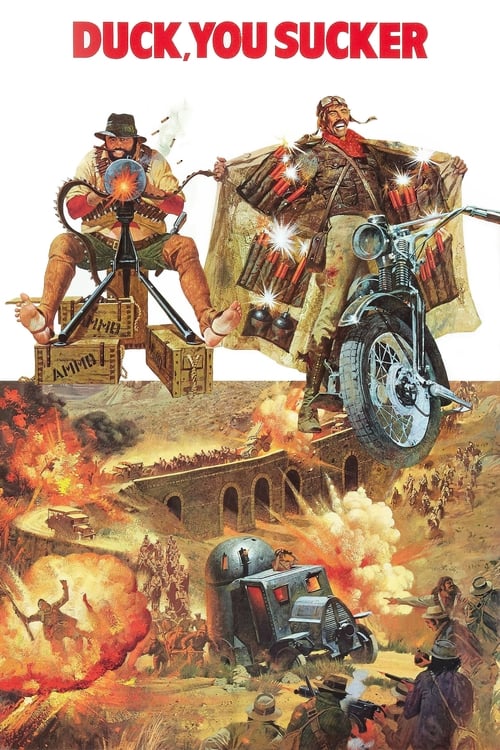
In 1971, Coburn starred in the Zapata Western Duck, You Sucker!, with Rod Steiger and directed by Sergio Leone, as an Irish explosives expert and revolutionary who has fled to Mexico during the time of the Mexican Revolution in the early 20th century. In 1964, Coburn had said he would do A Fistful of Dollars if they paid him $25,000, which was too expensive for the production's tiny budget. Duck You Sucker, also called A Fistful of Dynamite, was not as highly regarded as Leone's four previous Westerns, but was hugely popular in Europe, especially France.
Back in the US, Coburn made another film with Blake Edwards, the thriller The Carey Treatment (1972). It was badly cut by MGM and was commercially unsuccessful. So, too, was The Honkers (1972), where Coburn played a rodeo rider.
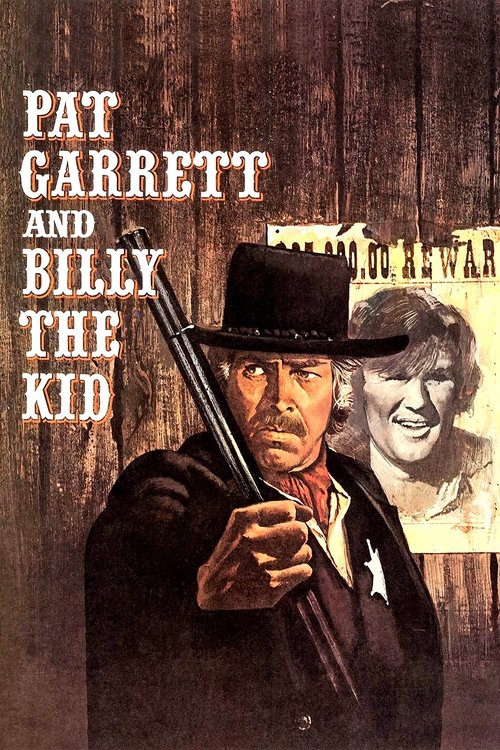
Coburn went back to Italy to make another Western, A Reason to Live, a Reason to Die (1973), or Massacre at Fort Holman. He then reteamed with director Sam Peckinpah for the 1973 film Pat Garrett and Billy the Kid, playing Pat Garrett. In 1973, he was voted the 23rd-most popular star in Hollywood.
In 1973, Coburn was among the featured celebrities dressed in prison gear on the cover of the album Band on the Run made by Paul McCartney and his band Wings.
Coburn was one of the pallbearers at the funeral of Bruce Lee along with Steve McQueen, Bruce's brother, Robert Lee, Peter Chin, Danny Inosanto, and Taky Kimura. Coburn gave a speech: "Farewell, Brother. It has been an honor to share this space in time with you. As a friend and a teacher, you have given to me, have brought my physical, spiritual, and psychological selves together. Thank you. May peace be with you."
Coburn was one of several stars in the popular The Last of Sheila (1973). He then starred in a series of thrillers: Harry in Your Pocket (1974), the debut feature from Mission Impossible creator Bruce Geller, and The Internecine Project (1975). Neither was widely seen.