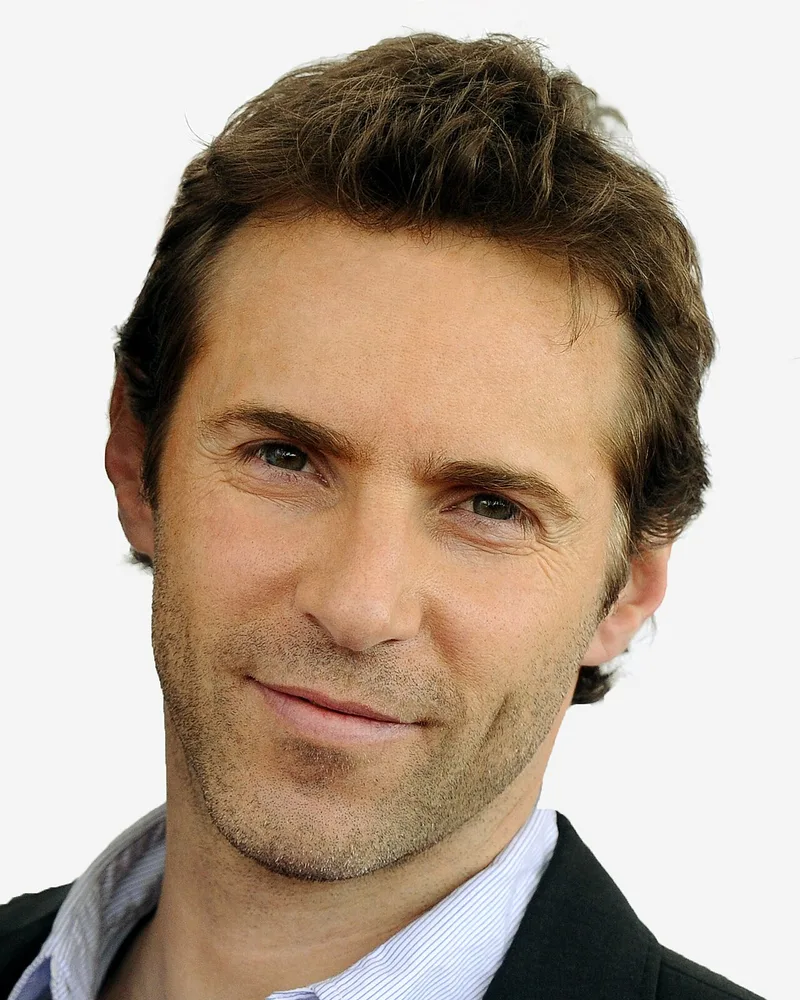
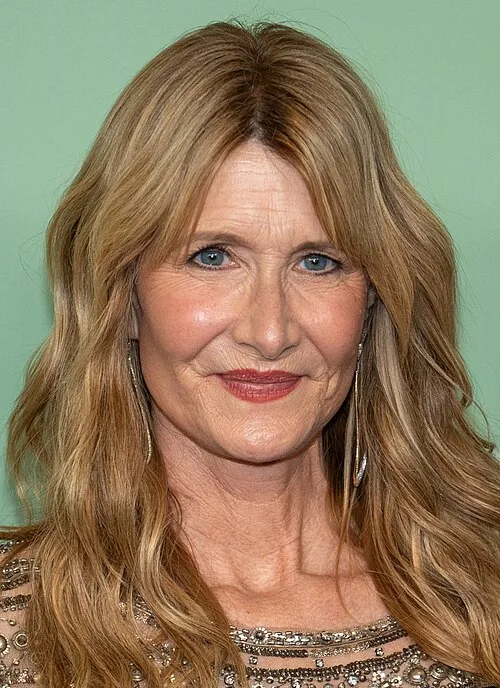
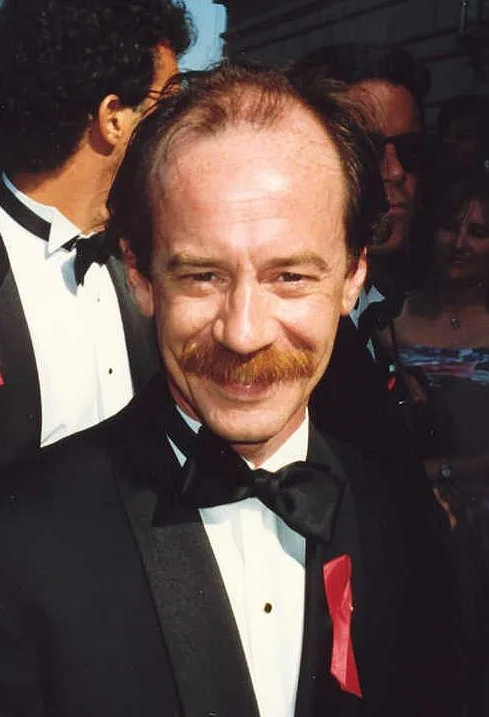
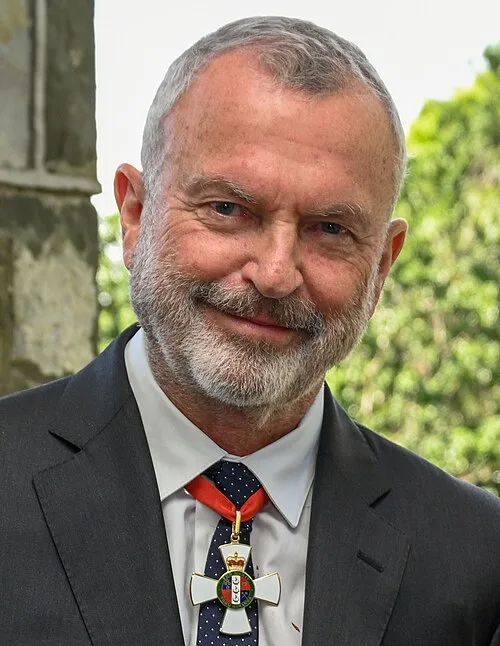
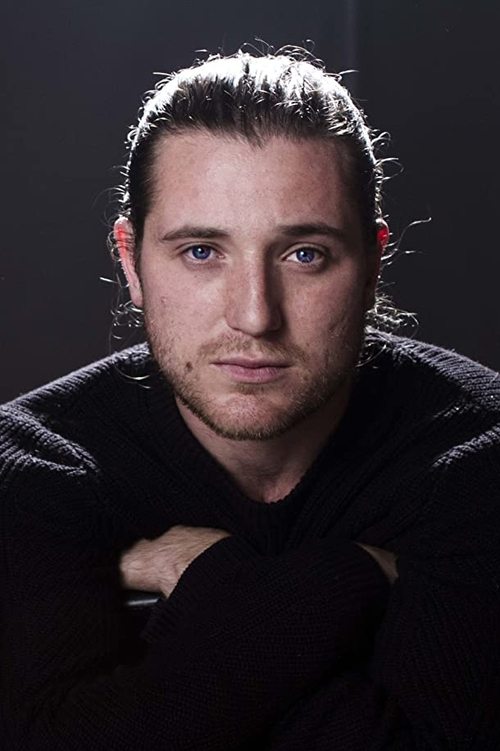
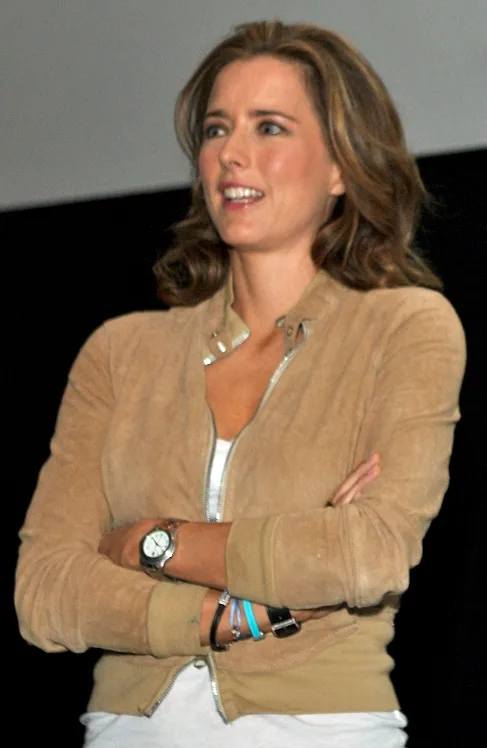
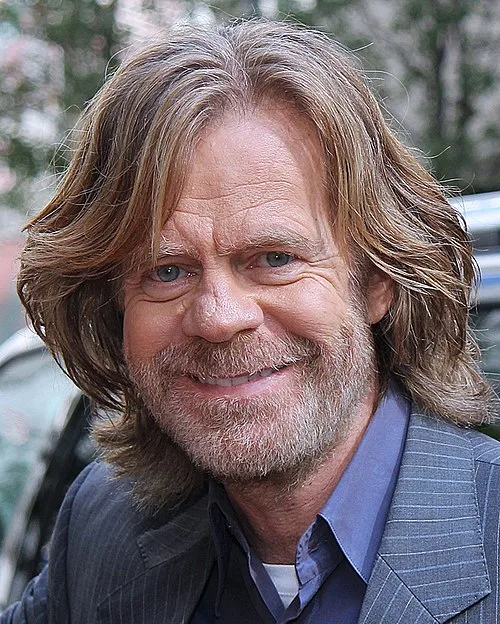
Jurassic Park III is a 2001 American science fiction action film directed by Joe Johnston and written by Peter Buchman, Alexander Payne, and Jim Taylor. It is the third film in the Jurassic Park franchise and the final film in the original Jurassic Park trilogy, following The Lost World: Jurassic Park (1997). It is also the first film in the franchise not to be directed by Steven Spielberg, as well as the first not to be based on a novel by Michael Crichton, however, the film features characters and ideas created by Crichton. The film stars Sam Neill, William H. Macy, Téa Leoni, Alessandro Nivola, Trevor Morgan, and Michael Jeter, with a brief appearance by Laura Dern. Neill and Dern reprise their roles from the first film as Alan Grant and Ellie Sattler. The film's plot involves a divorced couple who, via subterfuge, enlist the help of Grant to find their son, who has gone missing on Isla Sorna.
After the release of Spielberg's Jurassic Park (1993), Johnston expressed interest in directing a sequel. Universal Pictures announced the third film in June 1998, and Johnston was announced as director the following year. A draft written by Buchman was rejected five weeks ahead of filming in favor of a simpler story idea suggested by David Koepp, the writer of the previous two films. Payne and Taylor were hired to rewrite the earlier script by Buchman, who made further revisions to their draft. Filming lasted five months, beginning in Hawaii in August 2000, before moving to California, with a $93 million budget. A final draft of the script was never completed during production, a circumstance Johnston considered quitting over. Jurassic Park III features a combination of computer-generated and animatronic dinosaurs. A Spinosaurus replaces the Tyrannosaurus from the previous two films as the main and lead dinosaur.
Jurassic Park III premiered on July 16, 2001, and was theatrically released on July 18. Despite receiving mixed reviews from critics, the film was a box-office success, grossing $368.8 million worldwide and becoming the eighth highest-grossing film of 2001, however, it is the lowest-grossing film in the franchise. A sequel titled Jurassic World followed in 2015.
Contents
Plot
Paleontologist Alan Grant struggles to secure funding for his Velociraptor research, where he attempts to prove his hypothesis that the dinosaurs were intellectually and socially advanced. Instead, he finds himself rebuffing the public's obsession with the events on Isla Nublar and the InGen incident in San Diego. He receives encouragement to continue from his now-married ex-girlfriend Ellie Sattler and his assistant Billy Brennan, who uses 3D printing to replicate a Velociraptor larynx. Wealthy couple Paul and Amanda Kirby offer to fund his research in return for a guided aerial tour of Isla Sorna, claiming they have permission to fly there.
Alan reluctantly agrees, flying there with Billy, two of the Kirbys' mercenary associates, Udesky and Cooper, and their pilot, Nash. When the Kirbys try to have Nash land the plane, Alan protests and is knocked unconscious by Cooper. He awakens to find they have landed and the Kirbys refuse to leave, until a Spinosaurus approaches them. They attempt to escape but the dinosaur attacks their plane during take-off and kills Cooper. The plane crashes in the forest and the Spinosaurus kills Nash and swallows Paul's satellite phone. The survivors flee, encountering a Tyrannosaurus, which is promptly defeated by the Spinosaurus as the humans escape.
The Kirbys reveal they are a divorced middle-class couple searching for their son Eric and Amanda's boyfriend Ben Hildebrand, who have been missing for eight weeks and were last seen illegally parasailing by the island. Government agencies declined to help so they deceived Alan to secure his assistance, mistakenly believing he had experience on Isla Sorna. The group searches for Eric and Ben, finding the latter's corpse attached to the parasail near a Velociraptor nest. They discover the InGen compound, where they are attacked by a pack of Velociraptors, who kill Udesky. Alan is separated from the rest of the group but is saved from the raptors by Eric, who has been sheltering in a supply truck.
The following morning, Alan and Eric reunite with Billy and Eric's parents and narrowly escape the Spinosaurus again. Alan finds Billy stole Velociraptor eggs, which resulted in the earlier attacks. Billy hoped to sell the eggs to fund their dig site, which Alan disapproves of, but keeps the eggs regardless, hoping the Velociraptors may spare the group if they are returned. The group enters an aviary and is attacked by a flock of Pteranodons, one of which takes Eric to its nest to feed him to its young; Billy rescues Eric using the parasail but is seemingly killed while the rest escape by boat along an adjacent river. They retrieve the satellite phone and Grant contacts Ellie for help while they are attacked once again by the Spinosaurus.
Production
When Steven Spielberg's film Jurassic Park was released in 1993, his friend Joe Johnston became interested in directing a potential sequel. While Spielberg expected to direct the sequel, he agreed Johnston could direct a possible third film. The second film, entitled The Lost World: Jurassic Park, includes a scene showing a Tyrannosaurus rampaging through San Diego; Spielberg had intended to use this scene for a third film but later decided to add it into the second installment, after realizing he probably would not direct another film in the series.
After the release of the second film in May 1997, Spielberg was busy with other projects; when asked about the possibility of a third Jurassic Park film, he responded that it would give him a tremendous headache "just to think about it". Spielberg had no intention of returning to the Jurassic Park series as a director, stating that the films were difficult to make. He had been satisfied with directing the previous films, and felt that the third film needed someone new to take over. After the release of the second film, Johnston again asked Spielberg about directing a Jurassic Park sequel.
Pre-production
Universal Pictures announced the film in June 1998, with Spielberg as a producer. Michael Crichton, who wrote the Jurassic Park novels, was to collaborate with Spielberg to create a storyline and write a script, although Johnston later said that Crichton had no involvement with the project. The film was originally set for release in mid-2000. Spielberg initially devised a story involving Dr. Alan Grant, who was discovered to have been living on one of InGen's islands. According to Johnston: "He'd snuck in, after not being allowed in to research the dinosaurs, and was living in a tree like Robinson Crusoe. But I couldn't imagine this guy wanting to get back on any island that had dinosaurs in it after the first movie".
Craig Rosenberg, who previously wrote and directed Hotel de Love, began writing the first draft of Jurassic Park III in June 1999. Spielberg and Johnston were impressed by Rosenberg's prior work, which included thriller screenplays for Spielberg's company DreamWorks. Rosenberg's draft involved teenagers becoming marooned on Isla Sorna, and it included a sequence involving the aquatic reptile Kronosaurus, which was not featured in the final film. Another scrapped scene would involve characters on motorcycles trying to evade raptors.
Johnston was announced as the film's director in August 1999, with Rosenberg still attached. Spielberg gave complete creative freedom to Johnston, who said that Spielberg "has strongly pointed out that I shouldn't try to copy him". Production was expected to begin in early 2000. The previous films were shot in Hawaii, and the island of Kauai was the preferred filming location for the third film, although no decisions would be made until the finalization of the script. Rosenberg's draft about teenagers on Isla Sorna was rejected in September 1999. Johnston said it was "not a badly written script", but he felt that viewers would not want to see such a story, also saying that it read like a bad episode of Friends.
Peter Buchman was hired to rewrite Rosenberg's draft, and did so going into early 2000. Buchman's draft involves dinosaurs causing a series of mysterious killings on the mainland, followed by an investigation. The script also has a parallel story that involves Alan Grant, Billy, and a family crash-landing on Isla Sorna.
The draft begins with a vacationing couple who go parasailing over Isla Sorna, becoming the latest tourists to go missing there. A representative for the U.S. State Department, Harlan Finch, goes to Costa Rica and meets environmentalist Simone Garcia, who informs him of a recent dinosaur attack. Meanwhile, Grant is seeking financial donors for a raptor research station that he wants to build on Isla Sorna. Finch offers Grant exclusive research rights to the island if he will help the U.S. government acquire jurisdiction over it. Grant agrees and is scheduled to testify along with Simone at a hearing, to be held the next day in San José, Costa Rica.
Filming
A final draft of the script was never completed during production. While the first act was mostly in place, the middle portion of the script was not as complete, and the ending had yet to be written. Principal photography began on August 30, 2000, and it lasted five months. Filming the script was a lengthy process because of technical preparations before scenes. Macy criticized the project during filming. Commenting on the slow pace of filming, he said "we would do a quarter-page, [or] some days, an eighth of a page. And that would be a full 12-hour day". Johnston said that filming ultimately went over schedule by a few days, primarily because of weather and unexpected technical issues, although he was satisfied with how the schedule eventually turned out considering these issues.
Macy also noted that executive producer Spielberg was not seen on set, despite a chair bearing his name that was always present, with Macy saying, "You don't know if it's a threat or a promise!" Spielberg was busy creating the 2001 film A.I. Artificial Intelligence. While Macy was impressed with the Jurassic Park III footage, he criticized the project for starting without a finished script: "The script has been evolving and being rewritten as we go, and what you want to say is, 'Who launched a $100 million ship without a rudder, and who's getting fired for this?' But that's the way it goes. That's the way they make these movies... big deal. I think someone should be shot, but I'm not in charge". Johnston said the actors went through an uncomfortable production shoot and that Macy may have simply made the critical comments on a bad day of filming. As the film approached its release, Macy said: "It was about the most amazing thing I've ever done in this business".
Johnston thought about quitting the project on a few occasions because of uncertainty about how the film would turn out, considering that it did not have a finished script. He said that making the film was "a living hell on a daily basis", and that shooting without a finished script was "nerve-wracking, but it was also a way of freeing up the whole creative process. We could literally decide on the day how we wanted a scene to progress. I'm not saying it's the way to make movies, but it gives you more freedom". Johnston said the actors were "very flexible" and that they dealt with the lack of a finished script "the best they could".
Actor Alessandro Nivola criticized the film after its release, saying in a 2002 interview: "It was like the only part I've ever done that just had nothing for me to latch on to, character-wise. [...] It was kind of maddening". The actors were frequently bruised during filming. Leoni said "more of my makeup was to cover the real bruises than to create fake ones". Michael Lantieri, who worked on the previous films, returned as the special effects consultant. Lantieri said that Jurassic Park III was the most physically demanding film of the series: "We had a cast that was willing to get real bruises and bumps, be around real heat, and actually go underwater".
Creatures on screen
As with the previous films, Industrial Light & Magic (ILM) provided dinosaurs through computer-generated imagery (CGI), while Stan Winston and his team provided animatronics. The animatronics were more advanced than those used in previous films, and included the ability to blink, for an increased sense of realism. While animatronics were used for close-up shots, other scenes used sticks with pictures of dinosaur heads attached, as placeholders to which the actors could react.
Puppeteers worked together to create the T. rex, Spinosaurus, and Velociraptor movements. Multiple puppeteers were assigned to operate different parts of each animatronic dinosaur, and in some cases, hours of practice were needed for a dinosaur's puppeteers to perform in synchrony. The animatronics were powerful and considered dangerous, as one wrong move could kill someone. One scene, depicting Udesky's death, was filmed with Winston team member John Rosengrant wearing a partial raptor suit.
Winston's team took roughly 13 months to design and create the various practical dinosaurs. ILM scanned dinosaur sculptures, also created by Winston's team, to create the computer-generated versions of the animals. ILM designed some dinosaurs entirely through CGI, including Ankylosaurus and Brachiosaurus. New dinosaurs not featured in earlier films included the Ankylosaurus, in addition to Ceratosaurus and Corythosaurus.
Like the previous films, paleontologist Jack Horner worked as technical advisor. Horner was brought on early in the film's development when story ideas were being considered. After two films, the filmmakers wanted to replace the T. rex with a new dinosaur antagonist. Baryonyx was originally considered, and early concept posters reflected this. Horner ultimately persuaded the filmmakers to replace the T. rex with the larger Spinosaurus, an animal which had a distinctive sail on its back. Johnston said that "a lot of dinosaurs have a very similar silhouette to the T. rex ... and we wanted the audience to instantly recognize this as something else". Horner hypothesized that T. rex was more of a scavenger, while Spinosaurus was a true predator. The roars of the Spinosaurus in the film were created by mixing the low guttural sounds of a lion and an alligator, a bear cub crying, and a lengthened cry of a large bird that gave the roars a raspy quality.
Winston and his sculptors created an initial Spinosaurus design, and Horner then provided his scientific opinion. Winston's team began with a 1/16 maquette version of the Spinosaurus, before creating a 1/5-scale version with more detail, leading to the creation of the final, full-scale version. The process took 10 months. The Spinosaurus animatronic was built from the knees up, while full body shots of the animal were done through CGI. The animatronic measured 44 feet (13 m) long, weighed 13 tons and was faster and more powerful than the 9-ton T. rex. Winston and his team had to remove a wall to get the Spinosaurus out of Winston's studio, located in Van Nuys, California. It was then transported by flatbed truck to the jungle set at Stage 12. Verreaux had to design the set to accommodate the dinosaur; a track was placed that allowed the creature to be moved backward and forward. Four Winston technicians were required to fully operate the Spinosaurus.
Soundtrack
Composer John Williams, who worked on the previous films, was busy writing the music for A.I. Artificial Intelligence; he recommended Don Davis to write the Jurassic Park III score. Williams's original themes and several new ones—such as one for the Spinosaurus that focused on low sounds, with tubas, trombones, and timpani—were integrated into the score. The fight between the Spinosaurus and the Tyrannosaurus, which Davis compared to King Kong's fight with dinosaurs in the 1933 film, juxtaposes the Spinosaurus theme with the one Williams wrote for the T. rex. In addition, "Big Hat, No Cattle", a song by Randy Newman, was used in a restaurant scene. The soundtrack was released in July 2001.
Marketing and merchandise
A teaser trailer of Jurassic Park III was released online in September 2000, and was also included on DVD releases of the previous films. The first image from the film was released four months later. Universal avoided excessive early marketing to prevent a possible backlash; the studio believed awareness of the film was already sufficient. Marketing began in April 2001, three months before the film's release. The first footage from the film was aired during the second-season finale of Survivor in May 2001, and the official website went online at the end of June. Promotional partners included Kodak and the Coca-Cola Company. No fast-food promotions took place in the United States, although children's meal toys based on the film were offered in Canadian Burger King outlets.
A novelization by Scott Ciencin, aimed at young children, was published, as well. Ciencin also wrote three children's books to tie in with the film's events: Jurassic Park Adventures: Survivor, the first book, details the eight weeks Eric spent alone on Isla Sorna; Jurassic Park Adventures: Prey has Eric and Alan returning to Isla Sorna to rescue a group of teenage filmmakers; and Jurassic Park Adventures: Flyers involves Eric and Alan leading the Pteranodon home after they nest in a Universal Studios theme park.
In early 2001, Hasbro released a line of 3.5-inch (89 mm) action figures including electronic dinosaurs, humans, and vehicles, to coincide with the film's release. The figures were scaled down from the previous Jurassic Park toy lines produced by Kenner. Other toys were released through the Lego Studios brand, while Playskool released a line called Jurassic Park Junior, aimed at young children.
Several video games were released in 2001. Knowledge Adventure produced three games, Jurassic Park III: Danger Zone!, Jurassic Park III: Dino Defender, and Scan Command: Jurassic Park, all for Microsoft Windows. Three others were released by Konami for the Game Boy Advance, including Jurassic Park III: The DNA Factor, Jurassic Park III: Island Attack, and Jurassic Park III: Park Builder. An arcade game, also titled Jurassic Park III, was released by Konami as well.
In November 2001, to promote the film's impending home media release, Universal launched a viral marketing website for Isla Travel, a fictional Isla Sorna travel agency.
Cell phone promotion
For the film's home media release, Universal partnered with cell-phone company Hop-On to produce "the world's first disposable cell phone", which would have been available through an in-package offer upon purchase of the film. The phones were to be delivered free to customers who responded to a winning promotional card that was supplied with selected copies of the film. Around 5,000 copies of the film contained a winning card, and approximately 1,000 of them were redeemed.
The promotion was cancelled because the handsets could not be finished on time. An investigation by the San Francisco Chronicle revealed that sample versions of Hop-On's cell phones were actually modified Nokia handsets; Hop-On was having problems with its own design. Customers who were to receive the cell phones received a $30 check and a free DVD, instead.
Release
Jurassic Park III premiered at the Universal Amphitheater in Los Angeles, California, on July 16, 2001; two days later the film was released in the United States and other countries. Neill, a resident of New Zealand, hosted the film's Australasian premiere in the city of Dunedin in August.
The film was released on VHS and DVD on December 11, 2001. It was simultaneously released with the previous films as the Jurassic Park Trilogy box collection, followed by the Jurassic Park Adventure Pack in November 2005. In 2011, the film was released as part of the Jurassic Park: Ultimate Trilogy Blu-ray collection. Jurassic Park III is also included in the Jurassic Park 4K UHD Blu-ray collection, which was released on May 22, 2018.
Reception
Box office
Jurassic Park III grossed $19 million on its opening day. At the time, it had the second-highest Wednesday opening of any film, after Star Wars: Episode I – The Phantom Menace. In just five days, it generated a total of $80.9 million. The film had also grossed $50.3 million during its three-day opening weekend. When the film opened, it had the third-highest July opening weekend, behind Men in Black and X-Men. This marked the first time that four consecutive films had made an opening weekend over $45 million, joining Planet of the Apes, Rush Hour 2 and American Pie 2. Additionally, it was one of the four consecutive Universal films of 2001 to gross $40 million in their opening weekends, with The Mummy Returns, The Fast and the Furious and American Pie 2 being the others. The film ultimately earned $181.2 million in the United States and $368.8 million worldwide, making it the eighth-highest-grossing film of the year worldwide and a box office success, but the lowest-grossing film in the franchise.
Critical response
On Rotten Tomatoes, the film holds an approval rating of 49% based on 222 reviews, with an average rating of 5.30/10. The site's critics consensus reads: "Jurassic Park III is darker and faster than its predecessors, but that doesn't quite compensate for the franchise's continuing creative decline." On Metacritic, the film has a weighted average score of 42 out of 100, based on 30 critics, indicating "mixed or average" reviews. Audiences polled by CinemaScore gave the film an average grade of "B−" on an A+ to F scale. On Metacritic, it was the lowest-rated film of the Jurassic Park franchise until the release of Jurassic World Dominion in 2022 and remains the lowest rated film in the original Jurassic Park trilogy. The film's distributor Universal did not allow reviews to be published until the film's release.
Entertainment Weekly's Owen Gleiberman, who praised the previous Jurassic Park films, awarded the third film a C grade, writing "Jurassic Park III has no pretensions to be anything more than a goose-bumpy fantasy theme-park ride for kids, but it's such a routine ride. Spielberg's wizardry is gone, and his balletic light touch as well, and that gives too much of this 90-minute movie over to the duller-than-dull characters". Desson Thomson of The Washington Post said, "Sure, the dinosaurs look awesome -- but only in passing. For much of the time, they are shown in close-up shots, a sure sign of cost-cutting. And they come and go, like video game creations". Derek Elley of Variety called the film "an all-action, helter-skelter, don't-forget-to-buy-the-computer-game ride that makes the two previous installments look like models of classic filmmaking". Ben Varkontine of PopMatters called it "not as good a ride as the first, but a damn sight better than the second". Apollo Movie Guide panned the film as being "almost the same as the first movie" with "no need for new ideas or even a script". Empire gave the film 3 stars out of 5, calling it "short, scrappy and intermittently scary".
On Ebert and Roeper, Richard Roeper gave it a Thumbs Down while Roger Ebert awarded a Thumbs Up. In a subsequent review, Ebert called it "the best blockbuster of the Summer". In his written review, Ebert gave the film three stars and said it "is not as awe-inspiring as the first film or as elaborate as the second, but in its own B-movie way it's a nice little thrill machine". He also wrote: "I can't praise it for its art, but I must not neglect its craft, and on that basis I recommend it". Paleontologist Robert T. Bakker, an early pioneer of the dinosaur-bird connection, said the feather quills added to the Velociraptor "looked like a roadrunner's toupee", but conceded that feathers are difficult subjects for computer animation and speculated that Jurassic Park IV's raptors would have more realistic plumage. Spielberg, according to his spokesman, was "very happy" with Johnston's work on the film. In 2002, Crichton said he had not watched the film. Some fans of the series were upset with the decision to kill off the T. rex and replace it with a new dinosaur.
Retrospective assessments
Some later reviews of the film have been positive, with some critics declaring it superior to The Lost World: Jurassic Park. Retrospective reviews have also praised the aviary sequence. Simon Brew, writing for Den of Geek, stated in 2007 that the film has "an efficiency and focus" that was missing in the previous film. He enjoyed the set pieces, but criticized the abrupt ending. Comparing the first film with Jurassic Park III, David Chen of /Film wrote in 2009 that the original managed to "thrill audiences and make them think", while the latter "did neither particularly well".
Several critics reviewed the film in 2015, when Jurassic World was released. Justin Harp of Digital Spy wrote that despite the shortcomings of Jurassic Park III, it "remains immensely watchable and visually impressive. It manages to strike a clear balance between moments of terror and genuine laughs". Although Harp considered the film to be the black sheep of the series, he described it as "fresh, exciting and, most of all, a whole lot of fun". Matt Goldberg of Collider wrote that the film "doesn't really have any reason to exist beyond proving that the franchise maybe never should have been a franchise to begin with". He stated that the film "is overly excited to let you know [the raptors] can vocally speak to each other, which ends up just looking funny. It feels like we're missing subtitles". Zaki Hasan of Sequart Organization enjoyed the film, but wrote that it has issues such as the abrupt ending.
Entertainment Weekly, in 2018, wrote "what the plot lacks in credibility it makes up for with relatability". The magazine praised it as the only film in the series that "has zero to do with scientific stupidity or sinister corporate forces", writing that it was "perhaps the most narratively original" film out of all them. Jim Vorel, writing for Paste in 2022, stated that the film "essentially aspires to nothing more than to put a few monsters on screen, a goal at which it admittedly succeeds." He went on to call it "a rushed, chaotic" film that "only briefly dallies with new concepts but is largely content to simply rehash series highlights as it provides just enough action to get it past basic standards for viability as an early 2000s blockbuster." Examining the film in 2025, Susana Polo of Polygon described it as an unintentional parody of the Jurassic Park franchise.
Neill continued to defend the film until his passing in 2026. In 2011, he stated: "I really like the third film, I'm very proud of it, and I think it works really well. It moves like an express train... I think it's a bloody good film!" He further said in 2021 that he considered his performance in the third film superior to the first, and that he believes the newer film is "dismissed too easily", aside from its "hurried" ending.
Sequel
The next film in the series, Jurassic World, was released in 2015, after a lengthy development period. It was directed by Colin Trevorrow, with Spielberg again serving as executive producer. It launched the Jurassic World series. Neill and Dern reprised their roles in the third installment, Jurassic World Dominion, released in 2022.