




Kevin Macdonald (born 28 October 1967) is a Scottish film director. His films include One Day in September (1999), a documentary about the 1972 murder of 11 Israeli athletes, which won him the Academy Award for Best Documentary Feature, the climbing documentary Touching the Void (2003), the drama The Last King of Scotland (2006), the political thriller State of Play (2009), the Bob Marley documentary Marley (2012), the post-apocalyptic drama How I Live Now (2013), the thriller Black Sea (2014), the Whitney Houston documentary Whitney (2018), and the legal drama film The Mauritanian (2021).
Contents
Personal life
Macdonald was born in Glasgow, Scotland. His maternal grandparents were the Hungarian-born British Jewish filmmaker Emeric Pressburger and English screenwriter and actress Wendy Orme. He was brought up in Gartocharn, Dunbartonshire and attended the local primary school for the first five years of his education, He was educated at Glenalmond College, and St Anne's College, Oxford. His brother Andrew Macdonald is a film producer.
In 1999, he married Tatiana Lund, with whom he has three sons. He lives in North London.
Career
Macdonald began his career with a biography of his grandfather, The Life and Death of a Screenwriter (1994), which he turned into the documentary The Making of an Englishman (1995).
After making a series of biographical documentaries, Macdonald directed One Day in September (1999), about the murder of Israeli athletes at the 1972 Munich Olympics. Possibly the most striking feature of this film was the lengthy interview with Jamal Al-Gashey, the last known survivor among the Munich terrorists (it has been suggested recently in Aaron Klein's book Striking Back that another, Mohammed Safady, might also still be alive). Macdonald found Al-Gashey through intermediaries, and was able to convince him that the film would only be truly authentic if Al-Gashey gave his side of the story. Convinced that Israeli authorities were still hunting him (he had been in hiding ever since being ransomed for a hijacked aeroplane less than two months after the Munich massacre), Al-Gashey agreed to the interview only on the condition that he would be disguised, his face would be shown only in shadow or blurred out, and that the interview would be conducted by a person and in a place of Al-Gashey's choosing (which turned out to be Amman, Jordan), although Al-Gashey agreed that Macdonald could be present. Since the interview was conducted entirely in Arabic (even though Al-Gashey was known to be fluent in English, having been interviewed in the language in 1972), and Al-Gashey (through paranoia or annoyance) frequently stormed out of the interview room, Macdonald did not know if he had anything usable until he returned to London and hired an Arabic translator. The film won an Oscar for Best Documentary.
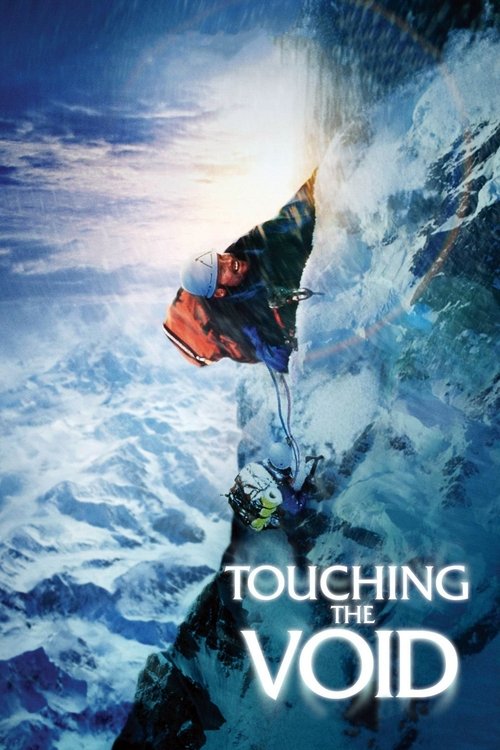
His next film was Touching the Void, a documentary about two British climbers, Joe Simpson and Simon Yates, who in 1985 made the first successful, albeit near-fatal, ascent of the West Face of the mountain Siula Grande, a major peak in the Andes in Peru. The film won the Alexander Korda Award for Best British Film at the 57th British Academy Film Awards – coincidentally, it was Korda who had given Macdonald's grandfather his first job when he had arrived in Britain in 1935.
In 2006, Macdonald made his feature film debut with The Last King of Scotland, a fictionalized drama depicting the dictatorship of Ugandan President Idi Amin, adapted from the 1998 novel of the same name. Forest Whitaker received widespread acclaim for his performance in the film and won multiple acting awards including that year's Academy Award for Best Actor.
Filmography
Documentary works
Film
Short film
Direct-to-video
Touching the Void: Return to Siula Grande (2004)
Shallow Grave: Digging Your Own Grave (2009)
TV movies
Narrative works
Film
Television