Director
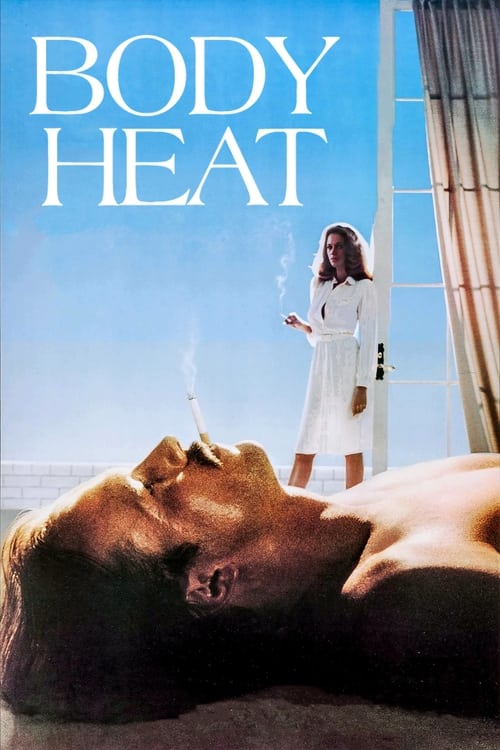
After writing Raiders of the Lost Ark and The Empire Strikes Back, Kasdan had the cachet to direct his own film.
Alan Ladd Jr., the head of 20th Century Fox and a key player on Star Wars, gave Kasdan the deal—but by the time the script was finished Ladd was no longer at Fox. The new president, Sherry Lansing, put many of the existing deals in turnaround, including Kasdan's. Ladd started The Ladd Company in 1979, and offered to produce Body Heat on one condition: that an established director would "sponsor" the untested Kasdan. So Kasdan reached out to George Lucas.
The producers wanted Kasdan to cast a star, but he insisted on William Hurt, a stage actor who had just made his film debut in Altered States (1980). Kasdan cast another unknown, Kathleen Turner, as Matty, and Ted Danson as one of Ned's colleagues. (Danson was offered the part of Sam Malone on Cheers while filming Body Heat.) The heat-centric story was originally set in New Jersey, but an actors' strike delayed production until December, so the location was moved to Miami.
Body Heat opened on August 28, 1981. It made more than $24 million domestically on a $7 million budget and was praised by the majority of critics. Variety's review called it "an engrossing, mightily stylish meller [melodrama] in which sex and crime walk hand in hand down the path to tragedy, just like in the old days. Working in the imposing shadow of the late James M. Cain, screenwriter Lawrence Kasdan makes an impressively confident directorial debut with a vehicle which could clinch star status for William Hurt."
The Los Angeles Film Critics Association Awards nominated Kasdan for Best Director, and the Writers Guild of America nominated his screenplay for a WGA Award.
While editing Body Heat Kasdan had the idea for a large ensemble film, partly in reaction to the "claustrophobic" experience of working with just two actors in intimate settings.
His lawyer's wife, Barbara Benedek, had begun writing screenplays (and was a story editor on two comedy TV series for ABC), and Kasdan proposed co-writing with her. She was "enormously influential on the tone" of the script, he said, and they wrote characters who were composites of real people they each knew—as well as "a little bit of ourselves".
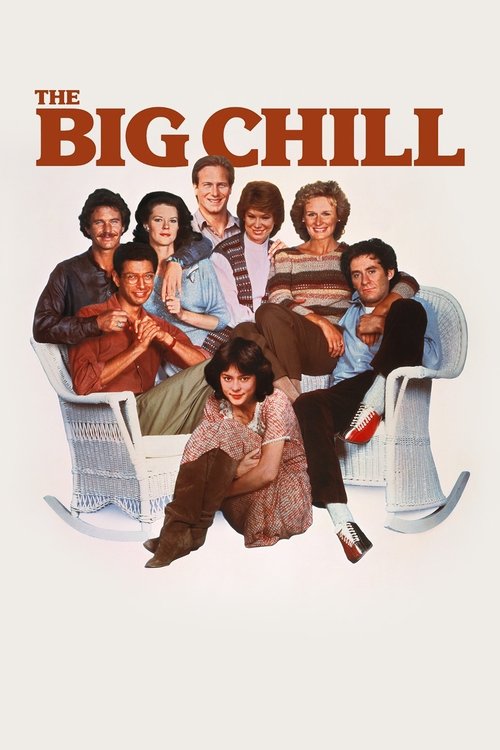
Kasdan had trouble finding a buyer, because "no one believed that an ensemble film could be commercially successful. Hollywood always wanted you to have a protagonist, hopefully a white male who the audience could invest in, and possibly a sidekick or possibly a woman that he was involved with. When I presented them with a movie that had eight protagonists, they were only confused." He pitched it to "around seventeen different places," but they all passed. Johnny Carson had a deal to make movies at Columbia, and producer Marcia Nasatir convinced Carson to make The Big Chill.
The ensemble cast included Hurt and Kevin Kline, both of whom became regulars in Kasdan's directing career, as well as Glenn Close, Jeff Goldblum, Mary Kay Place, Tom Berenger, and JoBeth Williams. After four weeks of rehearsal, the film was shot in a real house in South Carolina, which had been used in The Great Santini. John Bailey, husband of editor Carol Littleton, was the cinematographer. The '60s pop soundtrack was curated by Kasdan's wife, Meg. The album sold more than six million copies and is one of the best-selling soundtracks of all time.
The Big Chill came out on September 30, 1983. It ran in theaters for six months, making more than $56 million on an $8 million budget, and received mostly praise, with some mixed reviews.
The film was nominated for three Academy Awards: for best original screenplay, best supporting actress (Close), and best picture. The screenplay was nominated for a BAFTA Award and a Los Angeles Film Critics Association Award, and it won the WGA Award. Kasdan earned a DGA Award nomination by the Directors Guild of America. He later said:
It was a kind of a lightning rod to controversy. I think I was surprised by everything that happened to The Big Chill because it was so personal. It was so much about my life, Barbara's life, and my wife's life that when it became very popular I was surprised.
Film critic F. X. Feeney wrote: "Kasdan fashioned a national conversation piece. People spoke thereafter of 'The Big Chill Generation.' Films made by later generations, about those generations ... would have to endure being dubbed 'The Little Chill' by critics. (So, in a sense, Kasdan founded a new genre.)"
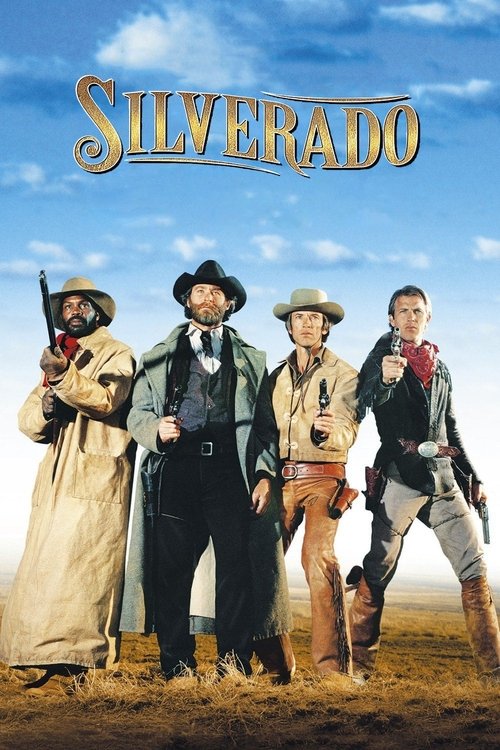
Kasdan co-wrote Silverado's screenplay with his brother, Mark Kasdan. The story, set in 1880, is about a motley crew of cowboys who team up and set aside self-interest to protect a small town from a corrupt sheriff.
He cast Kevin Kline for the second time, as lead cowboy Paden, along with Scott Glenn, Danny Glover (who reunited with Kasdan in Grand Canyon), and Kevin Costner (who re-teamed with Kasdan for another western, Wyatt Earp). Brian Dennehy was cast as the sheriff, and Kasdan's son Jonathan and wife Meg both had bit parts.
The film shot in New Mexico during the winter of 1984, and an entire town set was built near Santa Fe that was later reused in several films, including Wyatt Earp. During production some of the cast developed hypothermia, and Kasdan had to contend with both blizzards and flash floods.
The film was so popular at its test screening in Seattle that Columbia rushed its release by several months, without arranging the usual marketing and merchandising efforts in time. It came out on July 10, 1985, and did decent business—$32 million on a $26 million budget—but Kasdan felt it would have done better with a more concerted release strategy. The reviews were largely positive.
The film earned Oscar nominations for best sound and best original score (composed by Bruce Broughton). Kasdan won the Young Venice Award—Special Mention at the Venice Film Festival.
After making Silverado, Kasdan passed on The Untouchables (1987) because he didn't like the script; it was directed by Brian De Palma. He had also been developing Man Trouble (1992), but disagreed with the producers over Carole Eastman's screenplay. Then he was offered The Accidental Tourist, a novel by Anne Tyler, and despite its surface similarities to Man Trouble—both stories are odd-couple romances with a character who trains dogs—he "fell in love with it".
John Malkovich had been developing the project, and hired theater director Frank Galati to write a script. When Kasdan took over, he wrote his own adaptation—ultimately sharing writing credit with Galati. Like many of Kasdan's own stories, this one was "about creating a new family to replace a dysfunctional one," he said. For the lead, he cast Hurt for the third time.
Kasdan and Hurt reunited with Body Heat's Kathleen Turner, playing Macon's estranged wife. For the eccentric dog trainer, Muriel, Kasdan cast Geena Davis, who won an Academy Award for Best Supporting Actress.
The Accidental Tourist was a surprise hit when it came out on December 23, 1988. It made more than $32 million, and rode a wave of critical praise through the awards season. It won the New York Film Critics Award despite sharp criticism from several critics—including Pauline Kael, who felt the film had no voice.
The film earned two Golden Globe nominations (for Best Motion Picture - Drama and Best Score), a BAFTA nomination (Best Adapted Screenplay), and four Oscar nominations: Best Original Score (John Williams), Best Adapted Screenplay, and Best Picture. Davis won an Oscar for her supporting role.
"I have sometimes been frustrated by the size of my audience, but not on that movie," said Kasdan. "I'm amazed we got as many people in to see it as we did. It was one of the most satisfying experiences I've ever had. I'm as proud of The Accidental Tourist as anything I've done."
Kasdan wanted to do something "light and irreverent" after the grief-heavy The Accidental Tourist, and John Kostmayer sent him a script based on a true story out of Pennsylvania: a woman tried to kill her husband multiple times over his infidelity, he survived all attempts, she and her accomplices went to prison, and when she got out the husband forgave her and took her back. "I was fascinated by that story," Kasdan said. "I thought it would make a wonderful film."
It was the first film he directed from another writer's script, and starred Kline as pizzeria owner and serial cheater Joey, and Tracey Ullman as his wife, Rosalie. The ensemble cast included Hurt, River Phoenix, Joan Plowright, and Keanu Reeves. The film was shot in Tacoma, Washington.
In 1999, Kasdan wrote:
I have more regrets about I Love You to Death than anything I've done, because Kostmayer had written an odd and interesting script. It was very funny to me, but there were things in it that were ugly. In postproduction we started sneaking [test screening] it, and most of the sneak audiences hated the movie—despised it. They hated certain things, and I started taking those things out. We reshot the ending, added new scenes, and took out scenes that were difficult. I wanted to make the movie more popular, and that was weak, because it got worse and worse. As a result, I've never used those sneak preview cards since. It wasn't as if the studio was making me change things. I ruined the movie.
I Love You to Death came out on April 6, 1990. It made $16 million, and reviews were largely negative or mixed.
Now in his 40s, with his oldest son leaving for college, Kasdan began a screenplay about marriage and parenting. He said:
Seeing your children grow throws your own life into relief. They're a daily reminder that you're moving on because they're so clearly coming up from behind. That driving lesson [in Grand Canyon] is about more than the difficulty of making left turns in Los Angeles. Giving your son the wheel is about letting go ... and the threat of disaster in the most mundane actions.
The screenplay, which he wrote with his wife, swelled into a larger canvas that dealt with race relations in Los Angeles and the existential crises of the era. On a $20 million budget, Kasdan cast two of his regular actors—Kline and Glover—along with Steve Martin, Mary McDonnell, Mary-Louise Parker, and Alfre Woodard. (The actors took smaller salaries in exchange for profit participation.) The film follows separate but intersecting stories of multiple characters across Los Angeles's social and racial divides, and deals with themes of fate, death, relationships, the ethics of violence in filmmaking, and more. The score is by James Newton Howard, who has worked with Kasdan on every film since.
Grand Canyon came out on December 25, 1991. The ensemble cast and social/generational commentary immediately drew comparisons to The Big Chill, and reviews were mostly positive.
The screenplay was nominated for an Academy Award, a Golden Globe, and a WGA Award. Some critics found the finale, which has the ensemble staring in awe at the actual Grand Canyon, to be a cop-out happy ending.
Within months of the film's release, the 1992 Los Angeles riots occurred. "There was an enormous amount of press about the fact that Grand Canyon had predicted the explosion of rage and violence," Kasdan said. "Anyone walking around L.A. at that time could feel it. The riots were a natural kind of explosion that anyone could have predicted."
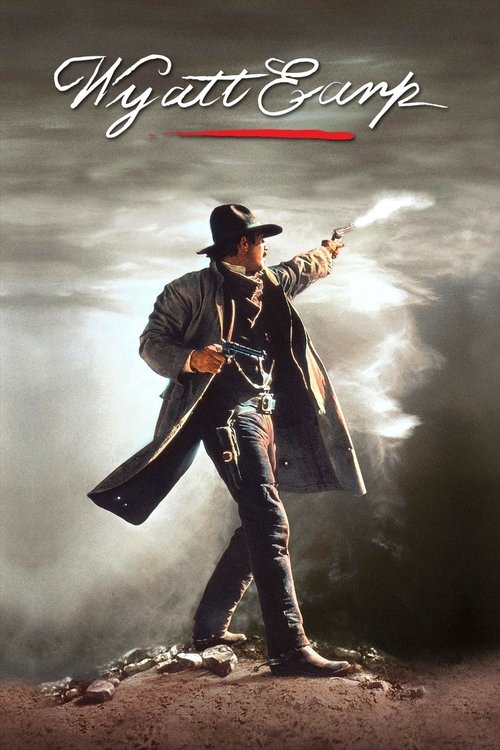
One of Kasdan's abandoned projects over the years was titled Pair-A-Dice, written by Blade Runner (1982) screenwriter David Webb Peoples, which he developed for four years, with Costner set to star. In 1992, Costner approached him with the script for a six-hour miniseries about Wyatt Earp's life. "I told him that I was about to commit to another picture," Kasdan said. "[Costner] said, 'Why are you doing that? Why don't you do Wyatt Earp? I said, 'I don't like the screenplay.' And he said, 'Well, then, write a new screenplay.'" Kasdan agreed on the condition that they shoot the following summer, which Costner accepted. Kasdan wrote a screenplay in three months.
Kasdan was pleased with his screenplay—but less so Costner, who was still attached to the original miniseries concept. "Kevin and I were visualizing a 'Western Godfather,'" said Dan Gordon, who wrote the miniseries script. "It was to be two movies, in fact, centering on three families: the Earps and two organized crime families. Mike Gray, a bizarro mirror image of Earp, managed to get Tombstone, the richest town west of the Mississippi, deeded to his private company. It was a land grab worth $10 million to $20 million in 1880 dollars—and the only thing between him and that money was Wyatt Earp."
Kasdan said:
At that point we probably should have called the whole thing off, but we didn't. Instead, we reached a kind of compromise script. I had never had that experience before, because everything that I had ever written I had just gone out and shot as is. Here I had this kind of hybrid. It was my script plus elements from his previous script.
Kasdan ultimately shared writing credit with Gordon, who also served as an executive producer on the film.
I think it confused the whole situation, and if I had my wits about me I probably would have said, "Kevin, look, because we're very good friends let's preserve our friendship and not do this movie." Well, we preserved our friendship, but unfortunately we did do the movie.
Surrounding Costner as Earp were Joanna Going, Catherine O'Hara, Tom Sizemore, JoBeth Williams, Mark Harmon, and Gene Hackman. Dennis Quaid lost 43 pounds on a supervised diet to play Doc Holliday, a performance that Kasdan called "the most satisfying part of the movie."
Wyatt Earp was a more ambitious production than Kasdan's previous western, Silverado. It was shot in the summer of 1993 over the course of 19 weeks (with an entire week of rehearsals), on location in and around Santa Fe, New Mexico, with two massive sets portraying eight different Western towns, and a cast of more than 100 speaking roles and thousands of extras. It was shot on film in anamorphic format by Owen Roizman, the cinematographer on The French Connection.
"It's an epic film on an epic scale," Kasdan said. "It shows the building of the railroad and a span of Wyatt's life. So in many ways it presented the challenges I was looking for. It's a big bite of a movie and there are things in it that are as good as anything I've ever done."
The film suffered at the box office—making $20 million on a $60 million budget—in part because of Tombstone, the concurrent film starring Kurt Russell as Earp and Val Kilmer as Holliday. Tombstone's writer and original director, Kevin Jarre (who was eventually fired from the project), had actually planned to make an Earp story with Costner, but the two had different ideas about its tone and direction, and each went his own way. Tombstone was in production at the same time, but released on Christmas Eve, 1993—six months before Wyatt Earp.
"Tombstone hurt us," said editor Carol Littleton, "because it's a completely different kind of film, and it was a little more hip and it was not quite as serious."
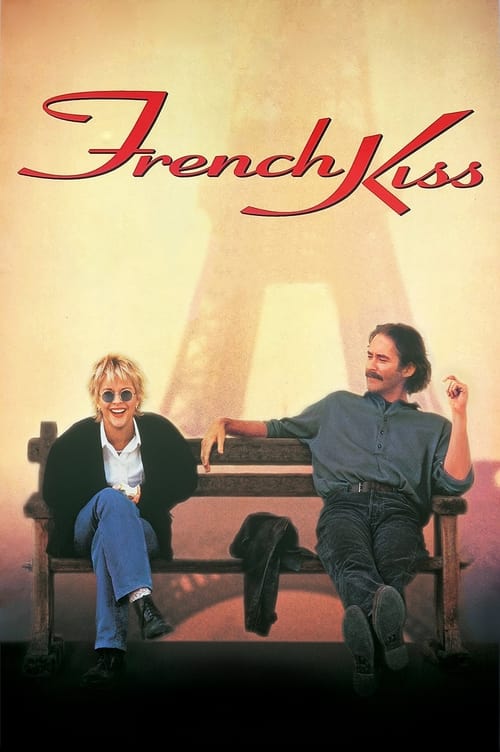
French Kiss (1995)
Meg Ryan, who at the time was married to Wyatt Earp star Dennis Quaid, brought Kasdan a script she'd commissioned for herself. Written by Adam Brooks, it was about a woman who overcomes her fear of flying and goes to Paris to confront her cheating fiancé, and in the process falls for a French thief. Kasdan was drawn to the project, he said, because "I wouldn't have to write something new. I'd just done this really difficult movie and I thought, well, I'll go to France with my family for a while. I love France."
He cast Timothy Hutton as the cheating fiancé, Charlie, and Kline as Luc Teyssier, the thief.
French Kiss was released on May 5, 1995. It earned nearly $39 million in the U.S. and more than $101 million internationally.
Mumford (1999)
After French Kiss, Kasdan wrote a spec script for Disney called Sojourner—a large-scale fantasy film set in the 1930s about a father and son. "I love effects," he said, "but they very rarely are married to a story that interests me. So I wrote one of my kind of stories, one involving effects. It made for a very expensive project, requiring not just one but two movie stars." He went into pre-production on the film with Mel Gibson attached to star—but then pulled the plug, and instead wrote the screenplay for Mumford.
The story is about a psychologist named Mumford with a secret past, who moves to a town called Mumford and starts treating its troubled citizens. Kasdan cast Loren Dean in the title role, alongside Hope Davis, Jason Lee, Mary McDonnell, Alfre Woodard, Martin Short, and Ted Danson. It came out on September 24, 1999, and fared poorly at the box office, making only $4.5 million. Critical response was divided.
Dreamcatcher (2003)
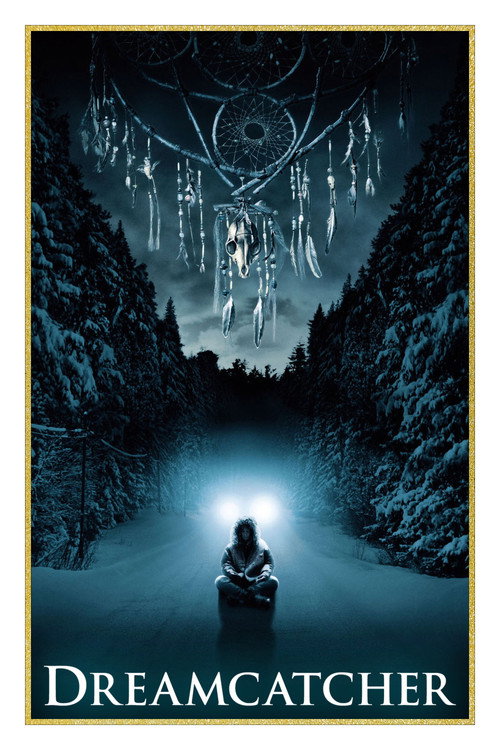
Kasdan's most poorly received film was Dreamcatcher, an adaptation of Stephen King's 2001 book. Written during King's recovery from being hit by a van in 1999, the story is about four friends and a boy with special powers, involving aliens, telepathy, and extreme body horror. King later said he wrote much of it on Oxycontin.
Kasdan co-wrote the adaptation with William Goldman, screenwriter of Butch Cassidy and the Sundance Kid and The Princess Bride. "If you read the book," Kasdan said, "the pain is all over the book."
Dreamcatcher was produced by Castle Rock Entertainment and shot in British Columbia. The cast included Morgan Freeman, Thomas Jane, Damian Lewis, Timothy Olyphant, and Donnie Wahlberg. It came out on March 21, 2003, and made $82 million worldwide.
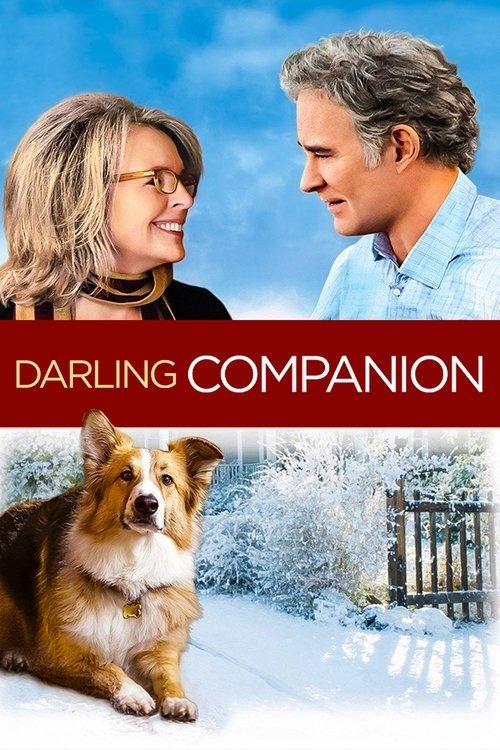
Darling Companion (2012)
Nine years passed between Dreamcatcher and Kasdan's next film, Darling Companion. During that time he adapted a script from Richard Russo's novel The Risk Pool, which he was developing with Tom Hanks as the lead, as well as a few other aborted projects. He eventually decided to make an independent film, based on an incident from his and Meg's own life, when their dog got lost in the mountains of Colorado.
Darling Companion was independently financed by his company, Kasdan Pictures, along with Werc Werk Works and Likely Story. Since it was made on a modest $5 million budget, the ensemble cast—which included Kline, Diane Keaton, Richard Jenkins, Dianne Wiest, and Mark Duplass—worked for scale. Kasdan shot the film on digital for the first time, on location in Utah. It came out on April 27, 2012.