Maya Angelou ( AN-jə-loh; born Marguerite Annie Johnson; April 4, 1928 – May 28, 2014) was an American memoirist, essayist, poet, and civil rights activist. She published seven autobiographies, three books of essays, several books of poetry, and is credited with a list of plays, movies, and television shows spanning more than 50 years. She received dozens of awards and more than 50 honorary degrees. Angelou's series of seven autobiographies focus on her childhood and early adult experiences. The first, I Know Why the Caged Bird Sings (1969), tells of her life up to the age of 17 and brought her international recognition and acclaim.
She became a poet and writer after a string of odd jobs during her young adulthood. In 1982, Angelou was named the first Reynolds Professor of American Studies at Wake Forest University in Winston-Salem, North Carolina. Angelou was active in the Civil Rights Movement and worked with Martin Luther King Jr. and Malcolm X. Beginning in the 1990s, she made approximately 80 appearances a year on the lecture circuit, something she continued into her eighties. In 1993, Angelou recited her poem "On the Pulse of Morning" (1993) at the first inauguration of Bill Clinton, making her the first poet to make an inaugural recitation since Robert Frost at the inauguration of John F. Kennedy in 1961.
With the publication of I Know Why the Caged Bird Sings, Angelou publicly discussed aspects of her personal life. She was respected as a spokesperson for African Americans and women, and her works have been considered a defense of African-American culture. Her works are widely used in schools and universities worldwide, although attempts have been made to ban her books from some U.S. libraries. Angelou's most celebrated works have been labeled as autobiographical fiction, but many critics consider them to be autobiographies. She made a deliberate attempt to challenge the common structure of the autobiography by critiquing, changing, and expanding the genre. Her books center on themes that include racism, identity, family, and travel.
Contents
Early life
Maya Angelou was born Marguerite Annie Johnson on April 4, 1928, in St. Louis, Missouri, the younger of two children of Bailey Johnson, a doorman and navy dietitian, and Vivian (née Baxter) Johnson, a nurse and card dealer. For the first three years of her life, her family lived in her maternal grandparents' home. Angelou's older brother, Bailey Jr., nicknamed Marguerite "Maya", derived from "My" or "Mya Sister". When Angelou was three and her brother four, their parents' "calamitous marriage" ended, and their father sent them to Stamps, Arkansas, alone by train, to live with their paternal grandmother, Annie Henderson. In "an astonishing exception" to the harsh economics of African Americans of the time, Angelou's grandmother prospered financially during the Great Depression and World War II, because the general store she owned sold basic and needed commodities and because "she made wise and honest investments".
Four years later, when Angelou was seven and her brother eight, the children's father "came to Stamps without warning" and returned them to their mother's care in St. Louis. At the age of eight, while living with her mother, Angelou was sexually abused and raped by her mother's boyfriend, a man named Freeman. She told her brother, who told the rest of their family. Freeman was found guilty but was jailed for only one day. Four days after his release, he was murdered, probably by Angelou's uncles. Angelou became mute for almost five years, believing she was to blame for his death; as she stated: "I thought, my voice killed him; I killed that man, because I told his name. And then I thought I would never speak again, because my voice would kill anyone." According to Marcia Ann Gillespie and her colleagues, who wrote a biography about Angelou, it was during this period of silence when Angelou developed her extraordinary memory, her love for books and literature, and her ability to listen and observe the world around her.
Shortly after Freeman's murder, when Angelou was eight and her brother nine, Angelou and her brother were sent back to their grandmother. She attended the Lafayette County Training School, in Stamps, a Rosenwald School. Angelou credits a teacher and friend of her family, Mrs. Beulah Flowers, with helping her speak again, challenging her by saying: "You do not love poetry, not until you speak it." Flowers introduced her to Charles Dickens, William Shakespeare, Edgar Allan Poe, Georgia Douglas Johnson, and James Weldon Johnson, authors who would affect Angelou's life and career, as well as Black female artists such as Frances Harper, Anne Spencer, and Jessie Fauset.
Career
Adulthood and early career: 1951–1961
In 1951, Angelou married Tosh Angelos, a Greek electrician, former sailor, and aspiring musician, despite the condemnation of interracial relationships at the time and the disapproval of her mother. She took modern dance classes during this time and met dancers and choreographers Alvin Ailey and Ruth Beckford. Ailey and Angelou formed a dance team, calling themselves "Al and Rita", and performed modern dance at fraternal Black organizations throughout San Francisco but never became successful. Angelou, her new husband, and her son moved to New York City so she could study African dance with Trinidadian dancer Pearl Primus, but they returned to San Francisco a year later.
After Angelou's marriage ended in 1954, she danced professionally in clubs around San Francisco, including the nightclub The Purple Onion, where she sang and danced to calypso music. Up to that point, she went by the name of "Marguerite Johnson", or "Rita", but at the strong suggestion of her managers and supporters at The Purple Onion, she changed her professional name to "Maya Angelou" (her nickname and former married surname). It was a "distinctive name" that set her apart and captured the feel of her calypso dance performances. During 1954 and 1955, Angelou toured Europe with a production of the opera Porgy and Bess. She began her practice of learning the language of every country she visited, and in a few years she gained proficiency in several languages. In 1957, riding on the popularity of calypso, Angelou recorded her first album, Miss Calypso, which was reissued as a CD in 1996. She appeared in an off-Broadway review that inspired the 1957 film Calypso Heat Wave, in which Angelou sang and performed her own compositions.
In 1959, Angelou met novelist John Oliver Killens and, at his urging, moved to New York to concentrate on her writing career. She joined the Harlem Writers Guild, where she met several major African American authors, including John Henrik Clarke, Rosa Guy, Paule Marshall, and Julian Mayfield, and was published for the first time. In 1960, after meeting civil rights leader Martin Luther King Jr. and hearing him speak, she and Killens organized "the legendary" Cabaret for Freedom to benefit the Southern Christian Leadership Conference (SCLC), and she was named SCLC's Northern Coordinator. According to scholar Lyman B. Hagen, her contributions to civil rights as a fundraiser and SCLC organizer were successful and "eminently effective". Angelou also began her pro-Castro and anti-apartheid activism during this time, joining the Fair Play for Cuba Committee. She had joined the crowd cheering for Fidel Castro when he first entered the Hotel Theresa in Harlem, New York, during the United Nations 15th General Assembly on September 19, 1960.
Africa to Caged Bird: 1961–1969
In 1961, Angelou performed in Jean Genet's play The Blacks (playing the part of the Queen), along with Abbey Lincoln, Roscoe Lee Browne, James Earl Jones, Louis Gossett, Godfrey Cambridge, and Cicely Tyson. Also in 1961, she met South African freedom fighter Vusumzi Make; they never officially married. She and her son Guy moved with Make to Cairo, where Angelou worked as an associate editor at the weekly English-language newspaper The Arab Observer. In 1962, her relationship with Make ended, and she and Guy moved to Accra, Ghana, so he could attend college, but he was seriously injured in an automobile accident. Angelou remained in Accra for his recovery and ended up staying there until 1965. She became an administrator at the University of Ghana and was active in the African American expatriate community. She was a feature editor for The African Review, a freelance writer for the Ghanaian Times, wrote and broadcast for Radio Ghana, and worked and performed for Ghana's National Theatre. She performed in a revival of The Blacks in Geneva and Berlin.In Accra, she became close friends with Malcolm X during his visit in the early 1960s. Angelou returned to the U.S. in 1965 to help him build a new civil rights organization, the Organization of Afro-American Unity; he was assassinated shortly afterward. Devastated and adrift, she joined her brother in Hawaii, where she resumed her singing career. She moved back to Los Angeles to focus on her writing career. Working as a market researcher in Watts, Angelou witnessed the riots in the summer of 1965. She acted in and wrote plays and returned to New York in 1967. She met her lifelong friend Rosa Guy and renewed her friendship with James Baldwin, whom she had met in Paris in the 1950s and called "my brother", during this time. Her friend Jerry Purcell provided Angelou with a stipend to support her writing.
In 1968, Martin Luther King Jr. asked Angelou to organize a march. She agreed, but postponed once again, and in what Gillespie calls "a macabre twist of fate", he was assassinated on her 40th birthday (April 4). Devastated again, she was encouraged out of her depression by her friend James Baldwin. As Gillespie states, "If 1968 was a year of great pain, loss, and sadness, it was also the year when America first witnessed the breadth and depth of Maya Angelou's spirit and creative genius". Despite having almost no experience, she wrote, produced, and narrated Blacks, Blues, Black!, a ten-part series of documentaries about the connection between blues music and Black Americans' African heritage, and what Angelou called the "Africanisms still current in the U.S." for National Educational Television, the precursor of PBS. Also in 1968, inspired at a dinner party she attended with Baldwin, cartoonist Jules Feiffer, and his wife Judy, and challenged by Random House editor Robert Loomis, she wrote her first autobiography, I Know Why the Caged Bird Sings, published in 1969. This brought her international recognition and acclaim.
Later career
Released in 1972, Angelou's Georgia, Georgia, produced by a Swedish film company and filmed in Sweden, was the first produced screenplay by a Black woman. She also wrote the film's soundtrack, despite having very little additional input in the filming of the movie. Angelou married Paul du Feu, a Welsh carpenter and ex-husband of writer Germaine Greer, in San Francisco in 1973. Over the next ten years, as Gillespie has stated, "She [Angelou] had accomplished more than many artists hope to achieve in a lifetime." Angelou worked as a composer, writing for singer Roberta Flack, and composing movie scores. She wrote articles, short stories, TV scripts, documentaries, autobiographies, and poetry. She produced plays and was named a visiting professor at several colleges and universities. She was "a reluctant actor", and was nominated for a Tony Award in 1973 for her role in Jerome Kilty's play Look Away. As a theater director, in 1988 she undertook a revival of Errol John's play Moon on a Rainbow Shawl at the Almeida Theatre in London.
In 1977, Angelou appeared in a supporting role in the television mini-series Roots. She was given multiple awards during this period, including more than thirty honorary degrees from colleges and universities from all over the world. In the late 1970s, Angelou met Oprah Winfrey when Winfrey was a TV anchor in Baltimore, Maryland; Angelou would later become Winfrey's close friend and mentor. In 1981, Angelou and du Feu divorced.
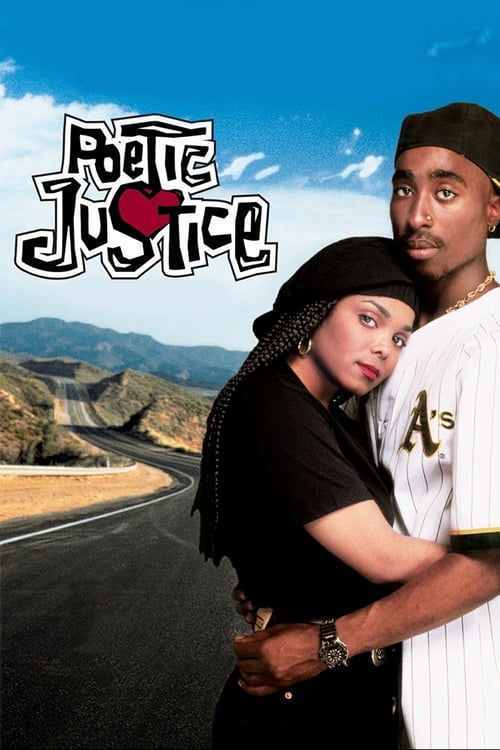
She returned to the southern United States in 1981 because she felt she had to come to terms with her past there and, despite having no bachelor's degree, accepted the lifetime Reynolds Professorship of American Studies at Wake Forest University in Winston-Salem, North Carolina, where she was one of a few full-time African American professors. From that point on, she considered herself "a teacher who writes". Angelou taught a variety of subjects that reflected her interests, including philosophy, ethics, theology, science, theater, and writing. The Winston-Salem Journal reported that even though she made many friends on campus, "she never quite lived down all of the criticism from people who thought she was more of a celebrity than an intellect ... [and] an overpaid figurehead". The last course she taught at Wake Forest was in 2011, but she was planning to teach another course in late 2014. Her final speaking engagement at the university was in late 2013. Beginning in the 1990s, Angelou actively participated in the lecture circuit in a customized tour bus, something she continued into her eighties. She also taught at the University of California, Los Angeles, the University of Kansas, and the University of Ghana and was recognized as a Rockefeller Foundation Scholar and a Yale University Fellow. She wrote the poetry and played a role in the 1993 movie Poetic Justice starring Janet Jackson.
Personal life
Evidence suggests that Angelou was partially descended from the Mende people of West Africa through her maternal line. In 2008, a DNA test revealed that 45 percent of her genetic makeup was from Central African peoples from Congo-Angola region and 55 percent came from West Africans. A 2008 PBS documentary found that Angelou's maternal great-grandmother, Mary Lee, who had been emancipated after the Civil War, became pregnant by her white former owner, John Savin. Savin forced Lee to sign a false statement accusing another man of being the father of her child. After Savin was indicted for forcing Lee to commit perjury, and despite the discovery that Savin was the father, a jury found him not guilty. Lee was sent to the Clinton County poorhouse in Missouri with her daughter, Marguerite Baxter, who became Angelou's grandmother. Angelou described Lee as "that poor little black girl, physically and mentally bruised."
The details of Angelou's life described in her seven autobiographies and in numerous interviews, speeches, and articles tended to be inconsistent. Critic Mary Jane Lupton has explained that when Angelou spoke about her life, she did so eloquently, but informally, and "with no time chart in front of her." For example, she was married at least twice, but never clarified the number of times she had been married, "for fear of sounding frivolous." According to her autobiographies and to Gillespie, she married Tosh Angelos in 1951, and Paul du Feu in 1973 or 1974, and began her relationship with Vusumzi Make in 1961, but never formally married him. Angelou held many jobs, including some in the sex trade working as a prostitute and madam for lesbians, and describes so in her second autobiography, Gather Together in My Name. In a 1995 interview, Angelou said:
I wrote about my experiences because I thought too many people tell young folks, "I never did anything wrong. Who, Moi? – never I. I have no skeletons in my closet. In fact, I have no closet." They lie like that and then young people find themselves in situations and they think, "Damn I must be a pretty bad guy. My mom or dad never did anything wrong." They can't forgive themselves and go on with their lives.
Angelou had one son, Guy, whose birth she described in her first autobiography; one grandson, two great-grandchildren, and, according to Gillespie, a large group of friends and extended family. Angelou's mother Vivian Baxter died in 1991 and her brother Bailey Johnson Jr. died in 2000 after a series of strokes; both were important figures in her life and her books. In 1981, the mother of her grandson disappeared with him; finding him took four years.
Death
Angelou died on the morning of May 28, 2014, at age 86. Although Angelou had been in poor health and had canceled recent scheduled appearances, she was working on another book, an autobiography about her experiences with national and world leaders. During her memorial service at Wake Forest University, her son Guy Johnson stated that despite being in constant pain due to her dancing career and respiratory failure, she wrote four books during the last ten years of her life. He said, "She left this mortal plane with no loss of acuity and no loss in comprehension."
Tributes to Angelou and condolences were paid by artists, entertainers, and world leaders, including President Obama, whose sister was named after Angelou, and Bill Clinton. Harold Augenbraum, from the National Book Foundation, said that Angelou's "legacy is one that all writers and readers across the world can admire and aspire to." The week after Angelou's death, I Know Why the Caged Bird Sings rose to number 1 on Amazon.com's bestseller list.
On May 29, 2014, Mount Zion Baptist Church in Winston-Salem, of which Angelou was a member for 30 years, held a public memorial service to honor her. On June 7, a private memorial service was held at Wait Chapel on the campus of Wake Forest University in Winston-Salem. The memorial was shown live on local stations in the Winston-Salem/Triad area and streamed live on the university web site with speeches from her son, Oprah Winfrey, Michelle Obama, and Bill Clinton. On June 15, a memorial was held at Glide Memorial Church in San Francisco, where Angelou was a member for many years. Rev. Cecil Williams, Mayor Ed Lee, and former mayor Willie Brown spoke.
Works
Angelou wrote a total of seven autobiographies. According to scholar Mary Jane Lupton, Angelou's third autobiography Singin' and Swingin' and Gettin' Merry Like Christmas marked the first time a well-known African American autobiographer had written a third volume about her life. Her books "stretch over time and place", from Arkansas to Africa and back to the U.S., and take place from the beginnings of World War II to the assassination of Martin Luther King Jr. In her fifth autobiography, All God's Children Need Traveling Shoes (1986), Angelou tells about her return to Ghana searching for the past of her tribe. She published her seventh autobiography Mom & Me & Mom in 2013, at the age of 85. Critics have tended to give Caged Bird the highest praise. Angelou wrote five collections of essays, which writer Hilton Als called her "wisdom books" and "homilies strung together with autobiographical texts". Angelou used the same editor throughout her writing career, Robert Loomis, an executive editor at Random House; he retired in 2011 and has been called "one of publishing's hall of fame editors". Angelou said regarding Loomis: "We have a relationship that's kind of famous among publishers."
Angelou's long and extensive career also included poetry, plays, screenplays for television and film, directing, acting, and public speaking. She was a prolific writer of poetry; her volume Just Give Me a Cool Drink of Water 'fore I Diiie (1971) was nominated for the Pulitzer Prize, and she was chosen by U.S. president Bill Clinton to recite her poem "On the Pulse of Morning" during his inauguration in 1993.
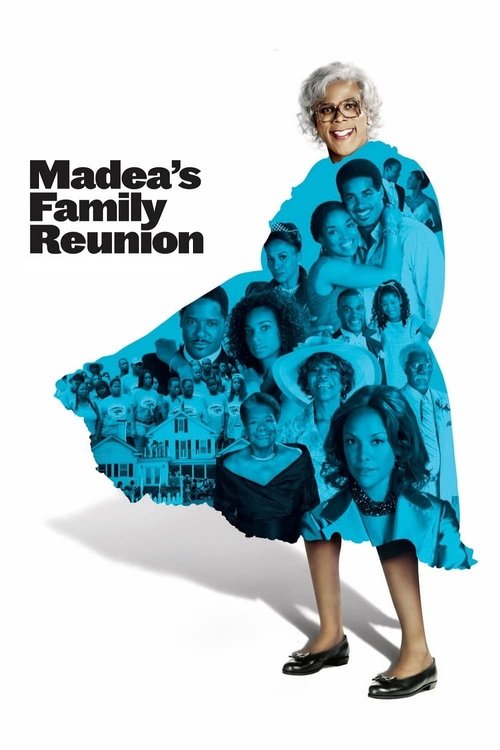
Angelou's successful acting career included roles in numerous plays, films, and television programs, among them her appearance in the television mini-series Roots in 1977. Her screenplay, Georgia, Georgia (1972), was the first original script by a Black woman to be produced, and she was the first African American woman to direct a major motion picture, Down in the Delta, in 1998.
Chronology of autobiographies
I Know Why the Caged Bird Sings (1969): Up to 1944 (age 17)
Gather Together in My Name (1974): 1944–48
Singin' and Swingin' and Gettin' Merry Like Christmas (1976): 1949–55
The Heart of a Woman (1981): 1957–62
All God's Children Need Traveling Shoes (1986): 1962–65
A Song Flung Up to Heaven (2002): 1965–68
Mom & Me & Mom (2013): overview
Reception and legacy
Influence
When I Know Why the Caged Bird Sings was published in 1969, Angelou was hailed as a new kind of memoirist, one of the first African American women who were able to publicly discuss their personal lives. According to scholar Hilton Als, up to that point, Black female writers were marginalized to the point that they were unable to present themselves as central characters in the literature they wrote. Linguist John McWhorter agreed, seeing Angelou's works, which he called "tracts", as "apologetic writing". He placed Angelou in the tradition of African American literature as a defense of Black culture, which he called "a literary manifestation of the imperative that reigned in the black scholarship of the period". Writer Julian Mayfield, who called Caged Bird "a work of art that eludes description", argued that Angelou's autobiographies set a precedent for not only other Black women writers, but also African American autobiography as a whole. Als said that Caged Bird marked one of the first times that a Black autobiographer could, as he put it, "write about blackness from the inside, without apology or defense". Through the writing of her autobiography, Angelou became recognized and highly respected as a spokesperson for Blacks and women. It made her "without a doubt, ... America's most visible black woman autobiographer", and "a major autobiographical voice of the time". As writer Gary Younge said, "Probably more than almost any other writer alive, Angelou's life literally is her work."
Als said that Caged Bird helped increase Black feminist writings in the 1970s, less through its originality than "its resonance in the prevailing Zeitgeist", or the time in which it was written, at the end of the American Civil Rights Movement. Als also claimed that Angelou's writings, more interested in self-revelation than in politics or feminism, have freed other female writers to "open themselves up without shame to the eyes of the world". Angelou critic Joanne M. Braxton stated that Caged Bird was "perhaps the most aesthetically pleasing" autobiography written by an African American woman in its era. Angelou's poetry has influenced the modern hip-hop music community, including artists such as Kanye West, Common, Tupac Shakur, and Nicki Minaj.
Critical reception
Reviewer Elsie B. Washington called Angelou "the black woman's poet laureate". Sales of the paperback version of her books and poetry rose by 300–600% the week after Angelou's recitation. Random House, which published the poem later that year, had to reprint 400,000 copies of all her books to keep up with the demand. They sold more of her books in January 1993 than they did in all of 1992, accounting for a 1,200% increase. Angelou famously said, in response to criticism regarding using the details of her life in her work, "I agree with Balzac and 19th-century writers, black and white, who say, 'I write for money'." Younge, speaking after the publication of Angelou's third book of essays, Letter to My Daughter (2008), has said, "For the last couple of decades she has merged her various talents into a kind of performance art—issuing a message of personal and social uplift by blending poetry, song and conversation."
Angelou's books, especially I Know Why the Caged Bird Sings, have been criticized by many parents, causing their removal from school curricula and library shelves. According to the National Coalition Against Censorship, some parents and some schools have objected to Caged Bird's depictions of lesbianism, premarital cohabitation, pornography, and violence. Some have been critical of the book's sexually explicit scenes, use of language, and irreverent depictions of religion. Caged Bird appeared third on the American Library Association (ALA) list of the 100 Most Frequently Challenged Books of 1990–2000 and sixth on the ALA's 2000–2009 list.
Awards and honors
Angelou was honored by universities, literary organizations, government agencies, and special interest groups. Her honors included a Pulitzer Prize nomination for her book of poetry, Just Give Me a Cool Drink of Water 'fore I Diiie, a Tony Award nomination for her role in the 1973 play Look Away, and three Grammys for her spoken-word albums. She served on two presidential committees, and was awarded the Spingarn Medal in 1994, the National Medal of Arts in 2000, and the Presidential Medal of Freedom in 2011. Angelou was awarded more than fifty honorary degrees. In 2021, the United States Mint announced that Angelou would be among the first women depicted on the reverse of the quarter as a part of the American Women quarters series. The coins were released in January 2022. She is the first Black woman to be depicted on a quarter.
Uses in education
Angelou's autobiographies have been used in narrative and multicultural approaches in teacher education. Jocelyn A. Glazier, a professor at George Washington University, has trained teachers how to "talk about race" in their classrooms with I Know Why the Caged Bird Sings and Gather Together in My Name. According to Glazier, Angelou's use of understatement, self-mockery, humor, and irony have left readers of Angelou's autobiographies unsure of what she left out and how they should respond to the events she described. Angelou's depictions of her experiences of racism have forced white readers to either explore their feelings about race and their own "privileged status", or to avoid the discussion as a means of keeping their privilege. Glazier found that critics have focused on the way Angelou fits within the genre of African American autobiography and on her literary techniques, but readers have tended to react to her storytelling with "surprise, particularly when [they] enter the text with certain expectations about the genre of autobiography".
Educator Daniel Challener, in his 1997 book Stories of Resilience in Childhood, analyzed the events in Caged Bird to illustrate resiliency in children. He argued that Angelou's book has provided a "useful framework" for exploring the obstacles many children like Maya have faced and how their communities have helped them succeed. Psychologist Chris Boyatzis has reported using Caged Bird to supplement scientific theory and research in the instruction of child development topics such as the development of self-concept and self-esteem, ego resilience, industry versus inferiority, effects of abuse, parenting styles, sibling and friendship relations, gender issues, cognitive development, puberty, and identity formation in adolescence. He found Caged Bird a "highly effective" tool for providing real-life examples of these psychological concepts.
In 2025, Connie and Peter Roop published a children's book illustrated by Noa Denmon, entitled Maya Angelou Finds Her Voice, which Publishers Weekly described as a "sensitively rendered biography".
Poetry
Angelou is best known for her seven autobiographies, but she was also a prolific and successful poet. She was called "the black woman's poet laureate", and her poems have been called the anthems of African Americans. Angelou studied and began writing poetry at a young age, and used poetry and other great literature to cope with her rape as a young girl, as described in Caged Bird. According to scholar Yasmin Y. DeGout, literature also affected Angelou's sensibilities as the poet and writer she became, especially the "liberating discourse that would evolve in her own poetic canon".
Many critics consider Angelou's autobiographies more important than her poetry. Although all her books have been bestsellers, her poetry has not been perceived to be as serious as her prose and has been understudied. Her poems were more interesting when she recited and performed them, and many critics emphasized the public aspect of her poetry. Angelou's lack of critical acclaim has been attributed to both the public nature of many of her poems and to Angelou's popular success, and to critics' preferences for poetry as a written form rather than a verbal, performed one. Zofia Burr has countered Angelou's critics by condemning them for not taking into account Angelou's larger purposes in her writing: "to be representative rather than individual, authoritative rather than confessional".
In the view of Harold Bloom, Professor of Literature (Yale University and New York University) and literary critic:
Her poetry has a large public, but very little critical esteem. It is, in every sense, "popular poetry," and makes no formal or cognitive demands upon the reader. Of Angelou's sincerity, good-will towards all, and personal vitality, there can be no doubt. She is professionally an inspirational writer, of the self-help variety, which perhaps places her beyond criticism. [...] Angelou seems best at ballads, the most traditional kind of popular poetry. The function of such work is necessarily social rather than aesthetic, particularly in an era totally dominated by visual media. One has to be grateful for the benignity, humor, and whole-heartedness of Angelou's project, even if her autobiographical prose necessarily centers her achievement.
Style and genre in autobiographies
Angelou's use of fiction-writing techniques such as dialogue, characterization, and development of theme, setting, plot, and language has often resulted in the placement of her books into the genre of autobiographical fiction. Angelou made a deliberate attempt in her books to challenge the common structure of the autobiography by critiquing, changing, and expanding the genre. Scholar Mary Jane Lupton argues that all of Angelou's autobiographies conform to the genre's standard structure: they are written by a single author, they are chronological, and they contain elements of character, technique, and theme. Angelou recognizes that there are fictional aspects to her books; Lupton agrees, stating that Angelou tended to "diverge from the conventional notion of autobiography as truth", which parallels the conventions of much of African American autobiography written during the abolitionist period of U.S. history, when as both Lupton and African American scholar Crispin Sartwell put it, the truth was censored out of the need for self-protection. Scholar Lyman B. Hagen places Angelou in the long tradition of African American autobiography but claims that Angelou created a unique interpretation of the autobiographical form.
According to African American literature scholar Pierre A. Walker, the challenge for much of the history of African American literature was that its authors have had to confirm its status as literature before they could accomplish their political goals, which was why Angelou's editor Robert Loomis was able to dare her into writing Caged Bird by challenging her to write an autobiography that could be considered "high art". Angelou acknowledged that she followed the slave narrative tradition of "speaking in the first-person singular talking about the first-person plural, always saying I meaning 'we'". Scholar John McWhorter calls Angelou's books "tracts" that defend African American culture and fight negative stereotypes. According to McWhorter, Angelou structured her books, which to him seem to be written more for children than for adults, to support her defense of Black culture. McWhorter sees Angelou as she depicts herself in her autobiographies "as a kind of stand-in figure for the Black American in Troubled Times". McWhorter views Angelou's works as dated but recognizes that "she has helped to pave the way for contemporary black writers who are able to enjoy the luxury of being merely individuals, no longer representatives of the race, only themselves". Scholar Lynn Z. Bloom compares Angelou's works to the writings of Frederick Douglass, stating that both fulfilled the same purpose: to describe Black culture and to interpret it for their wider, white audiences.