Production
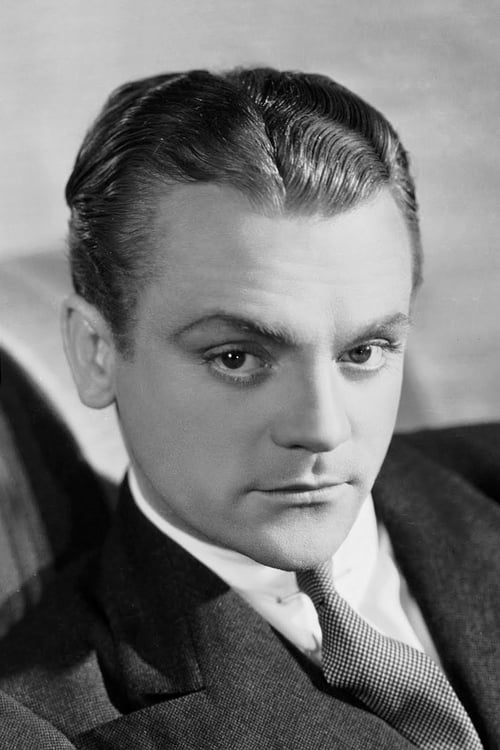
We knew that we were going to have a comedy, we [were] not going to be waiting for the laughs. But we had to go with Cagney, because Cagney was the whole picture. He really had the rhythm, and that was very good. It was not funny. But just the speed was funny ... The general idea was, let's make the fastest picture in the world ... And yeah, we did not wait, for once, for the big laughs.
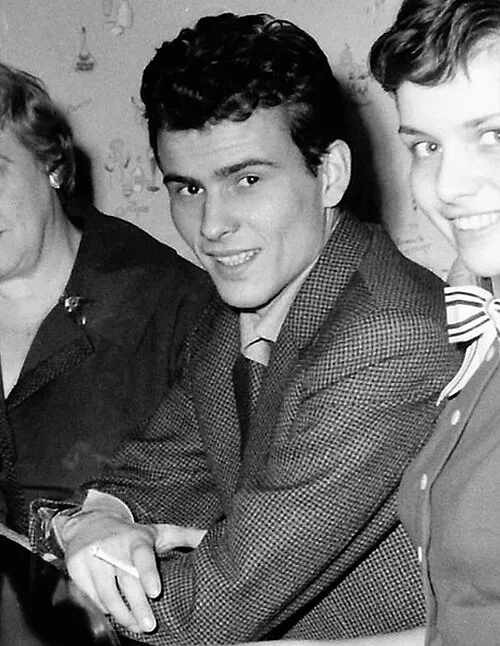
Cagney decided to take the role primarily because it was to be shot in Germany: while growing up in Manhattan's Yorkville neighborhood, he had had fond memories of the area, which was "teeming with German immigrants." Horst Buchholz was a young European actor who had recently finished The Magnificent Seven with Yul Brynner, Eli Wallach and Steve McQueen; reportedly, to star in the film, he turned down a role in Lawrence of Arabia. During the production of One, Two, Three, Buchholz became the only actor that Cagney ever openly disliked.
It is very interesting that not until the very end of my career did I meet an unco-operative fellow actor. As I review the pictures I’ve been in, I realize that each and every actor I worked with had a part in shaping my summary views on acting. We all worked together rewardingly with what I hope was mutual enrichment. I never had the slightest difficulty with a fellow actor until the making of One, Two, Three. In that picture, Horst Buchholz tried all kinds of scene-stealing didoes, and I had to depend on Billy Wilder to take some steps to correct this kid. If Billy hadn't, I was going to knock Buchholz on his ass, which at several points I would have been very happy to do.
Although Tuesday Weld lobbied strongly for the role of Scarlett, the role went to Pamela Tiffin, her second film role following Summer and Smoke, who was chosen after Wilder spotted her in an ad in The New York Times and cast her immediately following her audition. To star in the film, Tiffin dropped out of Frank Capra's Pocketful of Miracles, with her role being reassigned to Ann-Margret. Reportedly, Liselotte Pulver was cast as the secretary after being noticed by Wilder's wife Audrey at a party hosted by Curt Jurgens. Jack Lemmon was initially cast in the uncredited cameo role of an army corporal, though the part was eventually given to Red Buttons.
Wilder was filming in Berlin the morning the Berlin Wall went up, forcing the crew to move to Munich. Interiors were shot at Bavaria Film Studios. Because of issues with East German and Soviet authorities, who allowed Wilder to film on their side of Berlin only after reading the script, a full-size replica of the Brandenburg Gate was built on the back lot at the Bavaria Studios. To keep One, Two, Three current, Wilder and Diamond followed daily Berlin developments via Armed Forces Radio and the international New York Times, updating the script constantly. During principal photography, Wilder received a call from Joan Crawford, recently appointed to the board of directors of Pepsi-Cola following her husband Alfred Steele's death. In response to Crawford's protests over the use of the Coca-Cola brand in the film, Wilder scattered some references to Pepsi, including the final scene.
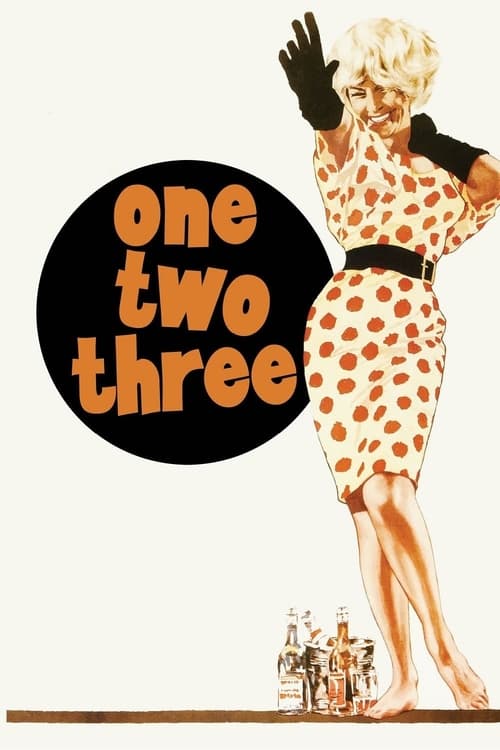
The theatrical release poster for the film, with a woman holding three balloons, was designed by Saul Bass. The Bass designed poster that Wilder originally intended for the film's release featured a United States style flag sticking out of a Coca-Cola-style bottle. The poster had to be replaced, however, when Coca-Cola threatened legal action against United Artists for copyright infringement.