Director
After The Caine Mutiny, Kramer left Columbia and resumed his independent productions, this time in the role of the director. Over the next two decades, Kramer reestablished his reputation within the film industry by directing a continual series of often successful films dealing with social and controversial issues, such as racism, nuclear war, greed and the causes and effects of fascism. Critic Charles Champlin later described Kramer as "a guy who fought some hard battles. He took on social issues when it was not popular to do so in Hollywood."
Among some of those controversial films were Not as a Stranger (1955), The Pride and the Passion (1957), The Defiant Ones (1958), On the Beach (1959), Inherit the Wind (1960), Judgment at Nuremberg (1961), and Guess Who's Coming to Dinner (1967). In addition to dramas, he directed It's a Mad, Mad, Mad, Mad World (1963).
His first film as director was Not as a Stranger (1955), the story of medical students and their career, some of whom lose their idealism and succumb to blind ambition, adultery, and immoral behavior. The film was a "smash hit," but reviews were mixed. Pauline Kael claimed it "lacked rhythm and development."
The Pride and the Passion (1957) is an adaptation from The Gun, a novel by C. S. Forester. It portrays in detail how a dedicated group of Spanish guerrillas dragged a gigantic cannon across half the country in an effort to defeat Napoleon's advancing army. It stars Frank Sinatra, Cary Grant and Sophia Loren.
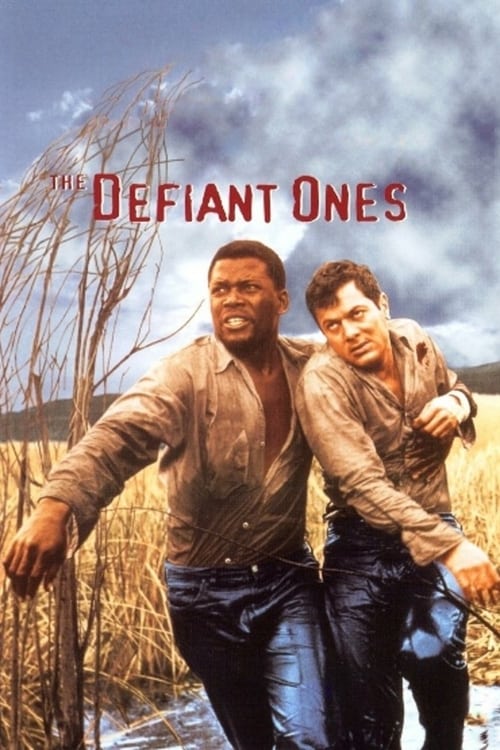
The following year, Kramer directed The Defiant Ones (1958), the story of two escaped convicts in the Deep South, one black, played by Sidney Poitier, and one white, Tony Curtis. To add to the intensity of the drama, both men are shackled together with chains, forcing them, despite their wishes, into a sense of brotherhood, suffering and fear.
New York Times film critic Bosley Crowther lauded the production and the acting in the film, calling it "a remarkably apt and dramatic visualization of a social idea—the idea of men of different races brought together to face misfortune in a bond of brotherhood — is achieved by producer Stanley Kramer in his new film." It was nominated for eight Academy Awards, winning two.
Five years after the film was released, producer George Stevens Jr. helped organize a showing of this, along with other Kramer films, at the Moscow Film Festival, which Kramer and co-star Sidney Poitier attended. Stevens writes that the showings of his films, especially The Defiant Ones, were a "great success in Moscow." He remembers that "filmmakers applauded his films, often chanting Kraaaamer, Kraaaaamer, Kraaaaamer," at their conclusion. Kramer spoke to the audience after each film, "making a fine impression for his country." Stevens credits The Defiant Ones for having the most impact, however:
The screening was one of the most emotional I have experienced. After the film, the crowd stood—many with tears in their eyes—and gave Poitier and Kramer an ovation that subsided only when we had left the auditorium. Stanley's visit to Moscow marked the high point in the cultural exchange between the two countries during those long years of estrangement.
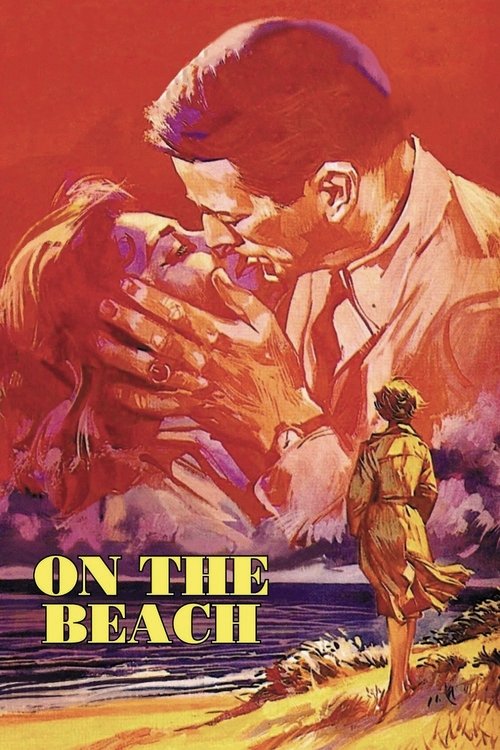
With On the Beach (1959), Kramer tried to tackle the sensitive subject of nuclear war. The film takes place after World War III has annihilated most of the Northern hemisphere, with radioactive dust on a trajectory towards Australia. Kramer gave the film an "effective and eerie" documentary look at depopulated cities. It starred Gregory Peck, Ava Gardner, Fred Astaire and Anthony Perkins.
Reviews were mostly positive, not just from critics but from scientists. Linus Pauling, winner of two Nobel Prizes (Chemistry and Peace), commented:
It may be that some years from now we can look back and say that On the Beach is the movie that saved the world. Critics Arthur Knight and Hollis Alpert likewise praised the film and admired Kramer for showing "courage in attempting such a theme."
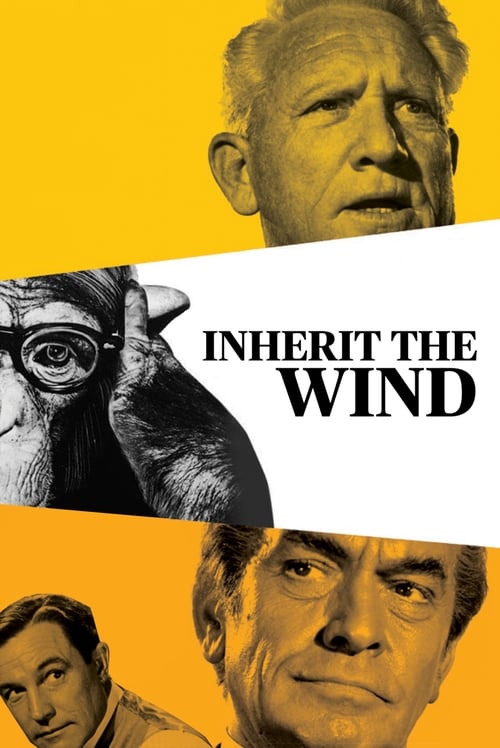
Inherit the Wind (1960) became Kramer's next challenging film, this one taking on the highly charged subjects of creationism and evolution, and how they are taught in school. The film, an adaptation of the play of the same name, written by Jerome Lawrence and Robert Edwin Lee, was a fictionalized account of the 1925 Scopes Trial, which concerned a violation of Tennessee's Butler Act. This law had made it unlawful to teach human evolution in any state-funded school in Tennessee. It starred Spencer Tracy, portraying a character based on Clarence Darrow, defending the teacher, and Fredric March as his rival attorney, based on William Jennings Bryan, who insisted that creationism was the only valid subject that should be taught to children. It was nominated for four Academy Awards.
For Tracy, who was nominated as Best Actor, the film became the first of four films he did for Kramer. "Everybody tells me how good I am," he said, "but only Stanley gives me work." The film received "extravagant reviews," yet failed at the box office due to its poor distribution and advertising. In addition, fundamentalist groups labeled the film "anti-God" and called Kramer "anti-Christ." Kramer, however, explains that these groups failed to understand the real theme of the film and the actual court trial it portrayed:
The spirit of the trial lives on, because the real issues of that trial were man's right to think and man's right to teach...the real theme of Inherit the Wind.
Kramer also notes that the film was the third part of a "trilogy of what have been called by some 'controversial pictures,'" of which the first two were The Defiant Ones and On the Beach. "I have attempted, and I hope succeeded in, making pictures that command attention," said Kramer.
Like his previous film, Judgment at Nuremberg (1961) was a fictionalized account of a real trial, this one about the Nuremberg Trials held after the defeat of the Nazis in World War II. It also starred Spencer Tracy as the leading judge, along with numerous other stars. Richard Widmark played the American military prosecutor, and Maximilian Schell played the defense attorney. The film was nominated for 11 Academy Awards and won two: Schell as Best Actor and Abby Mann for Best Screenplay. Reviews were extremely positive. Critic Hollis Alpert wrote in his review:
Stanley Kramer has once again used film importantly and continues to emerge as the only truly responsible moviemaker in Hollywood. Similarly, Arthur Knight credited Kramer for the film's significance: "From first to last, the director is in command of his material. ...he has not only added hugely to his stature as a producer-director, but to the stature of the American film as well."
However, despite mostly rave reviews in the U.S. and many countries in Europe, biographer Spoto notes that during its various premieres overseas, "it shocked many, angered some, disgusted others. But it bored no one." Kramer described its world premiere, in Berlin, as "the most frightening evening in my life." It was attended by hundreds of dignitaries from throughout Germany.
[Mayor] Willy Brandt stood up and warned the audience that they might not find the film pleasant, but that if Berlin was ever to regard itself as a capital city, then this film should be shown there because it was about all of them. "We may like or dislike or disagree with many things," he said, "but here it is."
Well, the film went on, and when it was over there was a deafening silence...The film was totally rejected: it never did three cents' business in Germany. It played so many empty houses it just stopped.
William Shatner, who had a supporting role, recalls that prior to filming, Kramer and screenwriter Abby Mann required that everyone involved in the production, actors and crew alike, watch some films taken by American soldiers at the liberation of the concentration camps. "They wanted us to understand what this film was about":
These films had not yet been released to the public; very few people had seen them. We didn't know what to expect...We watched scenes of bulldozers shoving piles of bodies into mass graves. We saw survivors, their eyes bulging, their bones practically protruding from their bodies. We saw the crematoriums and the piles of shoes. People gasped in shock, others started crying. Certainly it was the most horrifying thing I had ever seen in my life...But from that night on we understood the importance of the film we were making.
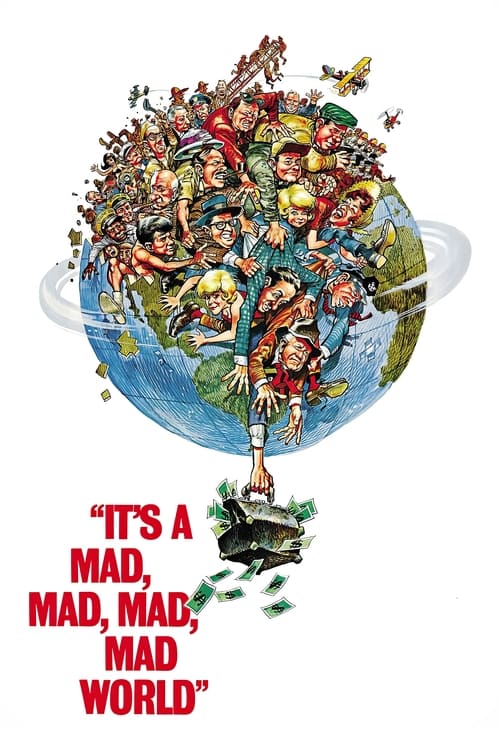
After the seriousness of his previous films, Kramer "felt compelled to answer" for the "lack of lightness" in his earlier films, writes Spoto. As a result, he directed It's a Mad, Mad, Mad, Mad World (1963), a film with a "gifted, wacky crew of comedians." Kramer describes it as a "comedy about greed." According to one writer, he directed it "to prove he could also handle comedy" and hired many of the leading comedic actors of the previous decades, from silent star Buster Keaton to emerging talent Jonathan Winters. Winters later wrote that "Kramer was a man who took chances—as they say, he worked without a net."
It played to mixed reviews with some criticizing its excessive comedy with too many comedians, thereby losing its focus. Nonetheless, it was Kramer's biggest box office hit, and the public enjoyed its "socially disruptive and goofy" story and acting. Film critic Dwight Macdonald writes that its "small army of actors—105 speaking roles—inflict mayhem on each other with cars, planes, explosives and other devices...is simply too much for the human eye and ear to respond to, let alone the funny bone," calling it "hard-core slapstick." It was nominated for six Academy Awards, winning for Best Sound Editing.
Ship of Fools (1965) has been described as a "floating Grand Hotel," an earlier film which also had an all-star cast. Its multi-strand narrative deals with the failing personal relationships among the passengers on board a passenger liner returning to Germany in 1933, during the rise of Nazism. Spoto describes its theme as one of "conscious social and psychological significance." It won two Academy Awards and was nominated for six others.
Some writers describe the film as a "microcosm" displaying a "weakness of the world that permitted the rise of Hitler." Kramer does not disagree, and wrote, "Even though we never mention him [Hitler] in the picture, his ascendancy is an ever-present factor. Most of the passengers on the ship are Germans, returning to their fatherland at a time when millions of other Germans are looking for ways to escape." In a scene noted by Spoto, a Nazi passenger is "barking inanities" about how Germans should purify their race, to which a German-Jewish passenger responds, "There are nearly a million Jews in Germany. What are they going to do — kill us all?"
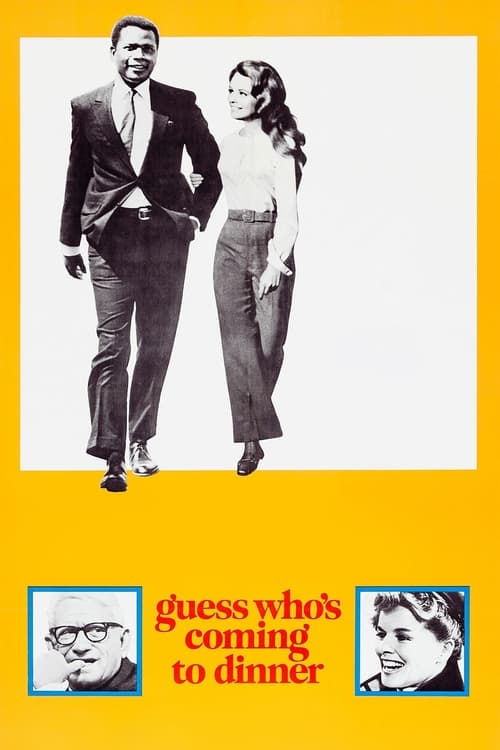
For his fourth film about the sensitive subject of racism, he both directed and produced Guess Who's Coming to Dinner (1967), a groundbreaking story about interracial marriage. It starred Spencer Tracy, Sidney Poitier, and Katharine Hepburn, winning two Academy Awards with eight nominations. It has been listed in the top 100 films over the last 100 years by the American Film Institute. However, despite its popularity with the public and its box-office success, many critics gave it negative reviews.
For Kramer and others involved in the production, it "was one of the most important events of their lives," writes Spoto. Partly because it was the first film that touched the subject since the 1920s silent era. "No one would touch this most explosive of social issues" until Kramer took on the challenge. Co-star Sidney Poitier called the film "revolutionary," and stated why:
No producer, no director could get the money, nor would theaters in America book it. But Kramer made people look at the issue for the first time...He treated the theme with humor, but so delicately, so humanly, so lovingly that he made everyone look at the question for the very first time in film history!
The film was also important as it was the last film role for Spencer Tracy, who was aware while making the film that he was dying and did in fact die a few weeks after its completion. It was his fourth film directed by Kramer and his ninth with Hepburn, who was so shaken by Tracy's death, that she refused to watch the film after it was completed. Kramer called Tracy "the greatest actor I ever worked with."
As a result of this film's commercial success, Kramer helped spur on Hollywood to reform its film marketing practices when it was observed that the film was doing excellent business everywhere in the U.S., including the Southern states where it was assumed that the prominent presence of Black actors in lead roles would never be accepted. However, Kramer, bothered by the film's negative reviews and wanting respect as an important film artist like François Truffaut and Jean-Luc Godard, undertook a nine-college speaking tour to screen the film and discuss racial integration. The effort proved a dispiriting embarrassment for him with college students largely dismissing his film and preferring to discuss less conventional fare like Bonnie and Clyde directed by Arthur Penn.
The film was Kramer's last major success, and his subsequent films were not profitable, and many had mixed reviews. Among those films were The Secret of Santa Vittoria (1968), R.P.M. (1970), Bless the Beasts and Children (1971), Oklahoma Crude (1973), The Domino Principle (1977), and The Runner Stumbles (1979). Oklahoma Crude was entered into the 8th Moscow International Film Festival where Kramer won the Golden Prize for Direction. At the time of his retirement, he was attempting to bring a script titled Three Solitary Drinkers to the screen, a film about a trio of alcoholics that he hoped would be played by Sidney Poitier, Jack Lemmon, and Walter Matthau.