1995–1998: Rise to prominence
Haynes's second feature film, Safe (1995), was a critically acclaimed portrait of Carol White, a San Fernando Valley housewife (played by Julianne Moore) who develops violent allergies to her middle-class suburban existence. After a series of extreme allergic reactions and hospitalization, Carol diagnoses herself with acute environmental illness, and moves to a New Age commune in the New Mexico desert run by an HIV positive "guru" who preaches both that the real world is toxic and unsafe for Carol, and that she is responsible for her illness and recovery. The film ends with Carol retreating to her antiseptic, prison-like "safe room", looking at herself in the mirror and whispering "I love you" to her reflection.
The film is notable for its critical (though not entirely unsympathetic) treatment of its main character. Julie Grossman argues in her article "The Trouble With Carol" that Haynes concludes the film as a challenge to traditional Hollywood film narratives of the heroine taking charge of her life, and that Haynes sets Carol up as the victim both of a repressive male-dominated society, and also of an equally debilitating self-help culture that encourages patients to take sole responsibility for their illness and recovery. Carol's illness, although unidentified, has been read as an analogy for the AIDS crisis of the mid-1980s, as a similarly uncomfortable and largely unspoken "threat" in 1980s Reaganist America. Safe was critically acclaimed, giving Moore her first leading role in a feature film, and gave Haynes a measure of mainstream critical recognition. It was voted the best film of the 1990s by the Village Voice's Critic Poll. The film historian David Thomson later described it as "one of the most arresting, original and accomplished films of the 1990s".
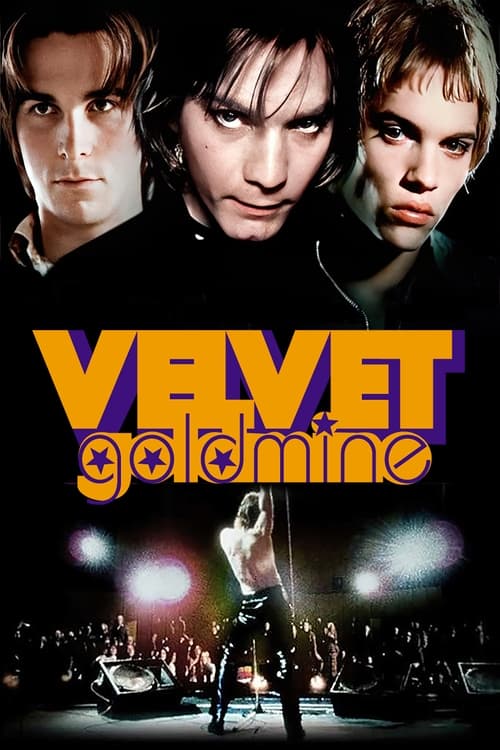
Haynes took a radical shift in direction for his next feature, Velvet Goldmine (1998), starring Christian Bale, Ewan McGregor, Jonathan Rhys-Meyers and Toni Collette. The film's title takes its name from David Bowie's song "Velvet Goldmine". Filmed and set mostly in England, the film was an intentionally chaotic tribute to the 1970s glam rock era, drawing heavily on the rock histories and mythologies of glam rockers David Bowie, Iggy Pop and Lou Reed. Starting with Oscar Wilde as the spiritual godfather of glam rock, the film revels in the gender and identity experimentation and fashionable bisexuality of the era, and acknowledges the transformative power of glam rock as an escape and a form of self-expression for gay teenagers.
The film follows the character of Arthur (Bale) an English journalist once enraptured by glam rock as a 1970s teenager, who returns a decade later to hunt down his former heroes: Brian Slade (Rhys Meyers), a feather boa-wearing androgyne with an alter ego, "Maxwell Demon", who resembles Bowie in his Ziggy Stardust incarnation, and Curt Wild (McGregor), an Iggy Pop-style rocker. The narrative playfully rewrites glam rock myths which in some cases sail close to the truth. Slade flirts with bisexuality and decadence before staging his own death in a live performance and disappearing from the scene, echoing Bowie's own disavowal of glam rock in the late 1970s and his subsequent re-creation as an avowedly heterosexual pop star. The film features a love affair between Slade and Wild's characters, recalling rumors about Bowie and Reed's supposed sexual relationship. Curt Wild's character has a flashback to enforced electric shock treatment as a teenager to attempt to cure his homosexuality, echoing Reed's teenage experiences as a victim of the homophobic medical profession.
Haynes was keen to use original music from the glam rock period, and (learning his lesson from Superstar) approached David Bowie before making the film for permission to use his music in the soundtrack. Bowie declined, leaving Haynes to use a combination of original songs from other artists, such as Brian Eno and Roxy Music, and glam-rock inspired music written by contemporary rock bands for the film, including Shudder to Think. Velvet Goldmine premiered in main competition at the 1998 Cannes Film Festival, winning a special jury award for Best Artistic Contribution. Despite the initial critical praise, the film received mixed reviews from critics. Costume designer Sandy Powell received an Academy Award nomination for her costume design and won the Oscar in the same year for her work on Shakespeare In Love.